Blade-Free Chainsaw Safety: How to Remove, Inspect, and Reassemble
A comprehensive, safety-first guide on removing and handling a chainsaw blade (bar and chain) for maintenance, storage, and transport. Learn steps, tools, and best practices to prevent injuries.


Safely handling a chainsaw when the blade is removed lets you perform maintenance or transport without the risk of a moving chain. The goal is to remove the bar and chain assembly, inspect wear, and store the saw securely. Always disconnect the spark plug or unplug the unit, engage the chain brake, and follow the model’s service manual; use proper tools, PPE, and a stable workspace.
Understanding blade-free chainsaw work
Removing the blade, defined as the bar and chain, from a chainsaw is a situation you may encounter during maintenance, transport, or certain service procedures. This article explains why blade-free handling matters, what you should know about the risks, and how to perform the process safely. According to Chainsaw Manual, safety-first guidance begins with a clear plan, proper PPE, and model-specific instructions. The goal is to minimize exposure to the chain’s potential for motion, kickback, and sharp edges. In practice, blade-free work is not a normal operating condition; it should be limited to services and checks conducted on a stable, supported surface with the power removed.
Blade-free handling also means you are decision-ready to address bar wear, sprocket integrity, and chain tension during maintenance. This is not about replacing the tool with a nonfunctional setup; it is about controlled steps that keep you safe while the saw is immobilized. The Chainsaw Manual team emphasizes that risk management begins long before you touch any fasteners: prepare your workspace, confirm you have the right tools, and use PPE designed for heavy-duty trimming and cutting environments. A solid plan reduces surprises and protects people nearby from accidental contact with moving components.
Why blade-free handling matters
There are several legitimate reasons to work with a chainsaw blade removed: routine maintenance (inspection of the bar, chain, and drive system), bar/chain replacement, or safe transport when storing the tool in a vehicle or workshop. Removing the blade reduces the risk of accidental contact with the chain and makes it easier to access fasteners, tensioners, and guards. For homeowners and professionals, blade-free handling is a necessary part of service protocols, not a casual activity. Chainsaw Manual analysis shows that many injuries occur during blade removal due to improper isolation of power sources, poor restraint of the tool, or neglecting the brake mechanism. By following a structured process, you limit exposure to sharp edges and rotating parts while maintaining a clear path for reassembly.
Before you begin, understand that a chainsaw is not a tool you operate without the bar and chain installed. The absence of the bar can temporarily change the balance and center of gravity, which is why stabilization and brake engagement are critical during every step. If you are unsure, pause and consult your model’s service manual. When blade-free handling is performed correctly, you will have a safer workflow, fewer lost components, and a smoother reassembly.
Safety foundations for blade removal
Safety is the core of blade-free work. The first rule is to never attempt any blade-free operation while the engine or motor is live. You should always remove power, engage the chain brake, and secure the saw before you touch any fasteners. PPE is non-negotiable: cut-resistant gloves, safety glasses or a face shield, and sturdy work boots protect you from sharp edges and dropped parts. If you are working near others, establish a clear exclusion zone and communicate your plan. Understanding kickback zones, even with the blade removed, helps you anticipate unexpected movements from residual tension or stored energy in the chain drive. The Chainsaw Manual team recommends a dry-run checklist to confirm you have all tools and a safe surface before you begin.
Another safety principle is to work slowly and deliberately, avoiding loose clothing or jewelry that could snag on components. Keep the bar cover and any storage containers nearby, so loose parts do not roll away. Finally, ensure you have stable lighting so you can see all fasteners and alignment marks clearly. These basics create a safer environment for blade-free tasks around the saw.
Tools, PPE, and workspace essentials
Having the right tools and PPE is essential for blade-free handling. Gather gloves, eye protection, and a sturdy work surface. You’ll also need the correct wrenches or sockets to fit your bar nuts, a screwdriver, and a torque-ready wrench if your model specifies torque values for reassembly. A container or tray helps keep the bar and chain components organized, and a bar cover provides an added layer of safety during storage. Additional items like lubrication for reassembly and a clean rags for surface prep should not be forgotten. In short, preparation reduces errors and speeds up the process.
Create a dedicated space for blade-free tasks. Have a non-slip mat or wooden bench, secure the saw so it cannot tip, and maintain a clean, well-lit area. If you are unsure about the correct tool sizes for your unit, consult the manual or contact the manufacturer’s support line before you begin. The right tools minimize damage to fasteners and reduce the risk of stripped screws.
Risks of operating without bar and chain
Running or testing a chainsaw without the bar and chain is not a normal or recommended operation. Even with the brake engaged, there can be residual energy in the drive system that may cause unexpected movement. Without a blade, the chain’s drive components—like the clutch and sprocket—may become misaligned if reassembly is rushed. There is also a risk of dropping the bar or chain and causing cuts or piercings. This section emphasizes why blade-free handling is confined to maintenance contexts and must be followed by a careful reattachment workflow before any attempt to start the engine.
Another risk is punishing heat buildup or fuel/gas expansion after storage without the blade in place. Bar and chain removal changes the balance of the saw and can affect how it sits on the work surface. Always place the tool in a secure, upright position to prevent tipping, and never leave the saw unattended on a bench with a blade removed.
Step-by-step overview before removal
This section outlines the preparatory steps you should perform before physically removing the blade. Begin by reading the model’s manual for any model-specific cautions and torque values. Confirm you have a stable, well-lit workspace and a clean area for fasteners. Remove any fuel or battery to ensure there is no power source connected. Check that the chain brake is engaged and that there is no residual tension in the drive chain. Finally, collect all required tools and PPE so you can begin the removal without interruptions.
A good practice is to take photos of the setup before you touch anything. These images help you reassemble with correct alignment and orientation. If you are working in a shop, consider using a magnetic tray to hold small fasteners so you don’t misplace them during the removal.
Preventive maintenance and reassembly considerations
Blade-free handling is a springboard for proactive maintenance. After removing the blade, inspect the bar rails for wear and scoring, check the chain for pinching or damaged drive links, and examine the sprocket and oiler system. If wear is present, plan for replacement parts or consult a service professional. When reassembling, ensure you align the bar and chain correctly, tension the chain to the manufacturer’s spec, and torque fasteners to the specified values. Apply a light coat of bar oil to the rails to facilitate smooth operation on reattachment. Finally, perform a careful test on a safe surface with the chain brake disengaged only after you confirm all safety checks are complete.
Document any part numbers or torque values for future maintenance, and store the blade-free saw in a secure location with the bar cover in place. This approach protects the tools and reduces the risk of injuries should someone inadvertently come into contact with an exposed drive system.
Authority sources and further reading
For authoritative guidance on blade-free handling and general chainsaw safety, consult professional safety standards and manufacturer recommendations. The Chainsaw Manual team also cross-references established safety resources for best practices and maintenance workflows. The following sources provide foundational guidance for safe blade-free work:
- NFPA (Major publication): https://www.nfpa.org
- OSHA (government safety guidance): https://www.osha.gov
- NIOSH/CDC (occupational safety information): https://www.cdc.gov/niosh
- US Forest Service safety materials (gov): https://www.fs.usda.gov
These references help homeowners, DIY enthusiasts, and professionals align with best practices for tool handling, storage, and maintenance. Remember to always verify model-specific steps in your user manual and consult manufacturer support when in doubt. The Chainsaw Manual analyses emphasize consistent safety checks and careful documentation as key components of blade-free workflows.
Tools & Materials
- Owner’s manual for your chainsaw model(Model-specific steps and torque values; essential for safe blade-free work.)
- Protective gloves(Cut-resistant preferred; protects hands during handling and removal.)
- Safety glasses or face shield(High-visibility protection against debris and chain splinters.)
- Wrench set (correct size for bar nuts)(Used to loosen/tighten bar nuts; sizes vary by model.)
- Screwdriver set(Flathead/Phillips as required by your saw’s fasteners.)
- Bar cover or scabbard(Protective cover to prevent accidental contact and damage.)
- Container or tray for bar and chain parts(Keeps components organized and prevents loss.)
- Work surface with non-slip mat(Stability to prevent tipping during removal and reassembly.)
- Lubricant or bar oil(Light lubrication for reassembly and smoother operation.)
Steps
Estimated time: 45-60 minutes
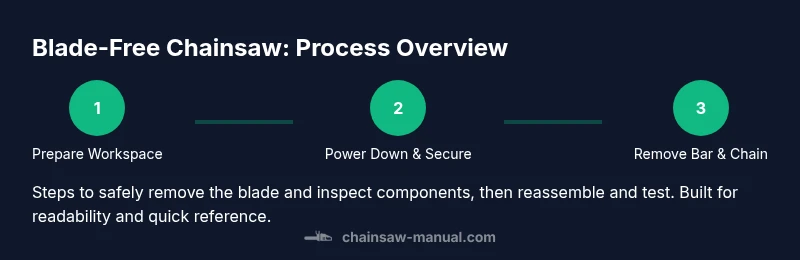
- 1
Prepare the workspace
Set up a clean, well-lit area with a non-slip surface. Place the saw on the mat or bench and remove any fuel if possible for gas-powered units. Gather all tools and PPE before starting to avoid interruptions.
Tip: Lay out your tools in a logical order so you don’t search for the right fasteners mid-task. - 2
Power down and secure
For gas saws, disconnect the spark plug cap; for electric, unplug the cord. Engage the chain brake firmly and ensure the bar is not under tension. Let any stored energy dissipate before touching fasteners.
Tip: Double-check that the brake remains engaged throughout the process. - 3
Remove the bar and chain
Loosen the bar nuts with the appropriate wrench and slide the bar away from the drive sprocket while guiding the chain off the bar. Place components in their container in the same orientation to ease reassembly.
Tip: Keep track of any washers or spacers that may be part of the mounting hardware. - 4
Inspect and clean
Inspect the bar rails for wear, the chain for damaged drive links, and the sprocket for signs of wear. Wipe down connected surfaces and remove debris that could interfere with reassembly.
Tip: Note any wear patterns or parts that should be replaced before reuse. - 5
Store blade-free saw securely
Place the bar cover on the blade-free unit and store it on a stable surface away from heat sources and curious children or pets. Keep the removed bar and chain in a labeled container to prevent loss.
Tip: Use a dedicated storage area to minimize risk of accidental contact. - 6
Reinstall and test
Reattach the bar and chain in the correct orientation, tension the chain to the manufacturer’s spec, and torque fasteners as specified. Reconnect power and perform a controlled test of the brake and idle when you are sure the unit is safe.
Tip: Always perform a test cut on a safe surface after reassembly to verify correct tension and alignment.
FAQ
Is it safe to operate a chainsaw without a blade attached?
No. A chainsaw should never be operated without the bar and chain installed. Operating a saw without the blade can cause uncontrolled movement, kickback, and potential injury. Blade-free work should be limited to maintenance tasks performed with the tool powered off and locked out.
No, never operate a chainsaw without the blade. This is dangerous and can cause serious injuries during maintenance.
What should I do before removing the blade, bar, or chain?
Read the model’s manual for model-specific steps and torque specs. Ensure the saw is powered off, the brake is engaged, and you have a stable workspace. Gather the right tools and PPE so you can perform the removal methodically.
Read the manual first, power off the tool, engage the brake, and have your tools ready before you start.
Can blade-free handling be done for transport?
Blade-free handling is sometimes used for safe transport or storage, but only after the saw is fully powered down and secured. Reattach the blade before any operation. Ensure you use protective covers and secure packaging to prevent movement or exposure to sharp edges.
Blade-free handling is for safe transport only after you’ve fully secured the tool; reattach before use.
What are common mistakes to avoid during blade-free work?
Rushing the reassembly, skipping brake checks, or failing to torque fasteners to spec are common mistakes. Not organizing fasteners can lead to misalignment and failure during reattachment. Always double-check orientation of the bar and chain.
Rushing or skipping torque specs are common mistakes that can cause failure when reassembling.
Which PPE are essential when removing the blade?
At minimum, wear cut-resistant gloves, safety glasses, and sturdy footwear. Consider a face shield if you anticipate debris from cleaning or if the setup is awkward. PPE protects your hands, eyes, and feet from sharp edges and accidental drops.
Wear gloves and eye protection; add a face shield for extra safety if you’re doing maintenance.
Watch Video
The Essentials
- Always disconnect power before blade-free work
- Engage the chain brake during removal and reinstallation
- Maintain a clean, organized workspace to prevent part loss
- Inspect all components for wear and replace as needed