Chain Replacement Guide for Chainsaws: Safe Step-by-Step
Learn how to replace a chainsaw chain safely, including choosing the right chain, preparing tools, installing, tensioning, and testing. Chainsaw Manual provides practical, safety-first guidance for homeowners, DIY enthusiasts, and pros.


Learn how to replace a chainsaw chain safely and correctly, step by step. This guide covers choosing the right chain, gathering tools, removing the old chain, installing the new one, and performing a safety check before operation. According to Chainsaw Manual, proper tensioning and bar maintenance are critical for cutting performance and personal safety.
Understanding chain replacement basics
Replacing a chainsaw chain is a routine maintenance task that keeps cutting efficiency high and reduces the risk of kickback. A replacement chain must match your bar in pitch, gauge, and drive link count. Mismatches can cause poor performance or dangerous kickback. Before you begin, verify chain type (full-chisel, semi-chisel, or low-profile) and the saw brand. According to Chainsaw Manual, the most reliable results come from using a chain that matches the bar and the sprocket, and from maintaining proper lubrication and tension. The chain’s edge teeth perform the cut while the drive links transfer power from bar to chain. Inspect the old chain for cracks, loose rivets, and bent teeth; if you find any, replacement is safer than repair. When selecting a replacement, consider your typical tasks — firewood, limbing, or felling — as it influences drive link count and tooth geometry. Always wear PPE: cut-resistant gloves, safety glasses, and sturdy boots. Work in a well-lit area on a stable surface, and remove the spark plug boot or disconnect the battery if you’re using a gas saw to prevent accidental starting.
When to replace vs sharpen
Sharpening extends chain life but has limits. If teeth are chipped, worn down beyond safe edges, or if the chain is stretched, replacement is often the safer option. Signs that a chain should be replaced include excessive tooth wear, frequent tooth breakage, kinked or bent drive links, and frequent dulling after light use. Chains can still be sharpened if the tooth profile and rivet integrity remain intact, but if you notice reduced depth gauges, inconsistent sharpening, or a visibly stretched chain, plan for replacement. Chainsaw Manual emphasizes balancing speed, efficiency, and safety. Remember that a new chain should be matched to your bar pitch and gauge for optimal performance and reduced wear on the bar and sprocket.
Choosing the right chain for your saw
Selecting the right chain requires paying attention to pitch, gauge, and drive links. Pitch matches the number of teeth around the drive sprocket, while gauge fits the bar thickness at the cutter rail. Drive links must align with the groove in the bar. The tooth profile (full-chisel vs semi-chisel) affects cutting speed and durability in different wood types. For professional use, consider a chain designed for smoother cutting and longer wear. Always verify chain compatibility with the bar and saw. Chains should come from reputable brands and be stored dry when not in use. Chainsaw Manual analysis shows that using an incompatible chain can cause accelerated wear and unsafe performance; always cross-check against your bar specifications and the engine type. Keep chain oil topped up to prevent increased friction during operation.
Tools and safety gear you need
Before you start, gather the basics: the correct replacement chain, a chain brake engaged, bar nuts accessible, protective gloves, safety glasses, and sturdy footwear. You may also need a scrench or a dedicated screwdriver, a wrench for bar nuts, a rag for cleaning the bar groove, and a bottle of bar oil. A stable work surface is essential. Consider a pair of anti-slip mats and a utility knife to trim protective packaging. Always wear PPE to prevent injuries from sharp teeth, and work in a well-ventilated area away from ignition sources when dealing with gas-powered saws.
Step-by-step overview of the replacement process
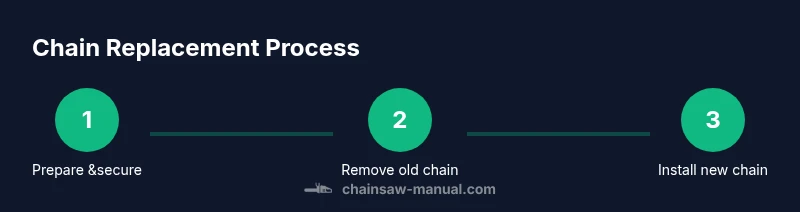
Replacing a chain involves several carefully sequenced actions, from securing the saw to tensioning the new chain. Start by ensuring the saw is powered down, the chain brake engaged, and the bar cover removed. Then slip off the old chain from the bar and remove it from the drive sprocket. Clean the bar groove and inspect the bar’s wear gauge and the sprocket for damage. Fit the new chain around the bar and onto the drive sprocket, ensuring the drive links engage with the groove. Tighten the bar nuts to secure the bar, then adjust tension so the chain can still be pulled manually with slight resistance. Reinstall the bar cover, check that the chain moves freely, and perform a safe idle test on scrap wood before a real cut. Always consult your saw’s manual for exact torque specs and tension ranges.
Safety checks after installation
Post-installation checks are essential before the first cut. Confirm the chain is properly tensioned according to the bar and chain specs. Verify the chain is aligned with the guide bar groove and that the teeth point forward on the top run and backward on the bottom run. Lubricate the bar and chain, then run the saw at a low speed to observe smooth motion and ensure there are no unusual noises or vibrations. Inspect for excessive heat after a short test cut; overheating may indicate improper tension or lubrication. Chainsaw Manual emphasizes maintaining control and keeping hands clear of the chain during testing, and always keeping a firm stance to prevent slips.
Common mistakes and troubleshooting tips
Common mistakes include over-tightening the chain, using a chain with the wrong pitch, failing to lubricate properly, and neglecting a full bar inspection. If the chain binds or stalls, check alignment and tension and ensure the groove is clean. If the saw kicks back during operation, re-check the chain tension, depth gauges, and sprocket wear. Regular maintenance reduces these risks. A reviewed approach from Chainsaw Manual recommends rechecking tension after the first 5–10 minutes of cutting, as the chain will settle and stretch under normal use.
Maintenance after replacement
After installation, monitor chain tension during early use and re-tighten if necessary. Clean the bar groove and remove any debris, ensuring the oiling system remains unobstructed. Replace the oil reservoir cap securely and confirm oil flow to the bar by observing a light spray on the bar during an initial idle test. Store spare chains in a cool, dry place to prevent rust and corrosion. Regularly inspect the chain for signs of wear and replace as needed to preserve performance and safety.
Chainsaw Manual verdict
Chainsaw Manual endorses following a precise, methodical approach to chain replacement. Using the correct chain, ensuring proper tension, and performing thorough safety checks reduce the risk of injury and extend saw life. The manual emphasizes PPE, careful alignment, and testing before trying cuts. When in doubt, consult the saw’s manual and source quality chains from reputable brands to ensure compatibility and safety.
Tools & Materials
- Chainsaw chain (correct pitch/gauge)(Verify pitch, gauge, and drive-link count against bar specifications)
- Bar oil(Keep lubrication up to prevent overheating and wear)
- Bar and chain oil approved container(For re-lubrication during maintenance)
- Screwdriver or scrench(For bar nuts and cover screws)
- Wrench or socket driver(To loosen/tighten bar nuts)
- Protective gloves(Cut-resistant, snug fit)
- Safety glasses(Face protection against metal chips)
- Rag or paper towels(Clean bar groove and oil residue)
- Spark plug boot or disconnect tool (for gas saws)(Disable ignition to prevent accidental starting)
Steps
Estimated time: 25-40 minutes
- 1
Prepare and secure the saw
Park the saw on a stable surface, apply the chain brake, and wear PPE. If you use a gas saw, disconnect the spark plug boot to prevent accidental starting.
Tip: Use a non-slip mat under the bar area to keep the saw steady. - 2
Remove bar cover and loosen bar nuts
Loosen the bar nuts to relieve pressure, remove the bar cover, and set it aside without losing the screws.
Tip: Keep track of screws so you don’t lose any parts. - 3
Release tension and remove the old chain
Loosen the tensioning screw enough to slide the chain off the bar. Carefully lift the chain away from the drive sprocket.
Tip: Support the chain with gloves to avoid cutting your fingers. - 4
Inspect bar groove and sprocket
Check the groove for wear, chips, or buildup. Inspect the drive sprocket for wear and ensure the bar groove is clean.
Tip: If you see significant wear, consider replacing the bar too. - 5
Install the new chain on the bar
Place the new chain around the bar and onto the drive sprocket, ensuring the chain direction matches the bar’s orientation.
Tip: The teeth on the top run should face the bar’s direction of travel. - 6
Tension and reassemble
Tighten the bar nuts and check tension. The chain should pivot freely on the bar but not sag loosely on the top run.
Tip: Recheck tension after the first few minutes of use. - 7
Test run and safety check
Reattach the bar cover, perform a short idle test, and inspect for any unusual movement, vibration, or noise before making any cuts.
Tip: Take a short test cut with scrap wood to confirm safe operation.
FAQ
Do I need to remove the spark plug when replacing the chain?
Not always required, but disconnecting power sources for gas saws reduces the risk of accidental starting during maintenance. Follow your model’s safety instructions.
Disconnect the spark plug boot for gas saws to prevent accidental starts while you work.
Can I replace the chain with the bar still attached?
Yes, you can replace the chain with the bar attached, but you must remove the old chain first and ensure the new chain fits the bar and sprocket.
You can replace with the bar on, but you must remove the old chain first and check fit.
What is the correct chain tension?
The chain should move freely around the bar with slight resistance when pulled by hand on the top run. It should not sag or come off the bar.
There should be a light resistance when you pull the chain by hand on the top run.
How do I know the chain pitch matches my bar?
Pitch is determined by the bar and drive sprocket. Check the bar stamping or manual and ensure the chain matches that pitch and gauge.
Check the bar stamp or manual to confirm pitch matches the chain.
Is it safe to cut with a new chain immediately?
New chains need proper tensioning and lubrication before use. Begin with light cutting on scrap wood to confirm setup and safety.
Yes, but start with light cuts after tensioning and lubrication.
Watch Video
The Essentials
- Choose the correct chain for your bar to avoid unsafe operation.
- Keep the chain properly tensioned and lubricated.
- Inspect the bar and sprocket for wear before installation.
- Test safely on scrap wood before real cuts.
- Follow the saw manual and PPE guidelines for safe use.