How to Install a Chainsaw Blade: Safe Step-by-Step
Learn how to install a chainsaw blade safely with Chainsaw Manual's step-by-step guide, tools, PPE, and a practical test plan. Includes blade compatibility and tensioning tips for homeowners and pros.


Install a replacement chainsaw blade by following a safe, step-by-step process to ensure proper tension and alignment. Before you begin, confirm blade type (pitch, gauge, and length) matches your chain and bar, engage the chain brake, and wear PPE. This quick guide covers alignment, tensioning, retightening, and a test cut to verify safe operation.
Blade compatibility and safety first
Before touching any parts, confirm your blade matches the saw’s design. Blades come in different pitches and gauges that must match your chain and the bar length. The drive links on the chain must align with the groove in the bar. Mismatched pitch or gauge can cause uneven cutting, increased vibration, and accelerated wear. Check the saw’s manual or the stamping on the blade packaging to verify compatibility with your bar length. If you’re replacing a damaged blade, inspect the entire bar and clutch area for wear and corrosion that could affect seating.
Safety comes first in every step. Engage the chain brake and wear cut-resistant gloves, eye protection, and sturdy footwear. Work on a clean, dry surface, free of loose screws or nails. Keep blades away from metal objects that could chip teeth, and never attempt to force a blade into place. Chainsaw maintenance is a controlled procedure: take your time, organize tools, and double-check every contact point—especially where the blade seats against the drive links. Chainsaw Manual emphasizes following the manufacturer’s torque specs and not substituting generic fasteners, which can compromise safety. When in doubt, consult the manual or seek guidance from a trained technician. This section sets the stage for safe handling and accurate assembly.
Tools, blades, and PPE you’ll need
Before you touch the blade, assemble the right blade with the correct pitch and gauge, plus the essential tools and PPE. You’ll typically need a replacement blade that is compatible with your bar length and drive links, the manufacturer-approved side cover wrench or Torx/Allen tools, a chain tensioner tool or scrench, and bar oil for testing. Consider keeping a clean cloth, a brush or scraper to remove residue, and a spare blade stored in a dry case. Confirm the blade’s condition; never reuse a damaged blade. Always check that the new blade’s teeth are sharp and free of burrs as dull or jagged teeth slow cutting and increase kickback risk.
Safety equipment is non-negotiable. Put on cut-resistant gloves with a good grip, splash-proof eye protection, and sturdy footwear. Ensure you have a stable workspace with adequate lighting, a clamping vise or stands if possible, and a clear area around the saw where you won’t trip over cords or hoses. Chainsaw Manual analysis, 2026, highlights that adequate PPE and proper handling reduce common injuries during blade changes and maintenance. Finally, arrange the components in the order you’ll use them to avoid misplacing fasteners or misaligning the blade; an organized workspace speeds up the job and reduces mistakes.
Understanding the installation flow (overview)
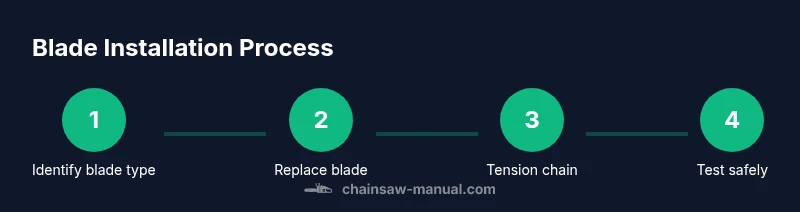
The blade installation relies on a consistent, repeatable sequence that works across most brands. The critical idea is to seat the blade so that the drive links align with the chain’s links, the teeth point in the correct cutting direction, and the blade sits flush against the bar. Start by removing the old blade, then slide the new blade in with careful attention to orientation. If your saw uses riveted blades or separate drive links, ensure the rivets or fasteners are seated in their grooves and that the blade does not rub against the bar or cover plate. Throughout the process, refer to the saw’s manual for model-specific steps such as surprising variations in fastener location or torque specs. Understanding why each action matters—alignment, seating, and even pressure on the nuts—helps you diagnose problems quickly and avoid wasted effort. After you complete this overview, you’ll be ready to proceed with the step-by-step routine with greater confidence and fewer surprises.
Post-install checks and maintenance
Once the blade is installed, perform post-install checks to ensure safe operation before any working cut. First, verify chain tension by gently pulling the chain away from the bar; there should be a slight drag but no sag. Re-seat the side cover, then lubricate the bar and chain with fresh bar oil. Start the saw and run it at a low idle with the chain brake off for a brief moment to observe smooth rotation and alignment. Listen for any unusual noises, vibrations, or scraping sounds that indicate misalignment. If you notice binding, stop the engine and re-check the blade seating and tension. After a short test, re-engage the chain brake and perform a controlled cut on scrap wood, gradually increasing pressure as you confirm the system is stable. Regular maintenance after installation—keeping the blade sharp, cleaning debris, and inspecting for nicks or cracks—extends blade life and improves performance. Chainsaw Manual’s guidance stresses continuing to monitor tension during initial use and re-tightening if needed.
Tools & Materials
- Chainsaw blade (correct pitch and gauge for your bar)(Verify compatibility with your chain and bar length)
- Side cover wrench or Torx/Allen tools(Model-dependent sizes: check manual)
- Chain tensioner tool or scrench(Used to adjust tension and secure bar nuts)
- PPE: cut-resistant gloves, safety glasses, sturdy footwear(Always wear before servicing the bar)
- Bar oil and fuel handling gear (for petrol saw)(Keep oil reservoir topped up for testing)
- Soft brush or cloth for cleaning(Clean debris from bar and blade before install)
Steps
Estimated time: 25-45 minutes
- 1
Prepare the saw and safety gear
Power off the saw and engage the chain brake. Place the saw on a stable surface and wear PPE. This creates a safe baseline and prevents accidental starts during maintenance.
Tip: A stable work area reduces risk of tool slipping. - 2
Disconnect power source
For petrol saws, unplug the spark plug cap or disconnect the battery for electric saws to prevent accidental startup. This ensures the engine cannot start while you work.
Tip: If you’re unsure how to isolate power, consult the manual. - 3
Remove the side cover and old blade
Loosen the nuts with the appropriate tool and carefully lift off the side cover. Slide the old blade free, being mindful of teeth edges.
Tip: Keep teeth away from fingers; handle with care. - 4
Install the new blade and align teeth
Slide the new blade into place along the bar, ensuring proper alignment with the drive links and teeth facing forward. Replace the side cover and loosely thread the nuts so the blade can seat.
Tip: Do not force the blade; if it doesn’t seat, re-check alignment. - 5
Tension the chain and secure the bar nuts
Use the tensioner or adjuster to bring the chain snug against the bar without binding. Tighten the nuts evenly in a cross pattern to avoid bending the bar.
Tip: Check tension again after a few minutes of operation. - 6
Reinstall cover and perform a safe test
Reattach the side cover, lubricate the bar, and start the saw with the chain brake on. Gently rev and observe for smooth rotation and proper alignment.
Tip: If there’s any binding, stop and re-check the setup.
FAQ
Do I need to remove the spark plug before blade installation?
For petrol saws, disconnect the spark plug lead to prevent starting. For electric saws, unplug the power source. Always ensure the saw cannot start during maintenance.
Disconnect the spark plug lead or unplug the saw to prevent accidental starting during blade installation.
How do I know the blade is the correct size?
Check the blade’s pitch and gauge stamped on the blade or refer to your saw’s manual to confirm compatibility with your bar length.
Check the blade’s pitch and gauge against your saw’s manual.
What signs indicate the blade needs replacement?
Dull or chipped teeth, exposed wear, or excessive vibration indicate replacement. If the blade won’t hold a sharp edge after sharpening, replace it.
Look for dull teeth, chips, or excessive wear as signs to replace.
Can I install a blade on an electric chainsaw?
Yes, as long as you follow safety steps and unplug the saw during installation. Refer to the manual for model-specific instructions.
Yes, just ensure the saw is powered off during installation and follow the manual.
Is it safe to run a test cut after installation?
Yes, perform a controlled test cut on scrap wood with the chain brake off and the saw running at a low idle. Re-engage the brake after verification.
Yes, test carefully on scrap wood with safety in mind.
How often should I inspect the blade after use?
Inspect the blade before each use for damage and wear. Re-sharpen or replace as needed to maintain safe, efficient cutting.
Inspect the blade every use and replace when worn.
Watch Video
The Essentials
- Verify blade compatibility before installation
- Engage chain brake and PPE throughout the process
- Tension the chain properly and recheck after testing