How to Put Chainsaw Blade Back On: A Safe Reinstallation Guide
A complete, safety-first guide showing step-by-step how to put a chainsaw blade back on, including tools, tips, and checks from Chainsaw Manual.


To reinstall a chainsaw blade, first ensure the tool is off and the spark plug boot disconnected (gas models) or the battery removed (electric models). Secure the bar, line up the drive sprocket with the clutch drum, slide the bar into place, tighten the bar nuts to the factory torque, and reattach the clutch cover. Always wear PPE and consult your manual for model-specific specs.
Safety First: Why Proper Blade Installation Matters
Reinstalling a chainsaw blade isn't a cosmetic step; it's a safety-critical maintenance task. If the blade isn't properly seated, you risk kickback, bar or chain derailment, or worst-case blade separation during operation. A secure blade ensures proper chain tension, smoother cuts, and reduces vibration that can wear the bar and drive system. According to Chainsaw Manual, taking a few extra minutes to verify all parts are aligned and torqued to spec can prevent injuries and costly repairs. Before you start, remove the spark plug boot on gas models or disconnect the battery on electric models to prevent accidental starts. Work in a clean, well-lit area with your chain brake engaged and the chain stopped. Double-check that the bar groove is clean and free of debris; any grit can cause misalignment. How to put chainsaw blade back on can be easier when you understand the safety basics and follow a repeatable process.
Anatomy of a Chainsaw Blade and Bar
A chainsaw blade (chain) works with the bar, drive sprocket, and clutch. The bar sits in notches and a groove that align with the drive links of the chain. The drive sprocket engages the chain via the clutch drum; when the engine runs, power transfers through these parts to turn the chain. Knowing how these parts fit together helps with correct reinstallation and reduces the chance of misalignment or binding.
Common Installation Scenarios by Model Type
Gas-powered saws and electric saws share the same basic principle, but there are model-specific quirks. Some saws use standard bar nuts, while others require different fasteners or spacers. Left-handed threads, special washers, or anti-rotation features may be present. Always consult your model's manual to confirm the correct orientation, torque, and sequences for your specific unit. If you’re unsure, treat every reinstall as a high-safety task and verify each step before starting.
Tools and Safety Gear You Need
Before you even touch the blade, gather PPE such as safety glasses, cut-resistant gloves, and sturdy footwear. A clean, well-lit workspace with a stable surface minimizes slips. Have a basic wrench set, a screwdriver set, and a torque wrench (if available) to achieve the correct torque. Keep chain oil or bar oil handy for lubrication after installation. This prep reduces the chance of accidental slips and makes the reinstall smoother. As you prepare, remember that proper tool handling is a key part of how to put chainsaw blade back on safely.
Step-by-Step Overview for Reinstalling
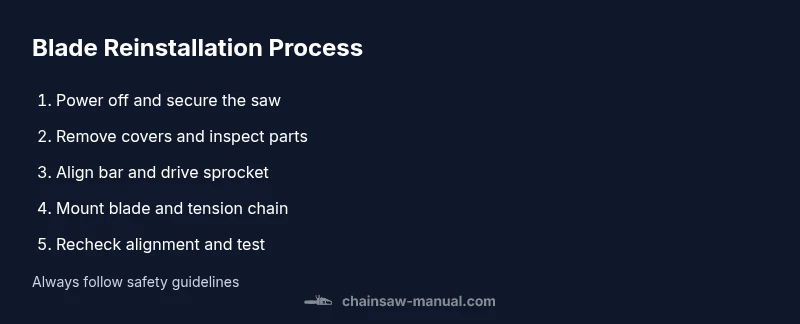
For many users, the reinstall is a series of precise actions rather than a single motion. The tasks include securing the bar, aligning the drive sprocket, mounting the blade, and applying the proper chain tension. This overview helps you visualize the flow of actions and reduces the risk of missing a critical alignment step. The exact torque values will come from the manufacturer, and deviating from those specs can cause downtime or damage.
Detailed Preparations: Cleaning, Lubrication, and Alignment
Clean the bar groove, check for burrs or damage, and ensure the sprocket and clutch drum rotate freely. Lubricate the chain lightly to reduce friction during the first test run, then verify alignment by rotating the chain by hand with the bar cover removed. The goal is to have a smooth, well-aligned chain that tracks evenly along the bar without binding. If anything looks off, halt and recheck before applying power.
Aftercare: Testing, Tensioning, and Adjustments
Power on in a controlled space and test the reinstalled blade at idle and a short, slow cut (if safe to do so). Check chain tension again after a brief run; it should have minimal slack and no loose links. Listen for unusual sounds or vibration, which can indicate misalignment or a loose component. Proper aftercare helps extend blade life and reduces the risk of failure during operation.
Troubleshooting Common Issues
If the blade won’t seat properly, recheck the bar groove, alignment of the drive sprocket, and the position of any spacers. A misaligned chain will derail or cause unpredictable cuts. If there are visible signs of wear or damage on the bar, blade, or sprocket, replace those parts before attempting another reinstall. Regular inspection is key to long-term safety.
Authority Sources
- https://www.osha.gov
- https://extension.umn.edu
- https://extension.oregonstate.edu
Tools & Materials
- Safety glasses(ANSI Z87.1 impact-resistant)
- Cut-resistant gloves(Protect hands while reassembling under tension)
- Wrench set (metric/SAE)(Sizes per model; commonly 10-13 mm)
- Screwdrivers (Phillips/flathead)(For clutch cover screws)
- Torque wrench (optional)(Use to reach manufacturer torque spec)
- Bar oil / chain oil(Lubricate chain after reinstall)
Steps
Estimated time: 15-25 minutes
- 1
Power off and secure saw
Power off the saw, remove the spark plug boot on gas models or disconnect the battery on electric models, and engage the chain brake. This prevents accidental starts while you work.
Tip: Always start with the power disconnected to avoid sudden starts. - 2
Remove bar cover and inspect
Loosen the bar nuts and remove the clutch cover. Inspect the cover, bar, chain, and drive sprocket for wear, cracks, or debris that could affect reinstall.
Tip: Clear debris from the bar groove before restarting. - 3
Clean groove and align chain direction
Clean the bar groove with a soft brush, check the chain direction, and verify the drive links align with the sprocket teeth.
Tip: Ensure the chain is oriented in the correct cutting direction. - 4
Position bar and align drive sprocket
Seat the bar in the chassis so the drive sprocket aligns with the clutch drum. This is critical for smooth operation and correct tension.
Tip: Take your time to align studs and holes before tightening. - 5
Mount blade and reattach bar nuts
Slide blade onto the bar, thread on the bar nuts, and snug them to hold the blade in place. Do not fully tighten yet.
Tip: Ensure the blade face is correct orientation relative to the chain. - 6
Tension the chain to spec
Turn the bar nuts to apply proper chain tension as per the manual, keeping the chain snug but able to move freely by about a half inch.
Tip: Over-tightening can cause excessive wear and overheating. - 7
Reattach clutch cover and inspect alignment
Reinstall the clutch cover, ensure the bar studs sit correctly, and verify there is no binding or misalignment between chain and bar.
Tip: Double-check that the chain moves freely by hand before starting. - 8
Test run safely
Power on in a controlled, clear area. Let the engine idle briefly, then inspect for wobble, unusual noise, or chain jump. Stop if anything seems off.
Tip: Always test in a safe open space away from bystanders.
FAQ
Do I need to remove the spark plug to reinstall the blade?
For gas-powered units, disconnect the spark plug boot to prevent accidental starting; for electric models, remove the battery. You don't need to remove the spark plug to reinstall the blade itself.
Disconnect power sources first; you usually don't need to touch the spark plug itself during blade installation.
How tight should the bar nuts be?
Bar nuts should be tightened to the manufacturer’s torque specification. Snug but not overtightened; use a torque wrench if available.
Tighten to the specified torque; do not overtighten.
Can I reinstall if the chain is damaged?
No. A damaged chain should be replaced. Replacing it ensures proper tension and safe operation.
If the chain is nicked or cracked, replace it before use.
What are signs of misalignment after reinstall?
Uneven chain tracking, chain derailment, excessive vibration, or the bar glazing can indicate misalignment. Stop and recheck setup.
Look for tracking issues or unusual noise during first test run.
Is it safe to reinstall blade without power tools?
A basic hand tool setup is sufficient if you follow torque specs and take care with alignment. Power tools may speed the process but are not required.
Hand tools work fine if you’re careful and follow torque specs.
Watch Video
The Essentials
- Inspect parts for wear before reinstall.
- Align drive sprocket with clutch drum accurately.
- Tension chain to manual spec; avoid over-tightening.
- Test in a safe area and recheck alignment.