Chain on a Chainsaw: Tensioning and Maintenance Guide
Learn practical, safety-first steps to tension, inspect, lubricate, and replace the chain on a chainsaw. This guide from Chainsaw Manual covers setup, test cuts, common mistakes, and maintenance for homeowners and pros.


You will learn how to correctly tension and inspect the chain on a chainsaw, along with safe lubrication and replacement steps. Gather PPE, a chain wrench, a coin gauge or file, and a stable, well-lit work area. This guide covers grip, stance, test cuts, and tension checks to prevent kickback and extend bar life. According to Chainsaw Manual, safety-first maintenance protects you and your tool.
Why Chain Tension Matters
A properly tensioned chain on a chainsaw is the first line of defense against dangerous kickback and poor cutting performance. When the chain is too loose, it can derail or come off the bar during even light cuts; too tight, and it increases wear and heat, reducing efficiency. In both cases, you lose control and risk injury. The chain on a chainsaw should run smoothly along the guide bar with just a slight gap that you can detect by pressing the drive links against the underside of the bar. Regular checks as part of your maintenance routine help ensure consistent performance. According to Chainsaw Manual, routine tension checks, lubrication, and alignment are essential for safety and tool longevity. This is not a one-and-done task; it’s a critical habit for every cut, whether you’re pruning a hedge or felling a tree.
Tools and Safety Prep
Before you touch the chain, prepare a safe, well-lit workspace and the right PPE. Put on cut-resistant gloves, safety goggles, and sturdy footwear. Keep the chain brake engaged when the saw is at rest to prevent accidental movement. Gather the essential tools: a wrench for the bar nuts, a chain gauge or a ruler to measure tension, a flat file or chain sharpening file, and a small brush to clean debris. Have a container of chain oil ready and a clean rag for wiping the bar and drive links. A stable, raised work surface reduces the risk of slips. The more organized your setup, the safer your workflow and the more accurate your tension checks will be.
Understanding Chain Components and Tension Range
A solid understanding of chain components helps you set the correct tension. The chain’s pitch, gauge, and number of drive links determine how it sits on the bar, and manufacturers specify a tension range for safe operation. The goal is a taut chain that still moves freely with minor resistance when pulled by hand, not a sagging loop. If you’re unsure of the exact range for your model, consult the user manual or the saw’s manufacturer site. Chains that run too tight can strain bearings and wear the guide bar, while chains that are too loose may derail or jump off the bar during a cut. Chainsaw Manual analysis shows that most operators benefit from checking tension at regular intervals and after rough cuts, especially when the bar or chain has heated significantly.
How to Check Tension: Visual Cues and Sound
Tension checks rely on simple, repeatable cues rather than guesswork. With the engine off and the chain brake engaged, rotate the chain by hand and observe how it sits on the bar. A correctly tensioned chain should have a slight give at the midpoint—no sagging, but not so tight that the drive links bind against the bar. Placing a gloved finger over the chain should reveal a quiet, smooth rotation with minimal resistance. If you hear binding, see visible gaps between drive links and bar, or notice wobbling, re-check your tension and seating. Remember to re-lubricate the chain after any adjustment, as lubrication affects tension stability during use.
Common Mistakes and How to Avoid Them
Many errors come from rushing the process. Common mistakes include loosening the bar nuts too far, over-tightening after a quick test, and neglecting lubrication after adjustment. Another pitfall is attempting to tension a chain that hasn’t seated correctly on the bar or using a worn bar or sprocket, which defeats the tensioning effort. A misaligned chain can also kick back more readily. To avoid these issues, re-check seating after each adjustment, test the saw in a controlled, low-load cut, and ensure the lubrication system is functioning properly before long cuts. The Chainsaw Manual emphasizes consistent checks as part of a safe maintenance routine.
Maintenance Beyond Tension: Lubrication, Sharpening, and Storage
Tension is only one part of keeping a saw safe and efficient. Lubrication reduces friction and heat, extending chain life and preserving bar integrity. Sharpening should be done with proper files and at recommended angles to maintain chain geometry. After use, wipe down the bar and chain, remove debris, and store the saw in a dry, secure location. Regularly inspecting the bar for nicks and wear helps prevent tension fluctuations caused by damaged seating surfaces. If a saw has been exposed to moisture or corrosive debris, a thorough cleaning can prevent rust that interferes with tension stability. Integrating lubrication, sharpening, and storage into your routine complements tension checks and enhances overall performance.
Authority Sources and Notes
For safety and technique standards, consult official safety resources and extension services. Authoritative sources include government and university guidance on tool safety and maintenance. Refer to the following links for additional best practices and context:
- https://www.osha.gov
- https://www.cdc.gov/niosh/
- https://extension.umn.edu
These sources complement practical, hands-on guidance and support the safety-first approach recommended by Chainsaw Manual.
Tools & Materials
- Safety PPE (gloves, eye protection, chainsaw chaps)(Protect hands, eyes, and legs from debris and contact with the chain)
- Chain wrench / suitable wrench for bar nuts(Essential for loosening/tightening bar nuts or tensioner)
- Adjustable wrench or socket set(Fits your bar nut size; ensure secure grip)
- Chain gauge or ruler(Measures slack and ensures correct tension)
- Flat file or chain sharpening file(Maintains chain sharpness during or after adjustment)
- Bar oil / chain oil(Lubricates chain during testing and use)
- Clean rag and brush(Wipe debris and inspect seating surfaces)
- Stable work surface or saw stand(Minimizes movement and increases safety)
- Torque-safe kickstand (optional)(Helpful on larger saws for stability)
Steps
Estimated time: 20-30 minutes
- 1
Shut Down & Secure
Power off the saw and engage the chain brake. If you have an electric saw, disconnect the plug or remove the battery. Remove any obstructions and position the saw on a stable surface with the bar clear of your body.
Tip: Always work in a well-ventilated area and keep bystanders at a safe distance. - 2
Inspect Seating and Bar
Inspect the bar groove and drive links to ensure they seat cleanly on the bar. Remove debris and verify that the chain has not stretched excessively. If the bar or drive sprockets show wear, replace them before adjusting tension.
Tip: Look for shiny contact surfaces and lack of burrs along the bar. - 3
Loosen Bar Nuts (If Applicable)
Loosen the bar nuts enough to allow the bar to move slightly. Do not remove the bar completely unless required by your model. This gives you room to adjust chain tension without stressing the bar.
Tip: Keep the saw stable and avoid tipping the bar during this step. - 4
Position Chain on Bar
Place the chain so the drive links sit properly in the groove and the cutting teeth align with the bar edge. Ensure the chain orientation matches the saw’s arrow marking for correct rotation.
Tip: Do not force the chain; if it won’t seat, recheck seating and try again. - 5
Tension the Chain
Use the tensioning screw or bar tensioner to remove slack until the drive links sit snugly against the underside of the bar. Avoid overtightening, which can damage bearings and the bar.
Tip: Rotate the chain by hand and listen for binding as a test of proper tension. - 6
Retighten Nuts & Check
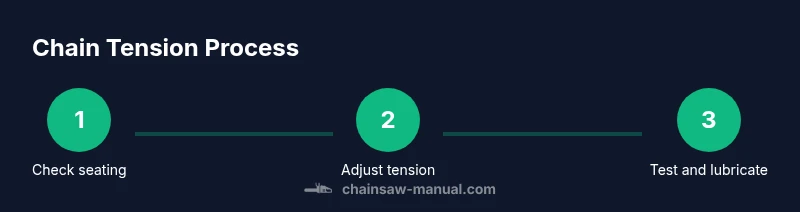
Return bar nuts to snug, secure torque according to your saw’s manual. Check tension again after a brief rotation and verify the chain can’t be pulled away from the bar beyond a slight amount.
Tip: Always re-check tension after you run the saw briefly. - 7
Lubricate & Test
Apply chain oil and run a test cut on a controlled piece of wood. Observe for heat, smoke, or irregular motion. If anything feels off, stop and re-evaluate fittings and seating.
Tip: Never test-cut with the chain dry; lubrication is essential for safe operation.
FAQ
How tight should the chain be on a chainsaw?
The chain should have a small amount of slack but not sag. It should rotate freely with slight resistance when pulled by hand. Always recheck seating after any adjustment.
A chain that’s just snug but not tight is best after tensioning. Recheck before use to ensure it won’t derail.
Can I tension the chain without removing the bar?
Many saw models allow tension adjustments with the bar in place using the tension screw or nut. Some require bar removal for full access. Consult your user manual for model-specific steps.
In many saws you can adjust tension with the bar on, but check your manual for your model.
What causes the chain to loosen after tensioning?
Factors include heat during use, worn drive sprockets, incorrect seating, and inadequate lubrication. If looseness recurs, recheck seating and consider replacing worn components.
Looseness often means something is worn or not seated right. Recheck parts or replace worn bits.
How often should I check chain tension?
Check before each use and after the first few cuts of a session. If you’re cutting hard or long sessions, re-check more frequently to maintain safe operation.
Test tension before starting and after initial cuts each time you use the saw.
Is chain tension related to kickback risk?
Yes. Poor tension can contribute to derailment or uneven cutting, increasing kickback risk. A properly tensioned chain helps maintain control and safety.
Yes, tension plays a role in kickback risk; keep it within the recommended range.
What should I do if the chain becomes too tight?
Over-tightening increases bearing load and can crack the bar. Back off a notch, re-seat the chain, and re-test tension carefully.
If it’s too tight, loosen a little and re-test. Don’t force a tighter setting.
What’s the right procedure after replacing the chain?
Ensure proper seating, correct tension, and good lubrication. Run light cuts to confirm smooth operation before heavy use.
After replacing a chain, seat it properly, tension it, lubricate, and test with light cuts.
Watch Video
The Essentials
- Ensure proper tension to prevent derailment
- Follow manufacturer guidance for torque and tension range
- Lubricate after tensioning to stabilize the system
- Regular checks reduce kickback risk and extend bar life