How to Check Chainsaw Chain Tension: A Practical Guide
Learn how to check chainsaw chain tension safely and accurately with practical steps, gear, and safety tips from Chainsaw Manual for homeowners and pros.


Today you’ll learn how to check chainsaw chain tension safely and accurately. This quick guide covers the essential tools, the safe setup, and the standard steps you’ll use on most bar-and-chain saws. By following these steps, you’ll reduce kickback risk and improve cutting efficiency. It also highlights common mistakes and how to avoid them.
Why Proper Chain Tension Matters
When learning how to check chainsaw chain tension, you unlock safer cutting, smoother bar movement, and longer chain life. A chain that is too loose can derail from the bar under load, increase the chance of kickback, and wear drive links unevenly. Conversely, a chain that is too tight places extra stress on the guide bar, sprocket teeth, and the drive links, shortening the chain’s life and reducing performance. In practice, proper tension helps the chain rail smoothly along the bar, keeps drive links seated, and minimizes heat buildup. This section explains the risks of improper tension and why taking a deliberate, methodical approach matters for both beginners and seasoned users. It also sets expectations for what “good tension” looks and feels like during a manual check and a quick field test.
Tools and PPE You’ll Need
Before you start, assemble the basics and put on proper PPE. You’ll want to minimize risk and maximize accuracy by working in a stable area with a firm surface. Gather the following essentials:
- Personal protective equipment (PPE): safety glasses or goggles, cut-resistant gloves, hearing protection, and sturdy footwear.
- Owner’s manual for your model: tension methods vary by saw, and the manual provides model-specific guidance.
- Flat-head screwdriver or the driver your bar nuts require: used to access or adjust the tension mechanism on many saws.
- Ruler or caliper: used to assess drive-link slack relative to the bar.
- Bar oil and maintenance supplies: keep lubrication up to date after adjusting tension to prevent heat buildup.
- Optional: chain gauge or tension gauge if your model supports it.
Safety note: never operate a chainsaw without proper PPE, and ensure the engine is off and the chain brake is engaged while adjusting tension.
Model Variations: Tensioning Methods
Not all saws use the same method to adjust chain tension. Some models have a dedicated tensioning screw on the side plate, while others rely on loosening the bar nuts and moving the bar to change tension. A few electric or compact models may require different steps. Regardless of method, the goal remains the same: allow the drive links to sit properly in the bar groove while avoiding excessive tightness that could strain the bar and sprocket. In this section we discuss common approaches, how to identify which method your saw uses, and how to avoid model-specific mistakes by consulting the manual and observing the bar and drive links during adjustment.
Common Mistakes and How to Avoid Them
Even experienced users can slip into bad habits when checking chain tension. Common mistakes include over-tightening after initial adjustment, neglecting to retest tension after lubricating the chain, and testing tension with the saw hot after use. Another frequent error is applying excessive force to move the drive links, which can mislead you about actual tension. To avoid these pitfalls, always test tension in a cool state, lubricate after adjustment, and verify tension in multiple spots along the bar. A cautious, repeatable approach will yield the best results and minimize wear.
Safety-First Check Routine After Adjustment
After you adjust the tension, perform a quick safety check routine to ensure the setup remains correct. Power the saw off, engage the chain brake, and manually rotate the chain to inspect for smooth operation with no binding. Check the bar groove for drive link seating along several points of the bar, and listen for odd noises that might indicate binding. Finally, re-lubricate the chain if needed and run the saw at a low idle (if the model permits) to observe any unusual behavior. If anything feels off, stop and re-evaluate tension rather than forcing adjustments. This disciplined routine helps prevent dangerous kickback and premature wear.
Tools & Materials
- Owner's manual for your chainsaw(Model-specific tension method and safety notes)
- Personal protective equipment (PPE)(Safety glasses, gloves, hearing protection, sturdy boots)
- Flat-head screwdriver or appropriate driver(Needed to access tension screw or bar nuts depending on model)
- Ruler or caliper(For assessing drive-link slack along the bar)
- Bar oil(Lubricate after adjustment to prevent heat buildup)
- Chain gauge (optional)(Helpful for checking chain pitch/gauge if available)
Steps
Estimated time: 20-40 minutes
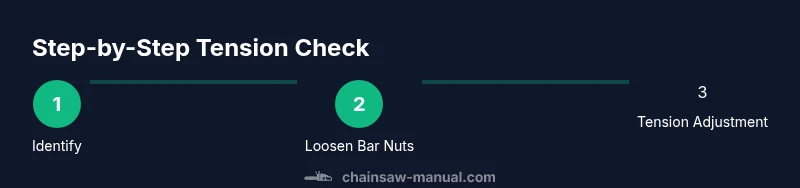
- 1
Prepare the saw and gear
Place the saw on a stable surface with the bar pointed away from you. Engage the chain brake, ensure the engine is off, and disconnect any power source if it’s electric. Put on PPE before touching the chain or bar.
Tip: Double-check that the chain cannot move before you start adjusting. - 2
Identify the tension method for your model
Consult the owner’s manual to locate the tension screw or bar-nut arrangement. Some saws require loosening bar nuts first, others allow direct adjustment via a tension screw. If you’re unsure, refer to the manufacturer’s guidance.
Tip: If in doubt, perform a quick test on a spare bar after rehearsing the steps on a safe surface. - 3
Loosen the bar nuts (if required)
Lightly loosen the bar nuts enough to allow the bar to move slightly. Do not completely remove the nuts unless your model instructs you to do so. This creates space to adjust tension without stressing the bar.
Tip: Keep the nuts in a safe place to avoid losing them. - 4
Adjust tension with the specified mechanism
Turn the tension screw or adjust the bar position per your manual to increase or decrease tension. Make small changes and recheck by hand; you should feel the chain seat well yet still have gentle slack in specific sections.
Tip: Make incremental adjustments and avoid forcing the bar to move beyond its natural range. - 5
Check drive-link slack using a ruler
With the bar in a neutral position, press a drive link gently away from the bar groove at three points along the bar. There should be a small amount of play and the drive links should stay seated in the groove.
Tip: If the drive links lift off the groove, loosen slightly and recheck. - 6
Tighten bar nuts and re-check
Tighten the bar nuts to secure the current tension, then recheck drive-link seating and chain tension at multiple spots. Ensure there’s no binding and that the chain moves smoothly by rotating the bar manually.
Tip: If binding occurs, re-open slightly and re-test before running the saw. - 7
Final safety test and lubrication
With the saw off, test the tension once more and apply bar oil if needed. If you run the engine briefly to observe behavior, do so in a controlled setting away from bystanders and with the chain guard up.
Tip: Always stop the saw completely before any adjustments after a test run.
FAQ
What happens if the chain tension is too loose?
A loose chain can derail from the bar, increase kickback risk, and wear drive links unevenly. It may also bind or bind the drive sprocket. Regular checks help prevent these issues.
A loose chain can derail or kick back, and wear the drive links unevenly. It’s important to check tension regularly.
Can I check tension with the saw running?
No. Always turn off the engine, engage the chain brake, and ensure the bar and chain are controlled before checking tension.
No. Turn off the saw and engage the brake before checking tension.
Should tension be checked after lubrication?
Yes. Lubrication can alter tension as the chain expands slightly with heat. Recheck tension after applying bar oil and a short test run.
Yes, recheck after lubrication to account for any expansion.
What tools do I need for tension checks?
A driver for the tension mechanism, a ruler or caliper, PPE, and the owner’s manual. Optional gauges can help on some models.
You’ll need a screwdriver, a ruler, PPE, and the manual.
How often should I check chain tension?
Check the tension before each day’s work and after extended use or heavy cutting, as heat and wear can change tension.
Check tension before you start and again after heavy use.
What is a sign of incorrect tension during use?
If the chain bites into the bar, emits excessive noise, or jumps off the bar, tension is likely off and needs adjustment.
Unusual biting, noise, or chain derailment means tension needs adjustment.
Watch Video
The Essentials
- Know your model’s tension method before starting.
- Aim for seated drive links with slight, safe slack.
- Retest tension after lubrication and first cuts.