Difference Between Chainsaw and Power Saw: A Thorough Comparison
An analytical, side-by-side comparison of chainsaws and power saws, covering design, use cases, safety, maintenance, and buying considerations. Learn how to choose the right tool for outdoor timber work, framing, and precise cuts with confidence.


The difference between chainsaw and power saw matters for safety, task suitability, and technique. A chainsaw uses a rotating chain on a long bar for heavy outdoor timber work, while a power saw refers to handheld, powered cutting tools (such as circular or reciprocating saws) designed for precise cuts in lumber and other materials. This comparison breaks down design, use cases, and key factors to help homeowners, DIY enthusiasts, and professionals decide which tool fits the job.
The difference between chainsaw and power saw
At first glance, the terms chainsaw and power saw describe two classes of cutting tools that share a common trait: powered operation. The Chainsaw Manual team emphasizes that the core distinction lies in design and intended tasks. A chainsaw features a bar with a moving chain that teeth rip through wood in rough, rapid cuts, often used outdoors for tree work, felling, and heavy limbing. In contrast, a power saw is a broad category for handheld, powered cutting tools—most commonly circular and reciprocating saws—built for maneuverability in tight spaces and precise cuts on lumber, studs, or metal with appropriate blades. Understanding this difference helps you pick the right tool for a given job and reduces the risk of misuse.
As you read, keep in mind that many homeowners encounter both tools on job sites. The Chainsaw Manual analysis shows that the decision often hinges on the material being cut, the working environment, and safety considerations. In practice, this means choosing the correct tool based on task type rather than assuming one tool fits all scenarios. The goal is to maximize efficiency while minimizing risk, which is why a clear distinction between these tools matters for planning and safety.
This guide aligns with Chainsaw Manual’s safety-first approach, focusing on practical guidance for real-world tasks and challenges.
Core design differences: chain drive vs blade drive
The most visible difference between a chainsaw and a power saw is the mechanism that delivers the cut. A chainsaw uses a chain-driven cutting action, with sharp teeth mounted on a rotating loop that runs along a metal bar. This arrangement is optimized for ripping through thick timber, bark, and branches. The chain requires regular tensioning, lubrication, and chain sharpening to maintain performance and safety.
Power saws, by contrast, typically employ a fixed blade (or blades) mounted to a rotating disk or reciprocating mechanism. A handheld circular saw uses a circular blade to make straight cuts in sheets and boards, while a reciprocating saw uses a blade that moves back and forth to sever nails, studs, and varied materials. The blade-based approach is ideal for controlled, precise cuts, often in indoor settings or tight spaces where a chainsaw would be unwieldy.
The difference in cutting action drives ergonomic considerations as well. Chainsaws tend to require more grip strength and stance stability due to kickback potential and the longer leverage of the bar. Power saws, being lighter and smaller, offer more maneuverability for fine work but may lack the raw timber-cutting power a chainsaw provides.
Power sources and how they affect performance
Power sources shape how you use each tool day-to-day. Chainsaws come in gas-powered and electric variants. Gas-powered chainsaws deliver mobility and power for outdoor tasks where an electrical outlet isn’t available, including felling small trees, splitting logs, and brush removal. Electric chainsaws—whether corded or cordless—are cleaner and quieter but depend on battery life or proximity to a power outlet. The choice often comes down to the balance between mobility, runtime, and maintenance needs (fuel mixing, bar and chain lubrication, spark plug care).
Power saws cover a broad spectrum of tools: corded and cordless circular saws for long, straight cuts in lumber; reciprocating saws for demolition and rough cuts; and miter saws for precise angle cuts. Each category uses a different power approach, with corded tools generally delivering steady power and cordless tools offering portability. The right choice depends on your typical tasks, workspace, and whether you prioritize continuous power over flexibility.
From a safety perspective, electric-powered tools produce fewer emissions and less vibration at the source than many gas-powered options, but battery weight and charge cycles can influence performance. Chainsaws, in particular, require careful fuel handling and maintenance practices to keep the engine running smoothly and to prevent dangerous fuel leaks.
According to Chainsaw Manual, aligning power source with task needs reduces downtime and enhances safety—for example, using an electric power saw indoors or in a workshop for precision framing, while reserving a gas chainsaw for outdoor timber work where portability and raw power matter most.
Typical use cases and task suitability
Typical use cases guide the selection between a chainsaw and a power saw. Chainsaws excel in outdoor timber work: felling trees, limbing, bucking, and cutting through thick logs where a long bar and aggressive chain make quick progress possible. Their reach and power enable rapid removal of bulky wood, especially in remote locations where access to electricity is limited. However, chainsaws are less suited for fine, precise cuts in finished materials or indoor framing where a compact tool with a controllable blade is preferred.
Power saws are favored for framing, cabinetry, drywall cutting, and metal or plastic material work when using the appropriate blade. Circular saws are versatile for long straight cuts across dimensional lumber, while reciprocating saws excel in demolition or rough cutting where a traditional cut would be impractical. Miter saws provide accurate angled cuts with minimal setup. In practice, many professionals own a chainsaw for outdoor tasks and one or more power saws for indoor, precise, or quick-cut requirements.
From a consumer standpoint, balancing job needs with space constraints will guide you toward a practical kit rather than relying on a single tool for all tasks. Chainsaw Manual’s guidance emphasizes selecting a tool that fits the most common tasks in your workflow while maintaining safety margins.
In summary, choose chainsaws for rugged outdoor woodwork and mobility; choose power saws for precise, controlled cuts in indoor settings or material-specific tasks.
Weight, ergonomics, and control
Weight and ergonomics influence how easily you can manage a saw for extended periods. Chainsaws tend to be heavier and require a firm stance and dynamic control to handle kickback and vibration. The bar length, engine size, and balance all contribute to how comfortable the tool feels during long sessions. A heavier chainsaw with a long bar can deliver more cutting power but demands better upper body strength, technique, and safety discipline.
Power saws vary in weight by category. Circular saws and reciprocating saws are generally lighter and more maneuverable, which translates into improved control for precise cuts, flush-fitting work, and operations in restricted spaces. Cordless designs add surface weight due to battery packs, so user comfort and battery placement become considerations for prolonged use.
When selecting either tool, consider how you will carry the tool, how you will access the work area, and how often you will need to reposition for different cuts. Ergonomic handles, anti-vibration features, and consistent grip encourage cleaner cuts and reduce fatigue—a factor Chainsaw Manual highlights for safer operation over the long run.
Safety implications and PPE considerations
Safety is the defining concern when working with any cutting tool. Chainsaws present higher kickback risk and more severe injury potential from close-range contact with moving chain. When using a chainsaw, practitioners should follow a strict safety protocol: wear a helmet with face shield, hearing protection, cut-resistant chaps, gloves, and sturdy boots; maintain chain tension and sharpness; and keep clear of bystanders. Safe operation includes anticipating kickback zones, avoiding cutting overhead, and maintaining a stable stance.
Power saw safety emphasizes blade-appropriate PPE and blade guards where applicable. Circular saws require eye and hearing protection, and careful handling to prevent kickback at the blade’s path. Reciprocating saws, used for demolition or metal cutting, demand attention to nails, wiring, and metal debris hazards. Regardless of tool, always secure the workpiece, maintain clear work zones, and unplug or disconnect power before blade changes.
In both cases, training and proper technique reduce accidents. Chainsaw Manual’s guidance stresses practicing with the tool in a controlled environment before tackling larger projects and emphasizes routine inspection of blades, guards, cables, and fuel systems to catch wear or damage early.
Noise, vibration, and maintenance considerations
Both tool families produce noticeable noise and vibration, which can contribute to fatigue and long-term exposure risks. Chainsaws typically generate higher vibration levels due to the chain operation and bar length, reinforcing the need for anti-vibration handles and frequent break periods during long sessions. Power saws—depending on the category—also vibrate, but designs often include anti-vibration features to improve comfort during use.
Maintenance is a cornerstone of reliability for both tool classes. Chainsaws require regular chain sharpening, proper lubrication of the bar and chain, and periodic inspection of the spark plug and fuel system. Gas-powered models demand fuel mixing and oil considerations for chains and bars. Electric chainsaws simplify some maintenance by eliminating fuel handling, but still require blade lubrication and chain tension checks. Power saws such as circular and reciprocating models need blade replacements, alignment checks, and oiling where applicable.
A prudent maintenance routine reduces downtime and extends tool life. Chainsaw Manual encourages setting a maintenance schedule that aligns with usage patterns and environmental conditions, ensuring blades stay sharp and components are in good condition.
How to choose between them: decision criteria
When deciding between a chainsaw and a power saw, start with the job profile. If the primary task involves outdoor timber work, large logs, or tree trimming, a chainsaw is typically the better choice for efficiency and power. If your work centers on indoor framing, cabinetry, drywall, or metal-cutting tasks with appropriate blades, a power saw often delivers the precision and control you need. Consider workspace constraints: a chainsaw needs space to maneuver, while a power saw may pass through tighter openings with less risk of hitting adjacent material.
Evaluate power availability: gas chainsaws require fuel and maintenance; electric saws require proximity to power sources or battery charging cycles. Budget considerations should include upfront cost, ongoing maintenance, blade replacements, and fuel or battery costs. Finally, prioritize safety and ergonomics: choose tools with features that minimize fatigue and maximize control, and ensure you have correct PPE and safe handling practices in place.
In the Chainsaw Manual framework, your decision should balance task fit, safety readiness, and long-term maintenance implications.
Maintenance and care quick-start guides
Effective maintenance begins with a simple routine: inspect the blade and chain, clean debris from vents, and ensure proper lubrication. For chainsaws, check chain tension regularly and sharpen the chain to maintain cutting efficiency. For power saws, verify blade alignment and ensure blades are sharp and intact for consistent performance. Store tools in a dry place and perform a general inspection before each use to catch any wear or damage early. Proper maintenance protects your investment and improves safety.
Educational resources from Chainsaw Manual emphasize using manufacturer-recommended oils and blades, along with following local safety guidelines for storage and transport. Practicing routine maintenance reduces the likelihood of unexpected breakdowns and keeps tools performing at their best.
Safety tips for beginners and first-timers
Beginners should start with hands-on training under supervision or consult the tool’s instruction manual. Always wear the recommended PPE: eye protection, hearing protection, gloves, and sturdy footwear; for chainsaws, add cut-resistant chaps and a helmet with face shield. Practice safe handling, including keeping a firm stance, maintaining a stable grip, and avoiding awkward body positions. Start with small, controlled cuts and gradually build confidence and accuracy. Staying within your comfort zone reduces risk while you learn proper technique.
Chainsaw Manual also recommends planning every cut, clearing the work area of trip hazards, and keeping bystanders at a safe distance. In all cases, never operate tools under the influence of fatigue, medications that impair coordination, or alcohol.
Common myths debunked and practical realities
A common myth is that bigger is always better for cutting tasks. In reality, choosing a tool with appropriate power and blade size matters more for safety and precision. Another myth is that chainsaws are too dangerous for DIY projects; with proper training, PPE, and cautious operation, many homeowners perform routine tasks safely. Conversely, some believe power saws can replace chainsaws for all outdoor work, which underestimates the chainsaw’s raw timber-cutting capability. The practical reality is that both tools have specialized roles, and the best outcomes arise from using the right tool for the right job.
Chainsaw Manual emphasizes continuous education and responsible use, particularly for first-time users.
Practical tips and common tasks by type
- Chainsaw tasks: felling small trees, limbing, bucking, clearing brush, and rough-cut timber.
- Power saw tasks: framing lumber cuts, cabinetry and trim work, demolition with reciprocating saws, and precise straight cuts with circular saws.
- Always carry and store blades safely, and keep a dedicated blade kit for each saw type to avoid cross-contamination and confusion.
With proper technique and appropriate blades, both tool types can achieve professional results. Chainsaw Manual’s practical guidance helps you plan, execute, and review each task with safety and efficiency in mind.
Real-world scenarios and checklist: quick decision aids
Scenario A: Outdoor property cleanup after a storm. A gas chainsaw offers mobility and power for rapid tree limb removal and clearing heavy-duty logs. Scenario B: Indoor remodeling with framing and trim. A circular saw and a reciprocating saw, both power saw variants, provide precise cuts and demolition capabilities. Checklist: verify blade suitability, wear PPE, inspect guards and cables, maintain blade alignment, and plan cuts to minimize kickback. A staged approach ensures efficiency without compromising safety.
Comparison
| Feature | Chainsaw | Power Saw |
|---|---|---|
| Power source | Gas-powered or electric variants for outdoor use | Corded or cordless electric options; includes circular and reciprocating styles |
| Typical tasks | Rugged outdoor timber work (felling, bucking, limbing) | Framing, cabinetry, demolition, and precise interior cuts |
| Weight and balance | Heavier with longer reach; requires strong stance | Lighter overall with high maneuverability for tight spaces |
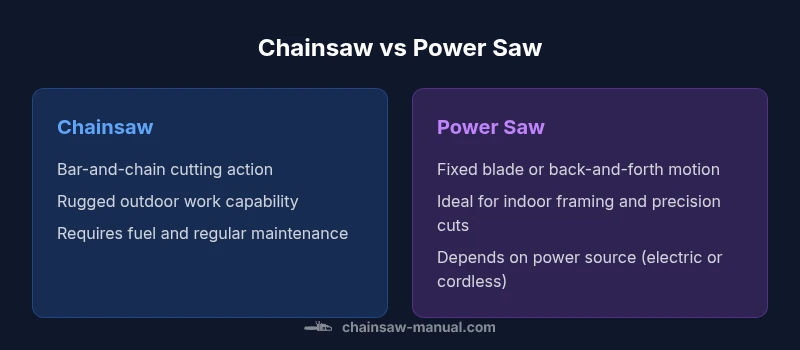
| Blade/chain configuration | Rotating chain on a long bar (bar-and-chain system) | Fixed blade or back-and-forth blade motion (circular/reciprocating blades) |
| Maintenance focus | Chain tensioning, bar lubrication, fuel handling | Blade sharpness, alignment, and motor maintenance |
| Best for | Outdoor heavy timber work and mobility | Indoor precision cuts and fast material removal |
Strengths
- Chainsaws deliver heavy-duty cutting power and outdoor versatility
- Power saws offer precision, control, and indoor usability
- Electric options reduce emissions and generally lower maintenance
- Gas chainsaws provide mobility without dependence on outlets
Drawbacks
- Chainsaws require more safety discipline and training
- Power saws may lack the raw timber-cutting power for big logs
- Gas chainsaws require fuel management and regular servicing
- Corded power saws limit movement due to wire length
Chainsaw for outdoor timber work; power saws for indoor precision tasks
If your workload centers on trees and rough wood, choose a chainsaw. For framing, trim, and precise cuts, a power saw is typically the better tool. Always prioritize safety and select blades appropriate for the job.
FAQ
What is the main difference between a chainsaw and a power saw?
A chainsaw uses a rotating chain on a bar for outdoor timber work, while a power saw is a broad term for handheld, powered saws (circular/reciprocating) designed for precise cuts in lumber and other materials.
A chainsaw uses a rotating chain for rough outdoor cuts, while a power saw covers blades like circular or reciprocating types for precise indoor work.
Are chainsaws safer than power saws?
Safety depends on use and training. Chainsaws have higher kickback risk and require more protective gear; power saws vary by type, but all require PPE and proper handling.
Safety depends on the task and training; chainsaws demand more protection due to kickback, while all power saws require proper PPE and careful handling.
Which typically costs more upfront and to operate?
Upfront costs vary by model and type. Gas chainsaws can be more expensive to maintain due to fuel and service needs; power saws vary with blade type and usage.
Gas chainsaws may cost more to maintain; power saws vary by blade and usage, with electric options often cheaper to run.
Can a power saw replace a chainsaw for all tasks?
Not really. For heavy outdoor timber work, a chainsaw is typically more efficient and powerful. Power saws excel in precise, indoor cuts and framing work.
No, not for all tasks. Chainsaws excel at outdoor timber, while power saws do fine indoor and precision work.
What maintenance is essential for both tools?
Keep blades sharp, maintain proper tension and lubrication, and inspect safety guards and cables. For chainsaws, regularly service the fuel system and chain; for power saws, monitor blade wear and motor health.
Keep blades sharp, check tension, and inspect safety parts; service fuel systems for chainsaws and monitor blade wear for power saws.
What should a beginner prioritize when buying?
Prioritize task fit, safety features, and ergonomics. Choose a tool with a blade compatible to common tasks you perform and ensure access to maintenance and spare parts.
Start with task fit and safety features; pick a tool with blades you’ll actually use and easy access to parts and service.
The Essentials
- Identify your primary tasks before choosing a tool
- Safety gear and training are essential for both tools
- Power sources influence mobility and maintenance needs
- Maintain blades, chains, and guards to extend tool life
- Choose specialized tools for optimal results