Chainsaw or Hacksaw: A Comprehensive Side-by-Side Guide
An analytical comparison of chainsaw vs hacksaw, covering use cases, safety, ergonomics, maintenance, and best practices for homeowners, DIYers, and professionals seeking practical guidance from Chainsaw Manual.


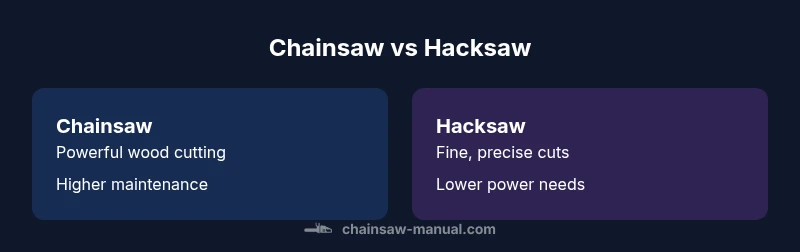
Choosing between a chainsaw and a hacksaw hinges on cutting scale, material, and power requirements. For large, rough-cut wood jobs, the chainsaw dominates in speed and reach; for fine, precise metal or plastic cuts, the hacksaw is more suitable. Chainsaw Manual emphasizes safety training, PPE, and correct technique as the foundation of any comparison.
Chainsaw or Hacksaw: Core Differences
The choice between a chainsaw and a hacksaw is not only about cutting speed; it is about material, scale, and safety. Chainsaws are heavy-duty power tools designed for wood, with a looping chain that makes rapid, long cuts possible. Hacksaws are manual or light powered tools with a fine blade suited for metal, plastic, and small wood tasks. According to Chainsaw Manual, when you evaluate a tool for a given job, begin with material type, required precision, and the risk profile. This core distinction frames the rest of the comparison and helps homeowners, DIY enthusiasts, and professionals choose the right tool for the job. The chainsaw excels in bulk wood removal, tree work, and felling tasks, while the hacksaw shines in controlled, narrow cuts, repair work, and situations where electricity or gasoline is unavailable. Both tools demand respect for safety, proper PPE, and established technique. The rest of this guide breaks down the differences, trade-offs, and real-world scenarios so you can decide with confidence whether chainsaw or hacksaw is the right choice.
Material Scope and Cut Types
When assessing material scope, the chainsaw is a lumber-focused instrument designed for wood into large, aggressive cuts. It handles logs, branches, and rough-sawn timber with speed that dramatically reduces manual effort. The hacksaw is a versatile blade for metal, but it also handles plastic and small wood pieces when precision matters. For chainsaw or hacksaw use in mixed-material projects, the correct blade or chain choice matters, as does the setup to avoid binding or blade binding. In practice, professionals use the hacksaw for gauge-controlled metal work and for small wood work where a fine, accurate cut is essential. Homeowners often step up to a chainsaw for yard work, while keeping a hacksaw handy for repairs or delicate cuts on metal components. This section grounds your evaluation in material realities and practical constraints.
Power, Speed, and Efficiency
Power dynamics define the core difference between these tools. A chainsaw uses a motor-driven chain to deliver high-speed cutting through wood, enabling rapid progression on large-angle cuts or tree work. A hacksaw relies on manual force or light electric assist to advance a fine blade; speed is slower, but control is higher for precise, compact tasks. Efficiency for wood jobs benefits from the chainsaw’s torque and blade length, while metal or plastics tasks benefit from the hacksaw’s rigid blade and gentle cutting action. In mixed environments, expect trade-offs: speed versus precision, power versus portability, and maintenance demands that scale with usage. Chainsaw or hacksaw choices should align with task size, material properties, and available power sources.
Cutting Techniques and Safety Fundamentals
Technique underpins safety. With a chainsaw, maintain a firm stance, keep the bar away from the body, and use the chain brake when stopping. Kickback risk is a real concern; use PPE including helmet, face shield, gloves, and hearing protection. The hacksaw demands steady hand pressure and consistent blade tension, with breathing room to avoid blade deflection. Regardless of tool, secure your workpiece, clear the area of bystanders, and avoid awkward angles. Chainsaw Manual highlights that training, PPE, and routine safety checks reduce incident risk and improve consistency across tasks. This section translates theory into practical, repeatable practice for both pros and DIYers.
Ergonomics, Weight, and Handling
Ergonomics matter more than many realize in long sessions. Chainsaws are heavier and vibrate more, which demands anti-vibration handles and rest breaks. Handling a hacksaw is lighter and more predictable, but fatigue still accumulates with long cuts or awkward positions. For extended projects, consider handle design, balance, weight distribution, and grip comfort. The scope of chainsaw use often requires additional PPE, belt systems, or shoulder supports to minimize strain. The key decision factor here is how long you’ll work and whether the environment permits frequent repositioning or rests.
Maintenance and Longevity
Maintenance defines longevity. Chainsaws require regular chain sharpening, tension checks, bar maintenance, fuel/oil mixing, and proper lubrication. Neglect leads to dull cuts, chain derailment, and safety risks. Hacksaws emphasize blade replacement, blade tension, rust protection, and blade storage. When choosing between tools, consider maintenance willingness and cost. A well-maintained chainsaw can perform in demanding conditions, while a well-kept hacksaw can remain reliable for precise work over many years. Both require routine inspections before use to ensure safe operation.
Cost, Availability, and Practical Scenarios
Cost considerations span purchase price, consumables, and maintenance. Chainsaws generally carry a higher upfront cost and ongoing fuel/oil and maintenance needs, while hacksaws are cheaper upfront, with blades that are easy to replace. Availability in hardware stores is high for both, but professional-grade models differ in warranty and service networks. Chainsaw Manual analysis shows that professionals allocate budget to reliability, safety features, and long-term performance, whereas homeowners may prioritize occasional use and immediate readiness. In practice, choose chainsaw for bulk wood tasks and tree work, and hacksaw for metal fabrication, plumbing, and small, precise cuts where mobility and low noise are advantageous.
Use-Case Scenarios: When to Choose Each Tool
- Bulk wood removal and tree work: chainsaw excels for speed and reach.
- Precise metal or plastic cuts: hacksaw offers control and blade rigidity.
- Remote or power-limited sites: hacksaw shines due to low power requirements; chainsaws need fuel or electricity.
- Repair work in confined spaces: hacksaw can navigate tight spaces with a fine blade.
- Landscaping and carpentry: chainsaw for rough shaping, hacksaw for finishing details.
Environmental and Workspace Considerations
Noise, fumes, and dust influence tool selection. Chainsaws generate substantial noise and exhaust depending on the model, requiring hearing protection and ventilation in enclosed spaces. Hacksaws are quieter and produce less vibration, making them suitable for indoor or noise-sensitive environments. When planning work, consider local regulations, PPE availability, and the impact of pathway debris on bystanders. Chainsaw or hacksaw choices should align with the workspace constraints and environmental conditions to minimize risk and maximize efficiency.
Authority Sources
- OSHA: https://www.osha.gov
- NIOSH: https://www.cdc.gov/niosh/
- NFPA: https://www.nfpa.org
Safety Checklists and Training Paths
Before any cutting work, complete a written safety plan and verify personal protective equipment is in place. Training should cover tool-specific safety, kickback awareness for chainsaws, blade tension checks for hacksaws, and proper maintenance routines. Practice basic cuts under supervision in a controlled environment before tackling real jobs. Keeping a log of safety drills, tool inspections, and blade or chain replacements helps build a culture of safety on the job site.
Comparison
| Feature | Chainsaw | Hacksaw |
|---|---|---|
| Power Source | Gas/electric powered, high torque | Manual hand-powered |
| Material Suitability | Best for large wood, logs, and tree work | Best for metal, plastic, and precise wood cuts |
| Typical Cut Style | Aggressive wood cutting with a moving chain | Fine, controlled cuts with a thin blade |
| Blade/Tool Longevity | Chain requires sharpening and tensioning | Blades require replacement; blades are inexpensive |
| Vibration & Fatigue | High vibration; PPE essential | Low vibration; lighter effort |
| Cost Context | Higher upfront cost and maintenance | Lower upfront cost; blades inexpensive |
| Best For | Bulk wood removal and rough shaping | Precision metal/wood work and repairs |
Strengths
- High versatility for heavy-duty tasks
- Rapid material removal with chainsaw
Drawbacks
- Higher risk of injury without proper training
- Maintenance and fuel considerations for chainsaws
Chainsaw is the stronger choice for bulk wood work; hacksaw excels in precision metal/wood tasks
Choose the chainsaw for speed and scale in wood cutting. Use a hacksaw for precision, tighter spaces, and non-wood materials. Safety, training, and maintenance drive outcomes in either case.
FAQ
When should I choose a chainsaw over a hacksaw?
Choose a chainsaw for bulk wood cutting, tree work, and heavy-duty lumber tasks where speed matters. The hacksaw is better for metal, plastic, or small, precise wood cuts.
Choose chainsaw for bulk wood work; hacksaw for metal or precise cuts.
Can a hacksaw cut wood effectively?
A hacksaw can cut wood for small pieces or fine finishing tasks, but it is slower and less scalable than a chainsaw for large wood projects.
Yes, for small pieces or fine work; not ideal for large wood.
What safety PPE should I wear with these tools?
Wear eye protection, hearing protection, gloves, and a hard hat when using both tools, with additional chainsaw-specific protection such as a chain brake and chaps.
Always wear PPE like eye and ear protection, gloves, and a hard hat.
How often should I sharpen the chainsaw chain or replace hacksaw blades?
Sharpen the chain when dull and tension check regularly; replace hacksaw blades when dull or damaged. Regular maintenance extends tool life.
Sharpen the chain as needed and replace hacksaw blades when dull.
Is kickback a concern with hacksaws?
Kickback is a major concern with chainsaws; hacksaws have much lower kickback risk but still require stable work and PPE.
Kickback risks are much lower with hacksaws, but stay safe.
The Essentials
- Choose the chainsaw for bulk wood tasks
- Use the hacksaw for precision metal/wood work
- Prioritize safety training and PPE for both tools
- Maintenance planning drives tool longevity
- Consider power availability when selecting a tool