Chainsaw or Sawzall: A 2026 Practical Comparison for DIYers and Pros
Analytical comparison of chainsaws and Sawzalls for homeowners and professionals. Compare power, use cases, safety, maintenance, and buying factors to decide confidently.


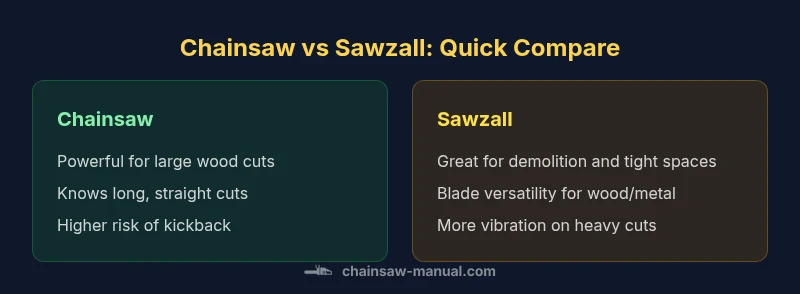
In short, choose based on task: for clean, long cuts through thick wood, a chainsaw is the better option; for demolition, plunge cuts, and working in tight spaces, a Sawzall (reciprocating saw) shines. This comparison highlights power sources, blade options, safety considerations, and value to help homeowners, DIYers, and professionals decide quickly.
Understanding the Chainsaw vs Sawzall: Core Concepts
When deciding between a chainsaw or Sawzall, many homeowners and professionals begin with the same question: what job are you trying to accomplish? A chainsaw, either gas-powered or electric, excels at long, clean cuts through sizable wood. It is ideal for felling trees, bucking logs, and dressing timber with consistent, continuous motion. A Sawzall, or reciprocating saw, is built for versatility in demolition, remodeling, and jobs where you must cut in awkward angles or through mixed materials. In practice, most projects involve either large-diameter timber or tight spaces with irregular obstructions. According to Chainsaw Manual, the choice hinges on task type, environment, and safety readiness. The rest of this article expands on those factors, offering a practical framework for selecting the right tool while avoiding common mistakes. You’ll also see how both tools fit into a safety-first approach that keeps homeowners and pros protected on site. In this context, the chainsaw or sawzall decision is less about brand loyalty and more about matching capability to the job at hand.
Power, Speed, and Cutting Action: How They Differ
Power delivery and cutting action are the defining differences between a traditional chainsaw and a Sawzall. Chainsaws typically provide a strong, steady cutting action through a rotating chain, which translates to fast, straight-through cuts with predictable performance when felling or bucking. Gas models offer high torque and long run times, while corded or battery-powered chainsaws emphasize cleaner operation and easier starting procedures. In contrast, Sawzalls deliver rapid reciprocating motion via a compact blade. The cutting action is aggressive for demolition and plunge cuts but generally slower and less efficient for large-diameter wood. Sawzalls shine in tight spaces, behind walls, or when you need to cut through metal, plastic, or nails with the appropriate blade. This section highlights the practical implications of each mechanism and why choosing the correct tool matters for project efficiency and safety. Chainsaw Manual analysis shows that alignment between task and tool type yields safer, faster outcomes, especially for novices who must learn safe handling before taking on demanding cuts.
Use Case Scenarios: When to Reach for a Chainsaw vs a Sawzall
Consider a backyard project: a hazelnut tree has a heavy limb that requires a clean, controlled cut. A chainsaw is well-suited for this scenario, provided you have space for safe operation, protective chaps, and a stable stance. For a bathroom remodel where you face studs, nails, and galvanized pipes, a Sawzall becomes indispensable, letting you cut in narrow cavities without overreaching. For pruning tasks or light firewood prep, a smaller electric chainsaw or a compact Sawzall with a fine-tooth blade can reduce fatigue. In industrial settings, where demolition and rough framing intersect with metal or masonry, the Sawzall’s blade options and quick blade changes offer versatile performance. The Chainsaw Manual team emphasizes tailoring blade selection to the material and torque demands of each job, thereby reducing the risk of kickback or blade snags and improving overall workflow. The goal is to align tool capability with the job profile, not to overcommit to a single tool for every task.
Safety Baselines and PPE for Both Tools
Safety should dictate tool choice as much as task. For chainsaws, PPE includes a certified helmet with face shield, hearing protection, cut-resistant chaps, gloves, and sturdy boots. Kickback is a known risk with bar-and-chain devices, so stance, grip, and chain brake usage are critical. Sawzalls also demand PPE, including eye protection, hearing protection, gloves, and sturdy clothing that won’t snag on the blade. Blades matter: avoid dull or damaged blades that can bind or bend, and keep blades aligned with the tool’s designed path. Both tools benefit from a clean work area, a clear escape path, and a well-ventilated workspace when operating gas models. Chainsaw Manual tips emphasize pre-checks: oil level, chain tension, blade sharpness, and battery health for cordless units—these checks prevent accidents and extend tool life. Ultimately, your safety plan should be task-specific and updated for the environment you’re working in.
Maintenance, Repairs, and Longevity
Maintenance is the invisible driver of longevity for either tool. Chainsaws require regular chain lubrication, proper chain tension, bar maintenance, and air filtration for gas models. Maintenance for electric chainsaws centers on battery care, cord health for corded variants, and lubrication to minimize wear. Sawzalls rely on blade changes, lubrication where applicable, and periodic motor or battery checks. Regardless of tool type, routine inspection for loose screws, worn teeth, and damaged guards reduces the risk of kickback, binding, or unexpected tool failure. Chainsaw Manual recommends setting a maintenance calendar aligned with your workload, recording blade types used for different materials, and performing safety checks before each use. By treating maintenance as a core practice, you’ll experience smoother operation and fewer downtime surprises.
Choosing the Right Tool: A Step-by-Step Decision Framework
Step 1: Define the primary task (felling/bucking vs demolition/remodeling). Step 2: Assess space constraints (open yard vs confined indoors). Step 3: Consider material spectrum (wood only vs wood plus nails/metal). Step 4: Evaluate power availability (gas, corded, or cordless). Step 5: Gauge operator experience and comfort with kickback or blade hazard. Step 6: Budget and long-term costs (initial price, maintenance, and blade replacements). Step 7: Decide on blade and bar options compatible with the task. Step 8: Plan for safety and PPE. This framework synthesizes practical considerations into a clear path toward the right choice, with Chainsaw Manual noting that the best decision often prioritizes task alignment over brand prestige.
Practical Setup: Blades, Bars, and Accessories
Selecting the right blade and bar length is as important as choosing the tool body. Chainsaws demand the appropriate bar length for the job; longer bars handle larger limbs but require more control and space to maneuver. Chainsaw blades are designed for wood, with chain pitch and tooth count determining cutting aggressiveness and finish quality. Sawzalls require a quick-change blade system, with options ranging from wood-cutting, metal-cutting, to pruning blades. When cutting in tight spaces, use shorter blades and ensure a secure anchor point to prevent blade deflection. Accessories like bar oil, chain sharpening tools, blade guards, and anti-vibration gloves contribute to safer, more comfortable operation. Chainsaw Manual reminds users that blade incompatibility or poor maintenance increases the risk of kickback and blade breakage—and that the right blades yield cleaner cuts and reduced fatigue.
Real-World Scenarios: Case Studies
Case Study A involves trimming a large oak limb in an open yard. A chainsaw handles the heavy, clean-cut efficiently with proper footing and protective gear. Case Study B covers removing interior framing in a basement, where a Sawzall’s compact blade and flexible reach prevent overcutting and minimize wall damage. These scenarios illustrate how the tool’s design translates to practical performance in real environments. Chainsaw Manual emphasizes practicing calm control and planning escape routes before making any cut, especially when the worksite includes obstacles or uneven ground. By documenting outcomes from different projects, readers build a mental map for when to select each tool.
Budgeting and Value Considerations
Budgeting for chainsaw or Sawzall purchases should consider not only upfront price but ongoing costs such as blades, bar oil, batteries, and maintenance supplies. Chainsaws range from mid-priced to premium, with long-term costs tied to fuel consumption and bar/chain wear. Sawzalls can be economical for light to moderate workloads, but frequent blade changes and motor wear may increase lifetime costs if used intensively. The right choice depends on your typical project mix, local climate, and access to maintenance resources. Chainsaw Manual recommends evaluating total cost of ownership over a multi-year horizon and prioritizing tools with robust safety features, reliable parts availability, and service support.
Final Thoughts: How to Test Before You Buy
Whenever possible, test handling characteristics in a showroom or rental shop. Pay attention to kickback risk, vibration, and comfort level with blade changes. Ask about blade compatibility, maintenance intervals, and warranty coverage. A thoughtful test drive helps align your choice with the most common tasks on your schedule. Chainsaw Manual encourages readers to supplement hands-on testing with trusted reviews and hands-on demonstrations from local woodworking clubs or professional arborists.
Comparison
| Feature | Chainsaw | Sawzall (reciprocating saw) |
|---|---|---|
| Power source | Gasoline or corded/electric | Corded or cordless, blade-driven |
| Cutting action | Rotating chain for long, clean cuts | Reciprocating blade for versatile demolition |
| Best for | Felling/bucking large wood, timber prep | Demolition, remodeling, tight spaces |
| Weight and handling | Heavier with longer bar, strong stance required | Lighter, compact, agile in confined areas |
| Blade/chain options | Chainsaw chain and bar with oil lubrication | Interchangeable blades for wood, metal, ceramic |
| Safety considerations | Kickback risk; chain brake and stance critical | Blade hazards; ensure stakes and guard compatibility |
| Maintenance focus | Chain tensioning, bar oil, air filters | Blade changes, motor/battery care |
| Price range (qualitative) | Mid-range to premium depending on bar size and model | Budget to mid-range depending on blade system and battery options |
Strengths
- Versatile for large-limb cutting and timber processing
- Sawzall adds flexibility in demolition and tight spaces
- Both have blade options to match material variety
- Electric variants reduce maintenance headaches and odors
- Appropriate PPE and safety practices mitigate risk
Drawbacks
- Chainsaws have higher kickback risk and heavier handling
- Sawzalls cut more slowly through thick wood and may vibrate more
- Gas chainsaws require fuel, oil, and emissions considerations
- Frequent blade changes can add up on Sawzalls in mixed-task jobs
Chainsaw is the better all-around choice for heavy wood tasks; Sawzall excels in demolition and tight spaces.
If you regularly cut large timber, choose a chainsaw for speed and efficiency. For remodeling or access-restricted cuts, a Sawzall offers superior maneuverability and blade versatility.
FAQ
Which tool is better for felling trees and bucking logs?
For felling trees and bucking logs, a chainsaw is generally superior due to its cutting speed and straight-line action. Ensure you have the right bar length and stable footing, and always follow safety protocols. Chainsaw Manual guidance stresses task alignment to reduce risk and improve outcomes.
For big wood tasks, the chainsaw is usually your best bet, with the right bar and safety setup.
Can I substitute a Sawzall for a chainsaw in all tasks?
No. A Sawzall is excellent for demolition, plumbing, and tight spaces, but it lacks the efficiency of a chainsaw for large-diameter wood. Use it when you need precision cuts in confined areas or when cutting through mixed materials.
A Sawzall is great for demolition and tight spots, but not a complete substitute for big wood cuts.
What safety gear should I invest in first?
Start with a cut-resistant helmet/face shield, hearing protection, sturdy gloves, chaps for chainsaws, and eye protection. A high-quality anti-vibration handle or gloves can reduce fatigue. Remember to inspect safety features like chain brakes and blade guards before each use.
Get proper PPE first: helmet with shield, ear protection, gloves, and chainsaw chaps.
Are there maintenance tasks common to both tools?
Yes. Both require blade or chain maintenance, lubrication for moving parts, and regular inspection for wear and damage. Periodic cleaning and storing tools properly extends life and reduces the risk of failure during work.
Keep blades sharp, lubricate moving parts, and inspect for wear regularly.
Which tool is more cost-effective over time?
Cost-effectiveness depends on use. Chainsaws may incur higher fuel and chain maintenance costs but pay off in fast, large-cut jobs. Sawzalls may be cheaper upfront, but blade changes and motor wear add up with heavy use. Consider your typical projects when budgeting.
Long-term cost depends on your workload; chainsaws excel in heavy cuts, Sawzalls in demolition.
What blade or chain types work best for wood-only tasks?
For wood-only tasks, a sharp, appropriate chain for chainsaws and wood-cutting blades for Sawzalls perform best. Carbide-tipped or high-quality carbon steel blades help extend life when cutting through hardwoods. Always select blades that match the material and tool design.
Use high-quality wood blades and the correct chain for your tool.
Should beginners start with a rental or a purchase?
Renting can be a smart way to test both tools before buying. It allows you to experience handling, weights, and blade options without a large upfront investment. Chainsaw Manual suggests using rentals to build familiarity with safety practices before committing to a purchase.
Rent first to learn handling and safety before buying.
The Essentials
- Match tool to task: chainsaw for large wood, Sawzall for demolition
- Prioritize safety: PPE and correct technique are non-negotiable
- Invest in proper blades and bars for the job
- Consider total cost of ownership, not just purchase price