Chainsaw vs Hacksaw: A Practical Comparison Guide
An analytical, side-by-side comparison of chainsaw versus hacksaw, covering wood vs metal cutting, safety, maintenance, costs, and real-world use cases for homeowners and professionals.


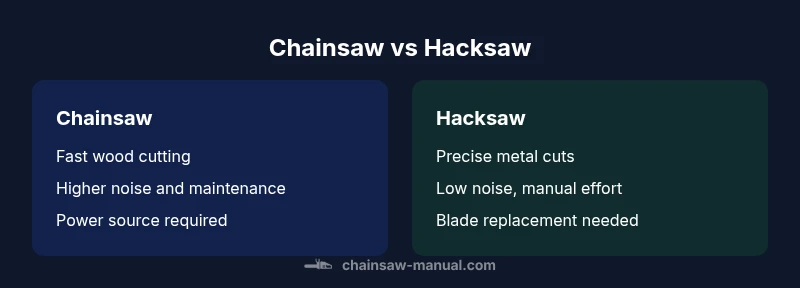
Chainsaw vs hacksaw: In most cutting tasks, the chainsaw dramatically outperforms a hacksaw for wood due to speed, capacity, and force. But a hacksaw excels in metal, plastics, and precise, small-scale cuts where a chainsaw would be unsafe or overkill. The best choice depends on material, cut size, and safety context.
Chainsaw vs Hacksaw: Core Differences
In the world of handheld cutting tools, chainsaw vs hacksaw represent two very different classes of equipment. The chainsaw is a power tool driven by an internal combustion engine (or electric motor) that drives a sharp, looping chain along a long bar. The hacksaw is a manual hand tool that uses a thin, replaceable blade held in a rigid frame. The practical implication is straightforward: the chainsaw delivers high-speed, high-torque wood cutting with limited precision and greater risk, while a hacksaw provides fine, controlled cuts on metal or plastic with minimal noise and power requirements. According to Chainsaw Manual, understanding these core differences helps homeowners and professionals choose safely and effectively. This initial distinction sets the stage for a deeper look at when each tool shines, and where each tool falls short.
In this guide, we’ll examine how material type, cut scale, and safety considerations drive the decision between chainsaw vs hacksaw, and how to align tool choice with task requirements.
Comparison
| Feature | Chainsaw | Hacksaw |
|---|---|---|
| Best for | Rapid lumber removal, framing, and large-diameter wood cuts | Metal, tubing, plastic, and precise small cuts |
| Cut speed | Very high in wood when fed properly and with appropriate bar length | Moderate and highly dependent on blade type and material |
| Material compatibility | Wood and engineered lumber; minimal use on metals without complex setups | Metal, some plastics, and thin-walled components; blades designed for metal work |
| Ergonomics/Portability | Heavy, loud, requires fuel or a power source; longer reach | Lightweight hand tool; highly portable; no fuel or outlet required |
| Maintenance | Chain lubrication, bar maintenance, fuel/oil management | Blade replacement, rust prevention, occasional alignment checks |
| Cost and replacement | Higher upfront (tool plus fuel/oil) with ongoing maintenance | Low upfront; blades are affordable but must be replaced as worn |
| Safety concerns | Kickback risk; requires training, PPE, and safe handling space | Lower kickback risk; exposure is limited to blade path; PPE recommended |
Strengths
- Chainsaw enables rapid wood cutting and large-volume work
- Hacksaw provides precise metal and small-cut accuracy
- Low initial cost and minimal setup for basic hacksaw tasks
- Chainsaw offers powerful performance in outdoor, vented environments
Drawbacks
- Chainsaw requires fuel, maintenance, and stronger safety controls
- Hacksaw is slow for wood and not suitable for heavy lumber tasks
Chainsaw wins for wood; hacksaw wins for metal and precision
Choose a chainsaw when working with lumber and large cuts; choose a hacksaw for metal, tubes, or tightly controlled, small-scale work. Safety and material compatibility should drive the final decision.
FAQ
When is a hacksaw a better substitute for a chainsaw?
A hacksaw is a better substitute when you’re dealing with metal, small-diameter cuts, or situations where noise, fumes, or mobility are concerns. For most wood cuts, a hacksaw will be impractical due to slower progress. The choice depends on material and scale.
Use a hacksaw for metal and small, precise cuts; a chainsaw is preferred for wood and larger tasks.
Can a hacksaw cut through wood at all?
Hacksaws can cut softwood or thin wooden components if the blade is suitable and the cut is light. However, the process is slow and requires careful stabilization and perpendicular guidance.
Yes, but only for light wood work; it’s not efficient for thick lumber.
Is it safe to use a chainsaw indoors or in tight spaces?
Using a chainsaw indoors or in tight spaces is generally unsafe due to kickback, fumes, and restricted maneuverability. If indoor work is unavoidable, opt for a compact, electric tool with proper ventilation and PPE.
Indoor use is risky; prefer safer, smaller tools and ventilation.
What maintenance does each tool require?
A chainsaw requires regular bar and chain lubrication, chain sharpening, and fuel/oil management. A hacksaw needs blade replacement when dull and occasional blade alignment checks; keep blades dry to avoid rust.
Chainsaws need chain care; hacksaws need blade replacement and rust prevention.
Are there safer alternatives if power isn’t available?
If power isn’t available, a manual handsaw or bow saw can offer mobile, non-powered options for wood. For metal, handheld coping saws are possible but slow; plan for proper support and stable workholding.
Manual saws are an option when power isn’t an option, but expect slower progress.
How do I decide quickly between these tools for a DIY project?
Identify the material first, then estimate cut scale. If material is wood and volume is high, choose a chainsaw. If material is metal or you need precision, choose a hacksaw. Consider space, noise, and safety constraints.
Material first, then scale and safety to choose quickly.
The Essentials
- Assess material first: wood favors chainsaws, metal favors hacksaws
- Factor safety, noise, and space requirements into your choice
- Consider maintenance needs and total cost of ownership
- Always use appropriate PPE and follow manufacturer guidance