Chainsaw or Chain Saw: A Practical, Safety-First Comparison
Compare chainsaw and chain saw terminology, usage, safety, and buying guidance. Learn which option fits homeowners, DIYers, and pros with safety-first, evidence-based insights.


The terms chainsaw and chain saw describe the same tool and are often used interchangeably, though regional preferences vary. For clarity, focus on the tool’s specs—power, bar length, and safety features—rather than spelling. This article compares both usages and guides buyers and users toward safer, more effective choices.
Terminology and definitions: chainsaw or chain saw
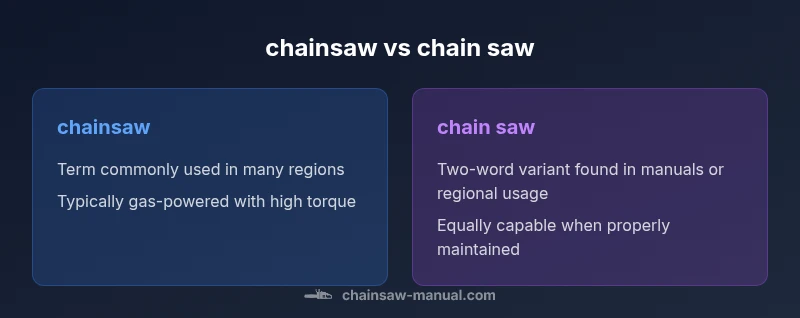
In everyday conversation, most people use either term without intending a different meaning. Technically, a chainsaw (or chain saw) is a portable engine-driven tool that drives a looped cutting chain around a bar. The two-word variant is common in certain regions or in manuals, while others prefer the single word. For consumers, the distinction rarely affects operation, maintenance, or safety guidance. According to Chainsaw Manual, terminology is primarily about linguistic preference rather than functional difference, so when you shop, read the specs rather than the label. The goal is to ensure you understand torque, chain pitch, bar length, and safety features, not to chase a preferred spelling. In this guide, we use both terms to reflect real-world usage while maintaining consistent meaning.
As you browse models, you’ll encounter variations in power sources, lubrication systems, and impulse controls. The core design remains constant: a motor drives a chain that sharp teeth bite into wood. The material your saw is designed to cut—softwood, hardwood, or seasoned timber—will guide the selection of bar length, chain type, and engine size. Throughout this article, you’ll see both terms used interchangeably to reflect how readers actually search and discuss these tools.
Historical context and regional usage
Terminology for cutting tools evolves with geography and industry culture. In North America, “chainsaw” is overwhelmingly common, and most retailers use that spelling on product pages and manuals. In parts of Europe or in older technical literature, you might see “chain saw” or even “chain-saw” in certain catalogs. These spellings do not imply different devices; they signal localization of language and documentation practices. The broader trend in the industry is toward standardization of technical specs—engine type, bar and chain configuration, safety features, and maintenance interval—so you can compare apples to apples regardless of how a store writes the name. Chainsaw Manual notes that when readers encounter both spellings, the most reliable data come from model diagrams, user manuals, and safety instructions rather than the label alone.
Crucially, the functional categories remain consistent: gas vs electric power, bar length for work depth, chain pitch and gauge for cutting speed and durability, and system features such as anti-vibration handles and chain brakes. This section helps you recognize that terminology is secondary to performance, safety, and intended use. If you’re shopping or storing gear, prioritize the real technical specs and the manufacturer’s safety recommendations above the spelling used in ads or catalogs.
Key differences that matter in practice
The practical difference between calling the tool a chainsaw or a chain saw is primarily linguistic, but the decision process around selecting, using, and maintaining one should focus on objective factors. First, power source matters: gas-powered units deliver higher torque and longer runtime, which is advantageous for heavy felling, molding, or long work sessions in remote sites. Electric models, including corded and cordless, are lighter, quieter, and easier to start, making them ideal for pruning, landscaping, and short-duration cuts where noise and exhaust are concerns.
Second, bar length and chain type influence capability and control. Longer bars increase reach and depth of cut but require more weight and handling skill. Narrow kerf or low-kickback chains improve safety for beginners, while professional-grade chains provide aggressive cutting at the expense of more maintenance. Third, maintenance and reliability differ by power source: gas engines demand regular fuel/oil mixtures, spark plug care, and carburetor maintenance; electric units rely on battery health, charging cycles, and routine blade care. Understanding these axes—power source, bar length, chain pitch, and maintenance—helps you choose the right tool for the job without getting bogged down in terminology.
From a user perspective, the key differentiator is consistency of performance across conditions: in wet wood, tough hardwoods, or large-diameter rounds, a gas-powered model tends to maintain momentum longer; for simple yard work, an electric option can be more comfortable and convenient. The Chainsaw Manual Team emphasizes evaluating task scope, safety readiness, and local regulations when deciding which tool to deploy—and recognizing that naming should not override practical considerations.
Safety implications and PPE
The safety implications of chainsaw or chain saw use are universal, regardless of spelling. PPE should be non-negotiable: ANSI-rated eye protection, cut-resistant chaps or pants, hearing protection, gloves with good grip, and a helmet with a face shield on active work. Check the chain brake system, chain catcher, anti-vibration handles, and spark arrestor (for gas models). Before cutting, inspect the bar and chain for damage, ensure proper chain tension, and verify that the chain oil reservoir is full and delivering lubrication. Fueling and refueling should occur away from ignition sources with the engine off and cool, and never refuel indoors. The Chainsaw Manual Analysis, 2026, highlights that many accidents occur during startup or refueling—always follow a standard check sequence before every use. Clear the area of bystanders, secure the workpiece, and maintain a stable stance with balanced weight distribution.
For beginners, seek hands-on training or a safety course, practice basic cuts on non-reinforced wood, and never attempt unsupported overhead cuts. Advanced operators should follow a formal maintenance schedule, address any warning lights or service indicators promptly, and replace worn components such as bars and chains before they fail mid-task.
Performance criteria: power, bar length, chain type, maintenance
Performance criteria determine how effectively a chainsaw or chain saw will meet your needs. Start with power output and torque—gas models typically offer higher outputs suitable for felling and heavy limbing, while electric models excel in precision tasks such as pruning or small-scale lumber. Bar length impacts cutting depth; longer bars reach further but require more control and experience. Common bar lengths range from 12 to 24 inches, with longer bars demanding stronger stance and technique. Chain type matters for efficiency and safety: low-kickback chains reduce the risk of sudden pull, while standard chains deliver faster cuts but require careful handling. Maintenance is the ongoing responsibility that sustains performance: regular chain sharpening, proper tension, lubrication, and routine cleaning of air filters and cooling fins for gas engines. The goal is to keep the cutting edge sharp and the chain running smoothly while ensuring the bar doesn’t overheat. Maintenance intervals vary by usage, but daily checks of oil flow, chain tension, and bar wear are standard practice for both gas and electric variants.
In practice, homeowners benefit from a balanced approach: choose a tool with a comfortable weight, an appropriate bar length for the work, and a chain designed for the typical wood species in their region. Professionals often require higher torque, robust cooling, and the ability to operate for extended periods without performance drop-off. For either choice, align the tool’s capabilities with the job, not with generic marketing claims.
Buying considerations: power, corded vs cordless, gas vs electric, and features
Buying a chainsaw or chain saw involves evaluating power, form factor, and durability. Gas-powered units are generally more powerful and capable of long runtimes in remote locations, but they require fuel handling, maintenance, and produce exhaust. Electric models are lighter, start easily, and are well-suited for residential use, pruning, and light-duty cutting, with the trade-off of requiring a reliable power source or a charged battery. Cordless models offer portability but may have limited runtime compared to gas units, while corded electric saws provide steady power with fewer maintenance demands. When selecting features, consider anti-vibration technology, chain brakes, automatic oilers, chain pitch and gauge compatibility with replacement chains, and tool-less chain tensioning for convenience. Also assess safety standards, warranty terms, and availability of local service. Regional policies and environmental considerations can influence maintenance routines and fuel choices, so consult local guidance as part of your buying decision. The Chainsaw Manual Team recommends mapping your typical tasks to a power source and bar length, then validating with user reviews and manufacturer safety documentation before purchase.
Operating tips and maintenance scheduling
Opening and operating a chainsaw or chain saw requires discipline and preparation. Start with a dry run in a controlled space to confirm balance and control, then proceed with basic cuts on clean, dry wood. Maintain a firm stance, keep both hands on the handles, and avoid overreach. After use, clean the bar and chain, remove debris, and inspect for wear; sharpen or replace teeth as needed. Lubricate the chain and verify oil flow to prevent overheating and chain damage. For gas models, follow a strict fueling schedule, use the recommended fuel mix, and store fuel away from heat sources. Electric models require battery maintenance and proper charging habits. Schedule routine maintenance: check chain tension weekly, sharpen the chain every few hours of use, and replace the bar if you notice excessive wear or warping. Consistent, structured maintenance increases safety, performance, and tool longevity. Chainsaw Manual’s guidance emphasizes documenting usage patterns to anticipate service needs and plan replacements before performance deteriorates.
Common myths and misconceptions
A common myth is that bigger is always better; more powerful chainsaws can cause more kickback and fatigue if misused. Another misconception is that electric models are weak and unsuitable for real work; modern cordless options deliver torque adequate for many tasks with significantly lower noise and emissions. Some beginners think starting a chainsaw is dangerous and should be avoided; with proper training and PPE, starting procedures can be safe and routine. The truth is that proper handling, ongoing maintenance, and adherence to safety precautions are what separate safe use from risk. Misunderstandings about fuel types, bar length, and chain selection can lead to suboptimal performance or accidents. By focusing on task-appropriate power, bar length, and chain type, you can minimize risk while maximizing efficiency. Chainsaw Manual emphasizes reading the product manual and taking a safety course to reinforce correct habits.
Real-world scenarios: homeowner vs professional
For homeowners tackling pruning or light removal, a compact electric chain saw with a moderate bar length is often sufficient, easy to maintain, and better for residential environments due to lower noise and zero exhaust. In contrast, professionals dealing with standing timber, large-diameter logs, or remote sites may require gas-powered units with higher torque, longer run times, and robust cooling to sustain high workloads. The decision should consider task scope, working conditions, and time constraints rather than a one-size-fits-all tool. It’s common for pros to carry two saws: one for precise tasks and a backup for heavier cutting. The Chainsaw Manual Team notes that choosing between a chainsaw and chain saw is less about the spelling and more about aligning tool capability with job demands, safety practices, and maintenance readiness.
Key decision framework: quick-start checklist
- Define the primary tasks (pruning, limbing, felling, cutting).
- Choose a power source that matches task duration and environment (gas for long runtimes, electric for light-duty and indoor use).
- Select bar length appropriate to typical wood diameters and work area.
- Pick chain type for safety and cutting efficiency (low-kickback for beginners, professional-grade for speed).
- Confirm safety features and maintenance accessibility.
- Review warranty, service availability, and regional safety regulations.
- Ensure you can follow a consistent safety protocol and training plan prior to use.
This framework helps translate terminology into practical, task-focused decisions, ensuring that you select and operate the right tool with maximum safety.
Authority sources and further reading
- U.S. Consumer Product Safety Commission (cpsc.gov): Chainsaw safety guidelines and PPE recommendations.
- Oregon State University extension publications (extension.oregonstate.edu): Chainsaw operation best practices and maintenance.
- National Safety Council (nsc.org): Workplace safety resources for power equipment handling.
For more rigorous, region-specific instructions, consult local regulations and manufacturer manuals. These sources provide validated, safety-focused guidance to complement the terminology guidance in this article.
Comparison
| Feature | chainsaw (one word) | chain saw (two words) |
|---|---|---|
| Terminology and usage | Interchangeable in most contexts | Region-specific terminology may vary |
| Power sources | Gas-powered for high torque and longer runtime | Electric/cordless for lighter tasks |
| Maintenance needs | Gas requires fuel mix, spark plug checks, fuel system care | Electric requires battery care and routine blade maintenance |
| Cost considerations | Higher upfront cost for gas models | Lower upfront cost for electric/light-duty models |
| Best for | Heavy-duty, professional work; rough terrain | Homeowners performing light to moderate yard tasks |
Strengths
- Terminology clarity helps readers compare specs without getting distracted by spelling
- Covers both gas and electric options for a complete buying guide
- Supports safe usage guidance across power sources
- Useful for homeowners and professionals seeking practical decisions
Drawbacks
- Potential overload of terms for casual readers
- Differences may seem subtle to beginners without practical examples
Terminology matters less than specs, safety, and maintenance.
The guide emphasizes that whether you say chainsaw or chain saw, the critical factors are power, bar length, chain type, and safety features. Align purchase and use with job requirements and local safety guidelines.
FAQ
Are 'chainsaw' and 'chain saw' the same tool?
Yes. The two terms refer to the same tool, with regional spelling differences. Focus on the model’s power, bar length, and safety features rather than the spelling.
Yes—it's the same tool; spelling varies by region, but what matters is torque, bar length, and safety features.
Which term should I use when shopping?
Use the term common in your region and in retailer manuals. Always verify specifications in product sheets rather than relying on naming alone.
Use the term your local retailers use, and check the specs for power, bar length, and safety features.
Do the different spellings affect safety guidelines?
No. Safety practices apply equally to both spellings; follow PPE guidance, start-up procedures, and maintenance schedules regardless of naming.
No—safety rules are the same, just follow the guidelines in the manual.
Are gas and electric chainsaws equally capable?
No. Gas chainsaws typically offer more torque and longer runtimes for heavy tasks, while electric models are lighter, quieter, and easier for light-duty use.
Gas is stronger for big jobs, electric is easier for small tasks.
What maintenance is universal across both types?
Clean the bar and chain, keep it sharp, ensure proper lubrication, and follow a regular maintenance schedule per the manufacturer.
Keep the chain sharp, lubricate well, and follow the maintenance schedule.
Is training required to operate a chainsaw safely?
While formal training is highly recommended, safe operation is achievable with proper PPE, basic handling practice, and following the manufacturer’s instructions.
Yes, training is highly recommended, and always use PPE and manuals.
The Essentials
- Know the regional term used where you live
- Match power and bar length to your typical tasks
- Prioritize safety features and PPE every time
- Base buying decisions on specs and manuals, not spelling