Will a Chainsaw Work Without Oil? A Practical Troubleshooting Guide
A safety-first guide from Chainsaw Manual explaining why bar oil matters, how to diagnose lubrication issues, and actionable fixes to prevent damage and extend saw life.


Refilling bar oil is the immediate fix. The quickest fix is to check the oil level, then verify the oil pump and line are delivering oil to the bar. If there’s no spray, clean the pump and passages, or replace faulty seals. Never run the saw without adequate lubrication; it causes rapid wear and possible safety hazards.
Why oil lubrication matters for chainsaws
Bar oil is not a luxury feature; it is a critical part of safe, efficient chainsaw operation. Proper lubrication reduces friction, cooling the chain and bar while protecting the drive sprocket, bar groove, and chain teeth from excessive wear. When oil fails to reach the bar, heat builds quickly, cutting efficiency drops, and the risk of a seizure or kickback increases. For homeowners, DIY enthusiasts, and pros, understanding how the lubrication system works helps you diagnose issues fast and keep your saw performing at its best. According to Chainsaw Manual, consistent lubrication is a foundational safety practice that protects your investment and minimizes downtime.
In most saws, the oil pump pumps bar oil from a reservoir through channels to the bar and chain. If the reservoir is low, the pump is faulty, or the lines are kinked or clogged, oil won’t reach the bar. Small leaks, expired oil, or improper storage can also affect delivery. Knowing this helps you prioritize the most likely causes first and avoid unnecessary repairs.
Symptoms of oil-lubrication problems
Look for clear signs that the lubrication system isn’t delivering oil properly. Common indicators include excessive chain heat and smoking during use, a dry or squealing chain, dull cutting performance, and a visibly dry bar groove after a few minutes of cutting. Other hints are a lack of scent from the oil when the saw is running, or oil pooling in the clutch cover rather than at the bar. These symptoms should trigger a structured check of level, pump, and lines before you assume a bigger mechanical fault. Chainsaw Manual notes that catching lubrication issues early prevents expensive damage and extends tool life.
If you notice inconsistent spraying (sometimes oil, sometimes none), this could point to air in the line or a partially clogged outlet. In any case, don’t ignore the issue—oil is essential for heat management and blade longevity.
Quick diagnostic checklist
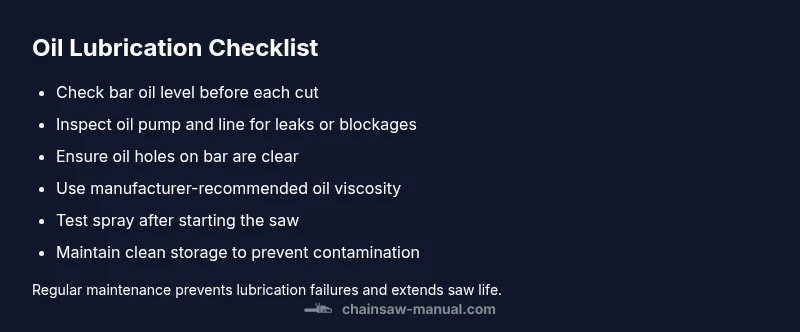
- Check bar oil level in the reservoir and top off with the correct oil type. Ensure the cap vents are not blocked.
- Inspect the oil cap for proper venting; a blocked vent can prevent oil from flowing.
- Look for leaks around the pump housing or hoses; tighten connections if needed.
- Inspect the oil line for kinks, cracks, or clogs; clear obstructions with a thin wire.
- Check the bar groove and oil holes on the bar; clean debris that could block oil distribution.
- Test oil spray by gently revving the saw and watching for a visible oil mist on the bar. If there’s no spray, proceed to deeper diagnostics.
Diagnostic flow: symptom → diagnosis → solution
- Symptom: No oil spray or sporadic spray at the bar.
- Diagnosis: Oil reservoir or vent issue, or pump/line blockage.
- Solution: Refill and vent; inspect and clean pump and line.
- Symptom: Bar and chain run dry despite full reservoir.
- Diagnosis: Clogged oil passages or faulty pump.
- Solution: Clean passages, replace seals or pump if needed.
- Symptom: Oil leaks from clutch cover or line shows cracks.
- Diagnosis: Damaged hose or seal.
- Solution: Replace hose/seal and check fittings.
- Symptom: Oil level ok, but oil doesn’t reach the bar consistently.
- Diagnosis: Air in the system or pump misalignment.
- Solution: Bleed air, reseat pump, or service pump alignment.
If the issue persists after these steps, consult a professional technician. Chainsaw Manual emphasizes that consistent lubrication is a safety and performance prerequisite; pursuing professional service early prevents more serious damage.
Step-by-step: fix for the most common cause
- Safety first: disconnect spark plug boot, wear gloves and eye protection, and work on a cool saw.
- Refill bar oil to the manufacturer’s recommended level using clean, compatible oil.
- Inspect the oil pump cover and lines for loose fittings, cracks, or signs of wear; reseat or tighten as needed.
- Clean oil passages and nozzle: remove any sawdust or debris blocking oil flow with a thin wire; avoid forcing material through small lines.
- Check the bar and chain: ensure the oil holes in the bar are clear; replace the bar if grooves are worn or damaged.
- Reassemble, prime lightly, and start the saw at a low throttle to verify oil spray. If the spray remains weak, proceed to pump/line replacement.
Tip: Always use oil designed for chainsaws, and follow your manual’s viscosity guidance. If you still don’t get oil spray after these steps, it’s time to check the pump seals or replace the pump.
Safety considerations and common mistakes
- Never operate a chainsaw without bar oil; heat-related damage can occur rapidly and void warranties.
- Avoid using old or contaminated oil; it can clog passages and reduce lubricating effectiveness.
- Wear PPE: eye protection, cut-resistant gloves, and sturdy boots whenever maintaining or testing the saw.
- Do not attempt to bypass lubrication by adding other fluids; oil is specifically formulated for lubrication and cooling in chainsaws.
- When cleaning or disassembling, keep small fasteners and components organized to avoid misassembly.
Prevention tips and maintenance routine
- Create a simple maintenance log to track oil level checks, pump tests, and line inspections. Regular checks help catch issues before they become major problems.
- Clean the oil reservoir cap and vent to prevent pressure or suction issues.
- Inspect hoses and seals every 6–8 hours of operation or at least monthly for frequent users.
- Use manufacturer-recommended oil viscosity; if you switch brands, verify compatibility with your saw model.
- Store the saw in a clean, dry place to prevent dust and grime from entering oil channels.
Quick checks before you start a cut
- Verify the oil reservoir is full and the cap vent is clear.
- Inspect the bar and chain for damage and ensure the oil holes are unobstructed.
- Do a slow idle test to confirm there’s a consistent oil spray when you pull the trigger.
- If you encounter any resistance or unusual noise, stop and reassess lubrication before continuing.
When to seek professional help
If oil still fails to reach the bar after following the steps, or you notice leaks, broken hoses, or pump seals, contact a qualified chainsaw technician. Professional service may be required for pump rebuilds or line replacements. Regular maintenance can prevent these issues, but complex oil-delivery problems deserve expert attention. Chainsaw Manual recommends proactive care to maintain performance and safety.
Steps
Estimated time: 60-90 minutes
- 1
Prepare and safety-check the saw
Power down, disconnect the spark plug boot, and put on PPE. Create a clean workspace and ensure the saw is cool before handling.
Tip: Always start with safety to prevent accidents. - 2
Check and refill bar oil
Open the reservoir and fill with clean, manufacturer-recommended oil. Do not overfill; reseal the cap securely.
Tip: Use a clean container to avoid introducing contaminants. - 3
Inspect pump and lines
Look for loose connections, cracks, or wear in hoses; tighten or replace as needed.
Tip: A loose hose can cause poor oil delivery even with a full reservoir. - 4
Clean oil passages
Remove debris from oil nozzle and bar oil holes using a thin wire or proper tool. Avoid forcing material that could damage passages.
Tip: Gentle probing works best to avoid bending lines. - 5
Inspect bar and chain
Check bar groove wear, oil holes on the bar, and chain tension; replace if grooves are worn or oil holes are blocked.
Tip: A worn bar can hinder oil spray and cutting efficiency. - 6
Test the spray
Start the saw at low throttle and observe oil spray onto the bar. If oil doesn’t spray, re-evaluate the pump/seals or replace the pump.
Tip: Don’t push the saw hard until you confirm oil delivery.
Diagnosis: Chain shows signs of dry lubrication or no oil spray at the bar during operation.
Possible Causes
- highLow or empty bar oil reservoir
- highClogged oil passages or faulty oil pump
- lowWrong oil viscosity or oil not designed for the saw
Fixes
- easyRefill bar oil to the recommended level and ensure the cap vent is not blocked.
- mediumInspect and clean oil pump and oil line; check for kinks or leaks and reseat fittings.
- hardReplace faulty seals or pump if necessary; verify compatibility of oil with saw model.
- easyUse manufacturer-approved oil viscosity and avoid mixing brands without guidance.
FAQ
Will a chainsaw run if there is no bar oil?
No. A chainsaw will usually overheat or suffer rapid wear without bar oil. Lubrication is essential for safe operation and efficient cutting. If you suspect lubrication issues, stop cutting and diagnose before proceeding.
No. If there’s no oil, stop and diagnose—lubrication is essential for safety and performance.
How do I quickly check the bar oil level?
Check the bar oil reservoir level through the cap, and inspect the vent. If the level is low, refill with the correct oil type. See your manual for any special refill procedures.
Check the reservoir and vent, then refill if needed.
What oil viscosity should I use for my chainsaw?
Use the viscosity recommended by the manufacturer. In general, a light to medium viscosity oil works for most outdoor chainsaws, but always follow your saw’s manual to avoid performance issues.
Use the manufacturer’s recommended oil viscosity for best results.
Can I fix an oil pump myself, or do I need a pro?
Basic checks like reseating connections and cleaning lines can be DIY, but pump replacements or seals often require professional service. If you’re unsure, seek a qualified technician.
Some fixes you can do yourself, but pump replacement is typically for pros.
How often should I inspect the oil line and pump?
Inspect oil lines and the pump regularly, especially after heavy use or if you notice poor lubrication. Regular maintenance prevents unexpected failures.
Check the lines and pump regularly to prevent issues before they slow you down.
Is it safe to run after adding oil if spray is weak?
If the spray remains weak after refilling and basic checks, stop and re-evaluate the system. Weak spray could indicate a more serious pump or seal issue that needs professional attention.
If it’s still weak after checks, don’t push it—get it inspected.
Watch Video
The Essentials
- Check oil level first and verify venting.
- Inspect pump and lines for leaks or kinks.
- Clean passages and ensure bar oil holes are clear.
- Always use manufacturer-recommended oil and maintenance routine.
- Don’t operate without lubrication; seek tech help if issues persist.