Troubleshooting a Chainsaw Oiler That Doesn’t Work
Urgent, step-by-step guide to diagnose and fix a chainsaw oiler that doesn't work. Safe fixes, diagnostic flow, and prevention tips from Chainsaw Manual.


According to Chainsaw Manual, when the chainsaw oiler doesn’t work, the most likely causes are a clogged oil passage or an empty reservoir. Start by checking the oil level, refilling with fresh bar oil, and cleaning the nozzle and passages. If that doesn’t fix it, inspect the oil pump and line for kinks or wear. Also verify the bar-oil system settings and test with the chain brake engaged and the chain removed.
Quick assessment: symptoms and what you should know
If you’re reading this because the chainsaw oiler doesn’t work, you’re likely facing a lubrication issue that can quickly shorten bar life and increase wear on the chain. This is not just a nuisance—it’s a safety concern because a dry-cut increases heat and can lead to kickback or stall. The Chainsaw Manual emphasizes treating this as a maintenance emergency. Begin with safe, simple checks before you consider disassembly. Look for obvious signs: oil on the ground near the bar tip, oil on the bar nose but not on the chain, or no oil flow when tested with the bar off. These clues guide your next steps and help you avoid unnecessary repairs.
In this guide we’ll walk through a clear diagnostic flow, prioritize easy fixes, and explain when professional help is warranted. The goal is to restore reliable lubrication quickly while keeping you safe and productive on the job. Remember to perform all checks with the engine off, spark plug disconnected, and the saw cooled down.
Common causes at a glance
- Empty or low oil reservoir: The most frequent reason the oiler stops delivering oil. Simply refilling may resolve the issue.
- Clogged oil passages or nozzle: Debris, varnish, or dried bar oil can clog the feed path, cutting off flow.
- Faulty oil pump or worn gears: A worn pump loses pressure and fails to push oil through the line.
- Damaged or kinked oil line: A pinched hose or loose connection prevents oil from reaching the bar.
- Incorrect oil specification or viscosity: Using oil that is too thick or not formulated for chainsaws can slow flow and clog passages over time.
- Inadequate metering or misadjusted screws: The metering screw or adjuster may be set too tightly, limiting flow.
- Bar and nose components wear: Worn bar oil holes, nose adaptors, or seals can leak or fail to pass oil.
Diagnostic flow: how to test each component
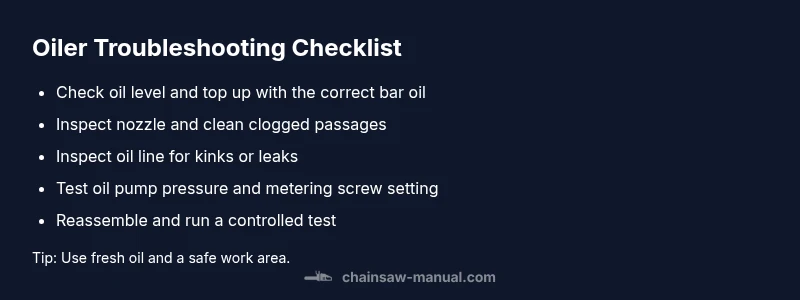
- Verify reservoir and oil supply: Confirm the oil level is above the minimum mark and the cap is sealing properly. Test with the bar off by squeezing the oiler lever or initiating a test spray. If there’s no flow, move to step 2.
- Inspect nozzle and passages: Remove the bar, clean the nozzle tip with a small pin, and flush the oil passages with compressed air or light solvent. Ensure everything is dry before testing again.
- Check the oil line and connections: Inspect for kinks, cracks, or loose clamps. Bend the line gently to assess flexibility; replace if damaged.
- Test the oil pump: With the bar off, observe if the pump housing is pressurizing when the saw runs momentarily (do not run under load). Listen for a grinding noise or feel resistance that suggests wear.
- Inspect the metering system: If your model uses a metering screw, verify it isn’t overtightened and adjust per the user manual to achieve correct flow.
- Reassemble and perform a controlled test: Reinstall the bar and chain, secure the chain brake, and run a brief test cut to confirm flow and coverage at the bar tip.
Step-by-step fixes for the most likely cause
- If the reservoir is empty or nearly empty: Refill with the manufacturer-recommended bar oil to the correct level. Check for leaks around the cap and seals; replace the cap if needed. Tip: use a clean funnel and wipe spills promptly to prevent a slip hazard.
- If passages or nozzle are clogged: Remove the bar and run a focused cleaning routine. Soak the nozzle in light solvent, scrub with a fine brush, and blow clean with compressed air from the outside in. Reassemble and test, ensuring no debris remains in the feed path. Tip: avoid forcing debris through the line; use gentle air pressure to prevent pipe damage.
- If the pump is faulty or worn: Inspect the pump for abnormal wear or oil seepage. If detected, replace the pump assembly following the saw’s service manual. Tip: use OEM parts or high-quality equivalents to ensure proper fit and seal.
- If the line is damaged or kinked: Replace the damaged segment and secure the line away from scrape points. Check clamps and fittings for tightness after reassembly. Tip: route lines away from hot components and sharp edges to prevent future damage.
- If the metering screw is misadjusted: reseat to the manufacturer’s recommended setting and verify by test spraying and cutting a short sample. Tip: document your baseline setting so you can revert if needed.
- After fixes, perform a test run: Start the saw, engage the chain brake, and run at idle several seconds to observe oiling; then test cut a small block to confirm coverage. Tip: observe a consistent oil stream at multiple spots along the bar.
Safety-first checks and precautions while working
- Always disconnect power or remove the spark plug before touching the oiler or bar assembly.
- Allow the chain to stop moving before inspecting or disassembling components. Wear gloves and eye protection when cleaning or flushing lines.
- Use only manufacturer-recommended oil types; mixing oils can affect viscosity and clogging.
- Work in a well-ventilated area and keep a dry, clean workspace to avoid slips and contamination.
- If you hear unusual grinding noises or observe oil leaks that persist after fixes, stop and seek professional service.
Steps
Estimated time: 45-60 minutes
- 1
Prepare safely and inspect basics
Power off the saw, detach the spark plug cap, and allow the chain brake to engage. Visually inspect the oil reservoir and cap seals, then confirm you have clean bar oil ready for top-up. This establishes a safe baseline before you touch any internal components.
Tip: Always start with basic safety checks—your first fix is prevention. - 2
Check oil level and refill
Verify the oil level is above the minimum mark. If low, fill to the recommended level with the correct bar oil. Wipe any drips and check for leaks around the cap and seals.
Tip: Use a clean funnel to avoid introducing contaminants. - 3
Clean nozzle and passages
Remove the bar, clean the nozzle tip with a fine pin, and flush the oil passages. Dry everything thoroughly before testing flow again.
Tip: Don’t force debris; air-blast gently to prevent pipe damage. - 4
Inspect the oil line and connections
Check for kinks, cracks, and loose clamps. Replace damaged sections or tighten fittings to restore a secure feed path.
Tip: Keep lines routed away from hot surfaces and moving parts. - 5
Test pump and metering system
With the bar off, run brief tests to feel pressure and check flow. If your model uses a metering screw, ensure it’s set to the manufacturer’s spec.
Tip: Document baseline settings for future reference. - 6
Reinstall, test, and observe
Reassemble the bar and chain, engage the brake, and perform a controlled test cut. Watch for oil presence at the bar nose across multiple spots.
Tip: If no oil appears, escalate to a pump or line replacement.
Diagnosis: Chainsaw oiler doesn't work
Possible Causes
- highEmpty or low oil in reservoir
- highClogged oil passages or nozzle
- mediumFaulty oil pump or worn gears
- lowKinked or damaged oil line
Fixes
- easyCheck oil level and refill with fresh bar oil
- easyClean oil passages and nozzle with compressed air or solvent
- hardInspect oil pump and replace if worn or leaking
- mediumInspect and replace damaged oil line or fittings
FAQ
Why is my chainsaw oiler not delivering oil?
Common causes include an empty reservoir, clogged passages, a faulty pump, or a damaged line. Follow the diagnostic flow to identify the specific cause and apply the appropriate fix.
Most often it’s an empty reservoir or clogged passage—check these first, then inspect the pump if needed.
How do I clean the oil passages on a chainsaw?
Remove the bar, clean the nozzle tip with a pin, flush passages with light solvent or compressed air, and dry thoroughly before testing. Reassemble and test flow.
Remove the bar, clean the nozzle, flush the passages, and test again.
Can I use any bar oil in my chainsaw oiler?
Use the oil recommended by the manufacturer. Thicker oils or unsuitable formulations can reduce flow and clog passages over time.
Use manufacturer-recommended oil to keep the oiler flowing smoothly.
When should I replace the oil pump?
Replace the pump if you observe reduced flow, visible wear, or oil seepage from the pump housing after testing. Follow the manual for part replacement steps.
If you notice weak flow or leaks, consider replacing the pump per the manual.
Is it safe to test the oiler with the bar off?
Yes, but ensure the chain brake is on and the saw is secured. Do not rotate the chain manually; observe the flow from the nozzle carefully.
Yes—test with the bar off and the brake engaged for safe observation.
Where can I get professional help for a non-working oiler?
If the oiler still doesn’t work after basic troubleshooting, contact a certified service technician or the manufacturer’s support line for diagnostic and repair options.
If it still doesn’t work, get professional service to avoid further damage.
Watch Video
The Essentials
- Check oil level and refill first
- Clean passages to remove clogs
- Test flow after each fix
- Replace worn pump or lines when needed
- Chainsaw Manual recommends routine oiler maintenance