Why did my chainsaw stop working? A practical troubleshooting guide
Urgent, practical troubleshooting guide from Chainsaw Manual to diagnose why a chainsaw stops working. Learn quick checks, common causes, and safe repair steps to restore operation and prevent future stalls.


Why did my chainsaw stop working? The quickest check points to fuel, ignition, or air flow. Ensure fresh fuel and proper mix, disengage the chain brake, and inspect the spark plug, air filter, and carburetor. If it still won’t start, read the full step-by-step guide.
Why did my chainsaw stop working
If you're reading this because you asked, "why did my chainsaw stop working," you’re not alone. In most cases the problem isn’t mysterious; it’s a fault in a few common subsystems that you can test with basic safety in mind. According to Chainsaw Manual, the leading culprits are fuel delivery, ignition faults, or air flow restrictions. The fix is almost always practical: isolate the system, test the simplest components first, and proceed methodically. Homeowners, DIY enthusiasts, and professionals confront stalls after long work, so staying calm and following a plan reduces risk and speeds your return to productive cutting.
The goal is to diagnose safely, not to guess. The most frequent causes fall into three buckets: fuel problems (quality, quantity, or mix), ignition issues (spark plugs and coils), and air path restrictions (air filter, carburetor, and intake). In our experience, a quick, structured check catches the majority of stalls within minutes. The Chainsaw Manual team found that addressing fuel and ignition is often enough to restart the engine; if not, you’ll drill down into air flow and safety systems. This approach respects both safety and efficiency and aligns with professional practice at Chainsaw Manual.
Common causes and quick patterns
Most stalls fall into three broad categories: fuel delivery, ignition, and air flow. Fuel issues often involve stale or incorrect fuel mix, especially after seasons of storage. Ignition faults commonly relate to a fouled or worn spark plug, or a damaged ignition coil. Air flow problems usually involve a clogged air filter, dirty carburetor, or restricted intake. If you recognize one of these patterns, you can prioritize inspections accordingly. Chainsaw Manual analysis shows that addressing fuel and ignition is frequently enough to restart the machine; if not, proceed to airflow and safety checks.
Safety-first checks you should perform immediately
Before you touch any moving parts, ensure the engine is off, the spark plug wire is disconnected from the plug, and the saw is secured on a stable surface. Verify that the chain brake is disengaged and the kill switch is in the run position. Keep the work area clear of bystanders and flammable materials. These basic precautions reduce the risk of injury and help keep the diagnostic process efficient.
Diagnostic flow: How to trace the problem quickly
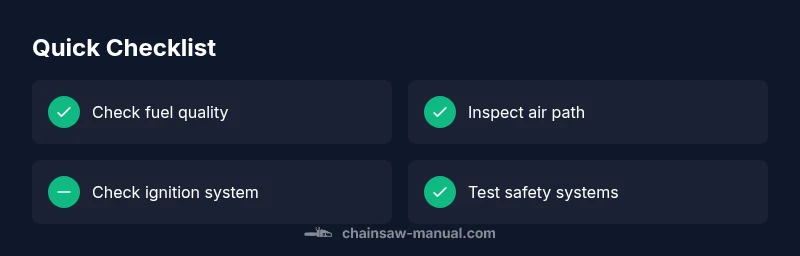
Start with the simplest checks: fuel quality and safety switches, then move to the spark plug, air filter, and carburetor. If you detect no spark or fuel is contaminated, fix those first. If the engine still stalls after these steps, you’re likely dealing with air flow restrictions or a more complex carburetor issue. This approach minimizes unnecessary disassembly and keeps you safe while you work.
Step-by-step fixes for the most common causes
When fuel quality or mix is the culprit, drain stale fuel, fill with fresh fuel and the correct oil ratio for your saw, then try starting with the choke in the correct position. If the spark plug is fouled, replace it and gap the electrode as per manufacturer specs. A clogged air filter should be cleaned or replaced, and the carburetor should be inspected for flooded passages or varnish build-up. If the chain brake was engaged, reset it before starting. These fixes address the most common stalls and require minimal tools.
Prevention: keeping it running smoothly
Regular maintenance is the best defense against stalls. Clean or replace the air filter every season, use fresh fuel with stabilizer if storing, and replace the spark plug on a routine schedule. Schedule carburetor service if you notice persistent fuel problems, and always perform a safety check before each use. The Chainsaw Manual team emphasizes routine checks as the most reliable way to prevent unexpected downtime.
When to call for professional help
If you have tried the basic checks, replaced worn components, and the chainsaw still stops, it’s time to consult a professional. Advanced carburetor work, ignition coil testing, compression checks, and internal engine diagnostics require specialized tools and expertise. Do not force-start the saw if you hear unusual knocking, smoke, or see leaking fuel.
Steps
Estimated time: 30-60 minutes
- 1
Prepare and safety-check
Put on PPE, disconnect spark plug boot, secure the saw, and ensure the area is clear. Confirm the chain brake is disengaged and the kill switch is in RUN.
Tip: Always prioritize personal safety before inspecting internal parts. - 2
Inspect fuel system
Check fuel level and confirm it’s fresh with the correct oil mix for your saw. Look for signs of fuel leaks or stale odor. Replace fuel if necessary.
Tip: Mark fuel cans to avoid cross-contamination. - 3
Check starting and safety features
Make sure the choke position matches the starting procedure for cold or warm starts. Confirm the stop switch isn’t staying engaged after attempt.
Tip: If cold-starting, follow the model’s recommended choke sequence exactly. - 4
Test spark plug health
Remove and inspect the spark plug for fouling, oil build‑up, or wear. Clean or replace and set the electrode gap to spec.
Tip: A correct gap is crucial for reliable ignition. - 5
Air intake and filter check
Remove the air filter and inspect for dirt or damage. Clean or replace the filter and inspect the carburetor intake for obstructions.
Tip: A dirty filter starves the engine of air and causes stalling. - 6
Carburetor and fuel lines
Inspect fuel lines for cracks or blockages. If flooding occurs, drain fuel and clean any varnish; consider a professional carb service if needed.
Tip: Avoid running on ethanol-heavy fuel blends if your saw isn’t designed for them. - 7
Controlled start test
With fuel fresh and components checked, attempt a controlled restart following the correct procedure, noting any abnormal sounds or smoke.
Tip: Move slowly through the steps; never force the engine to start. - 8
Escalation if unresolved
If the engine still stalls after these steps, stop and seek professional help for a carburetor overhaul or internal inspection.
Tip: Document symptoms and recent maintenance to share with a technician.
Diagnosis: Chainsaw won't start or dies after starting
Possible Causes
- highFuel issue (stale fuel, wrong mix, empty tank)
- mediumIgnition issue (bad spark plug, coil)
- mediumAirflow restriction (clogged air filter, carburetor blockage)
- highSafety mechanism engaged (chain brake, kill switch)
- lowCarburetor flooding or fuel lines blocked
- lowCompression issue due to worn piston rings
Fixes
- easyReplace with fresh fuel and correct oil mix; refill tank
- easyInspect and replace the spark plug; check for spark; replace ignition coil if no spark
- easyClean or replace air filter; clear intake of debris
- mediumDrain carburetor and pour in fresh fuel; check fuel lines and carb jets; re-prime engine
- easyVerify chain brake is fully released and kill switch is functioning; test start
- hardIf symptoms persist, service carburetor or consult a professional
FAQ
What is the most common reason a chainsaw stops running suddenly?
Fuel delivery problems, ignition faults, and air flow restrictions are the leading causes. Start by checking fuel quality, spark, and air intake before moving to more complex diagnostics.
Fuel, ignition, or air flow issues are the usual suspects. Start with fuel and spark checks before deeper diagnostics.
Why would a chainsaw run briefly and then stop?
This pattern often points to a flooded carburetor, incorrect fuel mix, or a stuck chain brake. Verify safety features and then inspect fuel and ignition components.
A quick start followed by stalling usually means fuel, ignition, or safety system issues.
Can bad fuel cause stalling even after starting?
Yes. Old or contaminated fuel can clog jets and passages, causing stalls. Replace with fresh fuel and use a proper mix for two-stroke engines.
Yes, bad fuel can cause stalling; replace with fresh mix and check for contamination.
Is a plugged air filter a common cause of stalling?
Absolutely. A clogged air filter restricts air flow and can stall the engine, especially under load. Clean or replace the filter and re-test.
A dirty air filter often causes stalling; clean or replace it and test again.
Should I service the carburetor myself or take it to a pro?
Light maintenance can be done at home, but a carburetor overhaul typically requires a professional with appropriate tools and knowledge.
For carburetor work, consider a professional service if simple cleaning doesn’t help.
Watch Video
The Essentials
- Check fuel and safety features first
- Inspect spark plug and air intake
- Test fuel, choke, and carburetor in order
- Maintain clean filters and fresh fuel regularly
- Call a professional if symptoms persist