Chainsaw Won't Work: Urgent Troubleshooting and Safe Fixes
Urgent, practical troubleshooting guide for when a chainsaw won't work. Learn quick checks, diagnostic flow, and step-by-step fixes to get back to work safely with Chainsaw Manual.


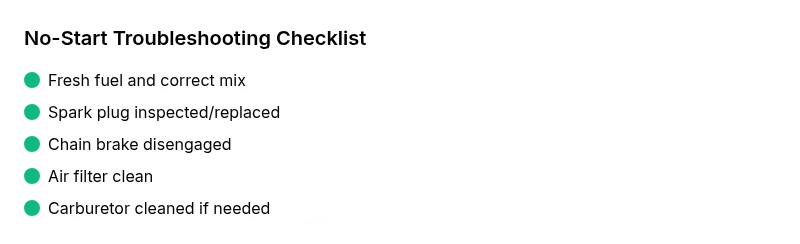
Most chainsaw no-start woes stem from a simple fuel, ignition, or safety issue. Begin by checking fuel freshness, spark plug condition, and the chain brake. If the engine still won't start, inspect the carburetor and air filter, then confirm the ignition coil is delivering a spark. These quick checks usually restore operation or guide the next step.
Understanding the symptom: chainsaw won't start
When a chainsaw won't start, the situation can feel urgent, especially if you're mid‑cut or up a job site. This symptom usually points to fuel delivery, ignition, or safety interlock issues rather than a seized engine. The Chainsaw Manual team finds that the majority of stubborn starts are caused by stale fuel, improper two‑stroke mix, a fouled spark plug, a dirty air filter, or a chain brake that has unexpectedly engaged. Take a calm, methodical approach: start with the simplest checks and work toward more involved diagnostics. By understanding how these systems interact — fuel, air, spark, compression, and safety interlocks — you can reliably identify the root cause and avoid unnecessary repairs. In practice, this means treating each subsystem as a clue rather than a single culprit. If you still can't get it running after these checks, move to a deeper diagnostic flow and consider professional help if needed.
Check the basics: fuel, spark, and safety interlocks
The most common reason a chainsaw won't start is an issue in the fuel system. Check for fresh fuel and the correct two‑stroke oil mix if you have a gas engine. Old, stale fuel can gum up the carburetor and prevent ignition. Also inspect the fuel lines, primer bulb, and fuel filter for cracks or leaks. Next, test for a strong spark: remove the spark plug, ground the plug body on the engine, and pull the start rope to see if a bright blue spark appears. If you don’t see a spark, the ignition system or kill switch is likely at fault and needs repair or replacement. Finally, confirm the chain brake isn't engaged. A simple nudge of the lever, or a reset, can restore normal starting in many cases. Document any patterns you notice, such as starts only failing when the chain brake is engaged.
Ignition and fuel system checks: spark, coil, and pull cord
Spark quality matters as much as spark presence. A fouled or worn spark plug can prevent ignition even with fresh fuel. Inspect for oil fouling or a dull electrode; replace if in doubt. Check the ignition coil for cracks or scorch marks if you have an electronic ignition system. A weak coil produces a weak or inconsistent spark. For electric models, verify the battery is charged and that the switch is functioning; for recoil models, ensure the pull cord retracts smoothly and the starter pawls engage. If the plug is wet after a failed start, you may be dealing with flooding; let the carburetor dry before retrying. Always reconnect the spark plug wire securely after testing. These checks are fast and often solve the majority of no-start complaints.
Air intake and carburetion: why airflow matters
Even with good fuel and spark, air starvation can stop a chainsaw from starting. A clogged air filter reduces airflow and can stall starting attempts. Remove and inspect the air filter; replace if dirty or damaged. Clean air is essential for proper carburetor operation. If the carburetor is gummed by varnish from old fuel, it can stick and prevent the engine from drawing a proper air‑fuel mix. In that case, you may need to remove the carburetor and clean it with a carburetor cleaner, being careful not to damage delicate adjustments. After cleaning, reassemble and try starting with the choke in the correct position. Remember to verify the fuel mix again, because incorrect ratios can worsen starting problems.
Safety interlocks, choke, and starting procedures
Modern chainsaws embed safety interlocks that prevent starts when the throttle is engaged or when the chain brake is on. Always verify the chain brake is disengaged before attempting to start. Use the proper choke position for cold starts and adjust as the engine begins to run. For cold starts, a short priming sequence can help; for warm starts, you may skip priming. Follow a consistent sequence so you can recognize when something is off. If your model uses a stop switch, make sure it isn’t stuck in the off position. These safety measures protect you from kickback and fuel leaks, and they also help you diagnose whether a starting problem is mechanical or operator‑related.
Diagnostic flow overview
Use this simple diagnostic flow to confirm a diagnosis. Start with symptom: no start versus rough run. If no start, check fuel and spark (Block 2 and 3). If spark is present and fuel is fresh, move to air intake (Block 4). If the engine still won’t start, inspect the carburetor and intake manifold for leaks or gunk, and think about a carb rebuild (Block 7). If the engine starts but dies soon after, this points to fuel starvation or an air leak. Capture all observed symptoms to guide the next steps. If you are uncomfortable with carburetor work, consider professional service to avoid tuning errors.
Step-by-step fixes for the most common cause
Step 1: Drain the old fuel and fill with fresh two‑stroke mix in the correct ratio; Step 2: Remove and inspect the spark plug; clean or replace; Step 3: Check the chain brake and safety switches; reset as needed; Step 4: Remove the air filter and clean or replace; Step 5: If fuel and spark are good but no start, clean the carburetor or consult a carb kit; Step 6: Reassemble, prime as required, and attempt a start with the choke in the initial position. Tip: Do not force the starter rope; a smooth, controlled pull prevents damage. If this still fails, proceed to Step 7: professional service.
Maintenance and prevention: keeping it reliable
Regular maintenance is your best defense against no‑start issues. Use fresh fuel and stabilize it for storage, and replace aged spark plugs every season or after 100 hours of use. Clean or replace the air filter at the start of each cutting season and after dusty tasks. Inspect fuel lines, primer bulbs, and carburetor linkages for cracks or wear. Store your chainsaw in a cool, dry place, and run the engine briefly after fueling to ensure proper temperature and lubrication. A simple checklist kept in your tool box can remind you to perform these tasks regularly, reducing the odds of sudden no-start events.
When to seek professional help and warranty considerations
If you’ve completed the basic checks and the chainsaw still won’t start, or if carburetor cleaning and ignition testing require specialized tools, it is time to call a professional. Avoid attempting complex carburetor rebuilds if you’re unsure of the adjustments, as improper tuning can damage the engine. Check warranty terms before replacing ignition coils or carburetors, and keep records of all maintenance. A qualified service technician can diagnose hidden issues such as compression loss, crankcase leaks, or damaged seals that aren’t obvious from surface checks.
Steps
Estimated time: 45-60 minutes
- 1
Verify fuel and mixture
Drain old fuel, fill with fresh two‑stroke mix in the correct ratio, and check for water contamination. Refill the tank entirely to avoid partial starts, then proceed to ignition checks.
Tip: Label fuel can with date and mix ratio to avoid stale fuel in future. - 2
Inspect spark plug
Remove the spark plug, check for fouling or oil deposits, and test for spark by grounding the plug against the cylinder and pulling the starter rope. Replace if damaged or worn.
Tip: Always ground the plug to metal on the engine while testing spark. - 3
Check safety interlocks
Ensure the chain brake is disengaged and the stop switch is in the run position. Confirm the throttle lock does not prevent starting.
Tip: A stuck kill switch is a common but overlooked cause. - 4
Clean air intake
Remove and inspect the air filter; clean or replace if dirty. A clogged filter reduces airflow and can prevent starting.
Tip: Avoid using compressed air to blow dust into the carb area; use gentle suction or wash filter. - 5
Inspect carburetor and air leaks
If fuel and spark are good but no start, remove the carburetor and clean the jets; check intake boots for leaks. A lean or flooded carb can prevent starting.
Tip: Follow service manual torque specs when reassembling. - 6
Test start and reassess
Reassemble, prime (if applicable), and attempt a cold start with the choke as recommended by your model. If it starts but dies, revisit fuel delivery or leaks and consider professional service.
Tip: Document any starting pattern to guide the next step.
Diagnosis: Chainsaw won't start or runs poorly
Possible Causes
- highStale or wrong fuel / improper two-stroke mix
- highNo spark due to faulty spark plug or kill switch
- mediumClogged air filter or dirty carburetor
- lowSafety interlock engaged (chain brake or stop switch)
Fixes
- easyFill fresh fuel and correct oil mix; replace fuel filter if present
- easyInspect/replace spark plug; test ignition spark
- mediumClean or replace air filter; clean carburetor ports if needed
- easyReset safety interlocks and ensure proper starting procedure
- hardCarburetor rebuild or professional service
FAQ
Why won't my chainsaw start even after refueling?
Fuel issues are the top culprit. Ensure fresh fuel, correct two-stroke mix, and no water contamination. If the engine still won't start, inspect the spark plug and air intake.
Fuel problems and ignition checks are usually the first step. If it still won't start, proceed to air and carburetor checks.
Is flooding the engine a real problem and how do I fix it?
Flooding occurs when too much fuel keeps the engine from firing. Let the carburetor dry, remove the spark plug, dry it, reassemble, and try starting with the choke open. If it persists, clean the carburetor.
Flooding means too much fuel; dry the carburetor and retry with minimal choke.
Can a dirty air filter cause starting issues?
A clogged air filter restricts air flow and can stop starting. Replace or clean the filter and check for any debris in the air intake.
Yes, a dirty air filter can prevent starts. Clean or replace it and retest.
Is it safe to test-start a chainsaw indoors?
No. Start the saw only in a well-ventilated outdoor area to avoid carbon monoxide exposure and fuel vapors. Use appropriate PPE.
No, always use outdoor area with ventilation.
How often should I replace the spark plug?
Inspect the plug regularly; replace if worn, fouled, or heat damaged. Typical intervals depend on usage, but annual replacement is common for frequent users.
Check it regularly and replace when worn or fouled.
What maintenance reduces no-start failures?
Regular fuel management, air filter cleaning, spark plug checks, and carburetor maintenance prevent many no-start issues. Keep a simple maintenance routine.
Regular fuel, air, spark, and carburetor care helps prevent no-starts.
Watch Video
The Essentials
- Verify fuel freshness before ignition attempts
- Check spark, kill switch, and chain brake first
- Clean air intake and carburetor if no-start persists
- Consult a pro for carburetor rebuilds or compression issues