Why Chainsaw Doesn t Start: Practical Troubleshooting
Facing a chainsaw that won t start? This urgent guide from Chainsaw Manual walks you through quick checks, a diagnostic flow, and safe fixes to get your saw running again.


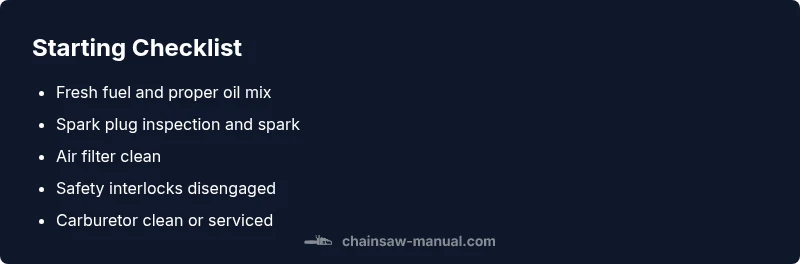
Most starting problems with chainsaws stem from fuel, ignition, or safety systems. Start by checking fuel freshness and the correct two-stroke mix, then inspect the spark plug and choke position, ensuring the safety lever is disengaged. If fuel is stale or the plug is fouled, replace or drain and refill. Use the diagnostic flow below for the full steps.
Why a Chainsaw Won't Start: Immediate Clues
If your chainsaw won't ignite, you’re likely dealing with something that blocks the starting sequence at the most basic level. According to Chainsaw Manual, most no-start conditions point to fuel, ignition, or safety interlocks rather than catastrophic engine failure. Start by confirming the obvious: is there fresh, properly mixed fuel in the tank? If the saw has sat for weeks, fuel can go stale and varnish the carburetor. Next, listen for a spark when you pull the starter cord or crank the engine with the spark plug grounded. If you hear nothing, the ignition system may be compromised. Finally, check that the chain brake is fully disengaged and that the stop switch is in the 'on' position. Even small misplacements can prevent starting. By walking through these checks in order, you’ll quickly determine which subsystem is at fault and keep yourself safe. Chainsaw Manual emphasizes safety gear and careful handling at every step.
Fuel System: The Most Common Culprit
Fuel issues are the leading cause of no-start conditions. Old, stale fuel can varnish the carburetor jets and prevent fuel from reaching the cylinder. Always mix fresh two-stroke fuel at the manufacturer-recommended ratio and store it in a clean container. If you suspect poor fuel, drain the tank and replace with fresh mix before attempting to start again. Check that the fuel lines are intact and free of cracks or leaks. Remember: never use gasoline alone in two-stroke engines; it needs the oil. Chainsaw Manual analysis shows that many start problems resolve after refreshing fuel and confirming proper oil mix.
Ignition System: Spark and Coil Check
A weak or absent spark will stop a starting attempt in its tracks. Remove the spark plug and inspect for fouling, carbon build-up, or a damaged electrode. Clean or replace as needed, and check that the spark is strong when you ground the plug against the engine. If there is no spark, test the ignition coil and kill switch circuit for continuity. A failed coil or a faulty kill switch can mimic other problems, so verify all connections and grounding before replacing parts. These checks are routine and safer when performed with the engine cool.
Air Intake and Filter: Let the Engine Breathe
A clogged air filter or blocked air intake starves the engine of air and makes starting difficult or impossible. Remove the air filter and inspect for excessive dirt or oil buildup. Clean reusable filters with compressed air or mild detergent and water, and replace if damaged. Ensure the air intake is clear of debris such as dust, resin, or plant matter. A clean intake improves starting reliability and engine efficiency, especially in dusty or dirty environments.
Safety Interlocks and Kill Switch: Hidden Start Blockers
Modern chainsaws include safety interlocks that prevent starting if the brake is engaged, the front handle is not held, or the kill switch is off. Double-check that the chain brake lever is disengaged, the choke is in the correct position for starting, and the stop switch is in the ON position. Some models require a two-step sequence to start; ensure you follow the exact procedure in your manual. Misinterpreting the safety features is one of the most common start killers.
Carburetor and Primer: Carb Trouble Geometry
Carburetor jets can become clogged from old fuel or varnish. If you suspect carburetor trouble, perform a safe carb clean following the manufacturer’s instructions, including flushing with the recommended cleaner and inspecting the primer bulb for cracks or leaks. If the primer pulls but fuel doesn’t reach the carb, there is likely an issue with fuel lines or the carb itself. Avoid forcing the primer or starting lever; aggressive priming can flood the engine and flood the cylinder.
Maintenance Habits That Prevent No-Start Issues
Prevention is the best remedy. Regularly inspect and replace worn hoses, seals, and gaskets; clean or replace the air filter; use fresh, properly mixed fuel; and perform a basic starting test monthly when the saw is idle. Keeping the spark plug clean and properly gapped reduces surprises. Record maintenance dates in a log to ensure timely service. These habits keep your saw reliable and safe to operate, reducing emergency repairs.
When to Call a Pro and Safety First
If the saw still won’t start after you’ve gone through the diagnostic checks and basic maintenance, it’s time to seek professional help. A certified chainsaw technician can diagnose subtle ignition or compression problems, inspect carburetor wear, or identify internal damage. Always prioritize safety: wear PPE, work in a well-ventilated area, and disconnect the spark plug cap when inspecting electrical components.
Steps
Estimated time: 25-40 minutes
- 1
Secure and prepare the saw
Place the saw on a stable surface with the bar guard in place. Wear eye protection and gloves. Ensure the area is clear of bystanders before you start any checks.
Tip: Lock the bar as you inspect interior components. - 2
Check the fuel system
Verify fresh fuel in the tank and confirm the oil mix is correct for a two-stroke engine. If there’s old fuel, drain and replace it with fresh mix.
Tip: Use a clean container and label fuel for storage. - 3
Inspect the spark plug
Remove the spark plug and examine for fouling or wear. Clean or replace the plug and gap it to spec before re-installing.
Tip: Ground the plug to test for spark away from fuel source. - 4
Check the ignition system and kill switch
Ensure the kill switch is ON and test the spark by grounding the plug. Inspect cables for cracks or loose connections.
Tip: A loose connector can mimic failure. - 5
Inspect air intake and filter
Remove and inspect the air filter; clean or replace as needed. Check the intake for obstructions like debris or sawdust.
Tip: Always re-seat the filter securely. - 6
Test the safety interlocks and brake
Disengage the chain brake and ensure the front handle is held during starting. Follow the model’s exact starting sequence.
Tip: Some models require a two-step process.
Diagnosis: Chainsaw won't start
Possible Causes
- highStale or incorrect fuel mix
- highFaulty spark plug or ignition coil
- mediumSafety interlock engaged / kill switch active
- mediumClogged air filter or intake obstruction
- lowCarburetor or fuel line blockage
Fixes
- easyDrain and replace old fuel; verify correct oil mix; refill tank
- easyInspect spark plug; clean or replace; check for spark
- easyEnsure chain brake is disengaged and kill switch ON; test start
- easyClean or replace air filter; clear intake path
- mediumInspect fuel lines and carburetor for blockages; professional service if needed
FAQ
Why won’t my chainsaw start after sitting for weeks?
Stale fuel can gum carburetors and foul plugs. Drain old fuel, clean the carb, and use fresh fuel with the correct oil mix.
Stale fuel can gum up the carburetor, so drain it and use fresh fuel with the right oil mix.
Is it safe to start a chainsaw with a clogged air filter?
No. A clogged filter restricts airflow and makes starting difficult. Clean or replace the filter before trying again.
A clogged air filter blocks airflow, so clean or replace it before restarting.
What if I don’t see a spark?
Check the spark plug, ignition coil, and kill switch for proper operation and wiring. Test for spark with the plug grounded away from fuel.
If there's no spark, check the plug and coil connections and verify the kill switch.
Can carburetor issues cause starting problems?
Yes. Carburetor varnish or leaks can prevent starting. Clean or rebuild carefully, and inspect fuel lines for leaks.
Carburetor issues can prevent starting; clean or rebuild if needed and check fuel lines.
When should I seek professional help?
If basic checks don’t restore starting, or you hear unusual noises or see engine damage, contact a certified chainsaw technician.
If basic checks fail, seek a professional chainsaw technician.
Watch Video
The Essentials
- Check fuel and spark first before deep disassembly.
- Verify safety interlocks are properly set.
- Clean or replace air filter regularly to improve starts.
- Follow the diagnostic flow to isolate the fault.
- Call a professional if issues persist after basic checks.