How to Fix Chainsaw Pull Cord: Safe Step-by-Step Guide
Learn how to diagnose and repair a chainsaw pull cord safely. This practical guide from Chainsaw Manual covers common causes, essential tools, a comprehensive repair workflow, and maintenance tips to keep starts reliable.


According to Chainsaw Manual, by following this guide you will diagnose and repair a chainsaw pull cord that won’t retract or starts but stalls. You’ll identify common causes (frayed cord, broken recoil spring, jammed pulley) and perform a safe, step-by-step repair. Essential safety steps include disconnecting the spark plug before starting.
Why pull cords fail: common failure modes
A chainsaw pull cord can fail for several reasons, and understanding the failure modes is the first step in learning how to fix chainsaw pull cord. Common culprits include a frayed or stretched cord that binds on the pulley, a worn or broken recoil spring that doesn’t rewind fully, a damaged or seized pulley or pawls, and foreign debris in the starter housing. In addition, improper maintenance, like ignoring air filter cleanliness and fuel system health, can accelerate wear on the starting mechanism. By recognizing these patterns, homeowners and DIY enthusiasts can decide whether a simple cord replacement will resolve the issue or if a more thorough starter service is required. Chainsaw Manual emphasizes safety and methodical inspection as the foundation of any repair.
How the recoil starter works
The recoil starter is a small, spring-loaded assembly that, when pulled, winds the spring and turns the engine over. The cord pulls a pulley, engaging pawls that rotate the crankshaft. When you release the handle, the spring rewinds the cord. If any part of this chain is worn or obstructed, the cord may either fail to retract or fail to engage the engine, leading to a hard pull or no start. Understanding this mechanism helps explain why a seemingly simple cord issue can cascade into multiple failure modes over time.
Before you begin: safety and prep
Safety is non-negotiable when working on a chainsaw. Always disconnect the spark plug lead, and if appropriate, remove the battery on electric models. Work in a clean, well-lit area; secure the saw to prevent movement. Wear cut-resistant gloves, eye protection, and long sleeves. Have a fire extinguisher or water source nearby in case of fuel leaks, and prepare a tray or container to collect any loose parts. A quick inspection of the surrounding components fuel lines, air filter, and carburetor can reveal additional wear you’ll want to address during a more complete service. Chainsaw Manual advises a calm, methodical approach to prevent injury and avoid misplacing small parts.
Diagnosing issues without tearing down everything
Start with a visual inspection of the cord path: look for fraying, stiff sections, or cords that snag on the pulley or housing. Manually rotate the pulley (when safe) to feel for unusual resistance or a grinding sensation, which could indicate a seized pawl or spring. Check the recoil spring for tension by gently pulling the cord a few times; if it feels weak or returns slowly, the spring may be worn or broken. If the cord retracts but the engine won’t start, you may be facing a different issue such as fuel or spark problems. Keep a log of what you observe to guide a precise repair plan. This step-by-step diagnostic approach reduces unnecessary disassembly.
Tools and workspace setup (safety-first overview)
Gather the essential tools and set up a sturdy workspace. A clean, flat surface, a magnetic tray for small parts, and a set of combs or picks can help with pawl and spring inspection. Keep a flashlight handy to inspect inside the starter housing. Before removing any screws, study your model’s service manual to understand the correct screw sizes and sequence. A tidy workspace minimizes the risk of losing tiny parts and simplifies reassembly. Remember, careful preparation prevents costly mistakes and speeds up the repair.
Replacing vs repairing: what to choose
Whether to replace or repair depends on the observed wear and the availability of parts. If the cord is intact but the recoil spring is weak or broken, replacing the spring or entire starter assembly may be more economical and reliable than re-stringing the cord alone. If the cord path or pulley is damaged, you may need a complete starter kit with a new pulley and rope. Manufacturers often provide a model-specific kit that ensures compatibility and performance. In many cases, a focused replacement is safer and longer-lasting than attempting an ad hoc repair. Chainsaw Manual consistently recommends evaluating safety, cost, and downtime before deciding on the repair path.
Parts would you typically replace (high-level overview)
Typical parts involved in a pull cord repair include the cord itself, the recoil starter pulley, pawls, the recoil spring, and occasionally the starter housing gasket. If wear is concentrated in the cord or the pulley, those are the most cost-effective fixes. If the spring loses tension or is kinked, it will not rewind properly, leading to recurring failures. Always replace with OEM or model-specific parts when possible to maintain reliability and safety.
The repair overview: a high-level workflow
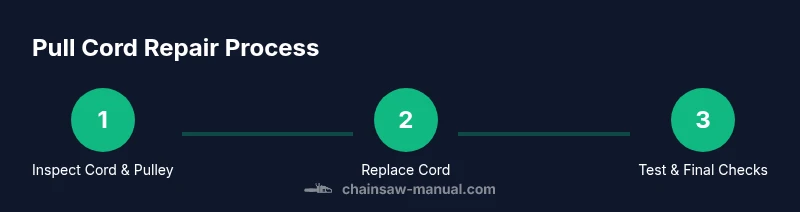
An effective pull cord repair generally follows these phases: (1) safely prepare and disconnect power; (2) remove the starter housing and inspect components; (3) replace the cord and test spool winding; (4) reassemble with correct tension and routing; (5) perform a bench test and then a field test. Understanding this flow helps you anticipate what to expect during the process and keeps the repair orderly. Note that some models require special tools; consult your manual for specifics.
Common mistakes and how to avoid them
Common mistakes include routing the cord incorrectly, which can cause early wear or binding; using a cord that’s too long or too short; not securing knots properly; forgetting to release the spring tension before disassembly; and reassembling with misaligned components. Take your time to re-check alignment after each step, double-check knot security, and keep track of screws and washers. A careful, deliberate approach reduces rework and keeps the repair safe.
Testing and post-repair checks
After reassembly, perform a careful bench test: pull the cord to ensure smooth extension and retraction without snagging. Reconnect fuel and spark, if applicable, and attempt a test start in a controlled area. If the cord catches or the handle feels excessively hard to pull, there may be internal binding or an improperly seated spring. Re-check the alignment and ensure all small parts are present and correctly placed. Routine post-repair checks help prevent a return visit to the shop.
Maintenance to prevent future pull cord failures
Regular maintenance reduces the likelihood of pull cord problems. Clean or replace the air filter, inspect and replace fuel lines and hoses as needed, and use fresh fuel with the proper oil mix. Store the saw in a dry place with the starter area free of dust and debris. Periodically inspect the recoil starter for signs of wear, particularly after a heavy use season. Routine maintenance extends the life of the starting system and improves reliability.
When to call a professional
If you encounter a damaged spring, a broken pawl, or a failed starter that requires specialized tools, it is safer and more cost-effective to seek professional service. A trained technician can safely compress and replace the recoil spring and ensure the entire starting system is correctly aligned. If you are unsure about torque specifications or reassembly sequence for your model, professional help is the prudent choice. Chainsaw Manual suggests not taking on high-risk repairs that could compromise safety or engine performance.
Tools & Materials
- Replacement pull cord (correct diameter and length)(Match model specs; pre-stretched if available)
- Recoil starter pulley and springs (if needed)(Use OEM parts when possible)
- Screwdrivers (Philips and flat-head)(Phillips #2 or model-specified)
- Pliers (needle-nose)(For knot tying and pull cord seating)
- Scissors or utility knife(Cut cord cleanly; avoid frayed ends)
- Utility knife or small knife(Optional for trimming ends)
- Safety gloves and eye protection(Protect hands and eyes)
- Torque driver or screwdriver for model screws(If required by model)
- Magnetic tray or tray(Keep screws and small parts organized)
- Rags and cleaning solvent(Clean debris from housing)
- Small flashlight or headlamp(Inspect inside housing)
- Owner’s manual or service sheet(Use model-specific guidance)
Steps
Estimated time: 45-75 minutes
- 1
Disconnect spark plug and secure saw
Power off the unit by disconnecting the spark plug boot; remove fuel source and ensure the saw cannot start. This step protects you from accidental ignition and reduces fuel exposure.
Tip: Always disconnect power before touching moving parts. - 2
Remove starter housing cover
Loosen screws and lift the starter housing to access the pulley and cord path. Keep track of each screw type and orientation for reassembly.
Tip: Lay out screws in order to replicate the original configuration. - 3
Inspect and remove the old cord
Carefully inspect the cord path and remove the damaged cord from the pulley; note how it exits the housing to ensure correct reinsertion.
Tip: If the cord is frayed, replace the entire cord kit. - 4
Prepare the replacement cord
Cut the new cord to the length recommended for your model and burn ends to prevent fraying.
Tip: Use a lighter or heat source to seal ends; avoid overheating. - 5
Install the new cord on the pulley
Thread the cord through the correct exit point and anchor it on the pulley with the appropriate knot; ensure it winds correctly when reassembled.
Tip: Double-check knot security before reassembly. - 6
Reassemble the starter housing
Carefully re-seat the pulley, pawls, and spring; reattach the housing, making sure the spring tension is properly contained.
Tip: Do not let the spring slip; control tension during reassembly. - 7
Test the pull and engine start
With the housing still off, gently pull to verify smooth cord movement; then reattach spark plug and test start in a controlled area.
Tip: If the pull feels gritty or binds, stop and inspect for obstructions.
FAQ
What causes pull cords to break?
Pull cords break mainly from fraying, overstretching, or knot failures, and sometimes from a weakened recoil spring or a seized pulley.
Pull cords usually fail due to wear or a stuck starter, often from a worn spring or frayed cord.
Can I fix it myself or should I hire a pro?
Small repairs like cord replacement are feasible for confident DIYers with proper tools. Complex issues, such as a damaged spring or misaligned starter, are safer to handle with professional service.
You can usually DIY a cord if you have the right parts, but springs and internal components are best left to pros.
Do I need to replace the entire starter assembly?
If multiple components show wear, replacing the entire starter kit is often more reliable than swapping individual parts.
Often, a worn starter kit is easier and safer to replace than fixing one piece at a time.
How can I tell if the recoil spring is damaged?
Signs include a slow or weak rewind, a broken or displaced spring, and unusual resistance when pulling the cord.
If the cord rewinds slowly or you hear grinding, the spring may be damaged.
What safety steps should I take before starting?
Disconnect spark plug, drain or isolate fuel, and wear eye and hand protection before opening any starter components.
Always unplug or disconnect the power source and wear PPE before starting work.
Why does the saw start but stall after pulling the cord?
That symptom points to fuel, spark, or compression faults rather than the cord itself; you’ll need to test the ignition and fuel system.
If it starts and stalls, check fuel and spark first.
Watch Video
The Essentials
- Inspect cord path and pulley for wear before replacement.
- Use model-specific parts for reliable starts.
- Measure and replace worn springs and pawls as needed.
- Test in a controlled area after reassembly and adjustment.