How to Get Chainsaw Started: Safe Step-by-Step Guide
Learn a safe, proven method to start your chainsaw. This step-by-step guide covers fuel, choke, starting sequence, and troubleshooting tips to prevent kickback and injuries.


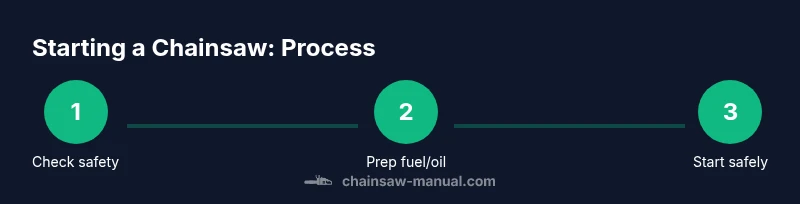
According to Chainsaw Manual, this guide explains how to get chainsaw started safely by following a clear sequence: inspect the area, prep fuel and oil, set the choke, and perform a controlled start. You’ll learn cold-start and warm-start approaches, when to pause, and how to verify the saw is ready for work.
Safety-first mindset for how to get chainsaw started
Safety governs every attempt to start a chainsaw. Before you approach the bar, clear the work area of obstacles, climbable branches, and loose debris. Wear the full PPE: a helmet with face shield, hearing protection, cut-resistant gloves, chaps, and sturdy boots. Stand with a solid stance, feet apart, and keep the saw away from your body with the bar pointed slightly downhill. According to Chainsaw Manual, safety is the foundation of any starting procedure, and a deliberate pre-check reduces the risk of kickback, entanglement, or fuel spills. For the purpose of this guide on how to get chainsaw started, you’ll follow a sequence that emphasizes control, predictability, and knowledge of your equipment. If you share the workspace, communicate clearly with others and never attempt to start a running saw near children or pets. By treating starting as a controlled operation, you reduce injury risk and keep projects moving forward.
Pre-start area and PPE readiness
Begin with a stable, flat surface and ensure the chain brake is engaged. Clear a safe working radius to avoid contact with branches, rocks, or bystanders. Use approved containers for fuel and oil, and keep them away from heat or flames. Inspect your PPE: helmet with face shield, hearing protection, gloves, and leg protection should be in good condition and properly fitted. A balanced stance increases control during starting and handling. The Chainsaw Manual emphasizes that preparation reduces surprises and supports safer, more consistent starts. If you notice damage to handles or fasteners, stop and repair before continuing. Have a first aid kit accessible and a clear escape path if you need to retreat from the work area. Once PPE and area are secured, you’re ready to address fuel, oil, and carburetion.
Fuel, oil, and carburetor basics
Fuel and oil choice matters for a smooth start. Use the fuel and oil mixture recommended by your saw’s manufacturer, and keep fuel in a clean, labeled container. Check the bar oil level and refill if needed; a dry bar and chain contribute to friction and poor starting behavior. Ensure the air filter is clean to maximize air flow during combustion. A clean carburetor improves starting reliability, especially after long storage. The right fuel quality and fresh oil reduce fouling and help the engine catch when you attempt to start. For the best chance to get chainsaw started, avoid dirty fuel, stale oil, or contaminated air intake. The guidance here aligns with Chainsaw Manual safety and maintenance principles.
The choke, throttle, and starting sequence
A proper starting sequence balances choke position, throttle setting, and timing. If your saw has a primer bulb, use it as directed before the choke, otherwise rely on the choke to restrict air when cold. Move the choke to the FULL position for a cold start, then pump the primer bulb (if equipped) a few times. Grip the saw firmly, keep your stance wide, and pull the starter rope in smooth, steady bursts. When the engine catches, gradually move the choke toward RUN as the engine warms. If the saw coughs or stalls, release the throttle and return to the choke, then try again. Following a disciplined sequence is key to getting chainsaw started reliably. Always keep hands away from the chain during starting, and maintain a secure grip.
Cold start vs warm start: step-by-step procedure
Cold start requires a more restrictive choke and a momentary priming action, while a warm start may bypass some steps. For cold starts, set the choke to full, prime if equipped, and pull until you hear a burble or attempt to run. Move the choke to RUN as soon as the engine shows signs of life. For warm starts, set the choke to half or RUN depending on your model and pull until it fires. Continue to monitor the engine closely, and avoid harsh revving. The goal is a smooth transition from start to idle with stable RPM. This approach minimizes wear and reduces kickback risk.
After-start checks and idling
Once started, slowly release the chain brake and allow the saw to idle briefly while you test control of the throttle. Check that the chain remains at rest when idle and that the starter mechanism doesn’t bind. Inspect gauges and indicators (fuel level, oil level, chain tension) and wipe away any exhaust residue from immediate surroundings. If the saw dies after a successful start, re-check fuel, filter, and spark plug. Remember to resume cutting only after you confirm steadier idle speed and proper lubrication. The aim is to verify readiness before moving to work.
Troubleshooting common problems
If the saw won’t start after several attempts, check for flooding, fuel starvation, or air intake obstruction. Flooding happens when too much fuel saturates the chamber; wait briefly and remove some fuel by opening the choke before reattempting. If there’s no ignition, inspect the spark plug and replace if corroded or fouled. A clogged air filter or dirty carburetor can also impede starting. In persistent cases, step back and review safety steps, then consult the manual or a professional. This practical approach helps you stay safe while resolving starting issues efficiently.
Authority sources
- OSHA safety guidelines: https://www.osha.gov
- NIOSH chainsaw safety resources: https://www.cdc.gov/niosh/
- US Forest Service chainsaw safety and maintenance: https://www.fs.fed.us
Tools & Materials
- Chainsaw (gas-powered or electric)(Ensure the saw is in safe, working order and the chain brake is functional.)
- Personal protective equipment (PPE)(Helmet with face shield, hearing protection, gloves, and chainsaw chaps.)
- Fuel and oil mix (as per manual)(Use fuel and oil specified by the engine manufacturer; store in a labeled container.)
- Bar oil(Check level and top up as needed; keep reservoir clean.)
- Air filter and spark plug inspection tools(Wrench or screwdriver to access components.)
- First aid kit and fire suppression (small)(Have in workspace for emergencies.)
Steps
Estimated time: 25-45 minutes
- 1
Verify safety and setup
Position yourself with feet shoulder-width apart and knees slightly bent. Engage the chain brake and clear the area of bystanders and obstacles. Verify PPE is in place and the work surface is stable before touching the saw.
Tip: Stand to the side of the bar, not directly in line with the chain path. - 2
Check fuel and bar oil levels
Confirm the fuel tank and bar oil reservoir are adequately filled according to the manual. If you’re using a carbureted engine, ensure fuel is fresh and not stale. Refill as needed and wipe any spills before starting.
Tip: Never mix fuel or oil near an ignition source. - 3
Inspect air filter and spark plug
Remove the cover and check the air filter for clogs; replace if dirty. Inspect the spark plug for wear or fouling and replace if needed. A clean air path improves starting reliability.
Tip: A fouled spark plug is a common cause of hard starts. - 4
Set choke and prime if applicable
For a cold start, set the choke to FULL and, if equipped, press the primer bulb a few times. For a warm start, adjust the choke to HALF or RUN as the model requires.
Tip: Follow your model’s primer sequence to avoid flooding. - 5
Begin starting sequence
Grip the saw firmly with both hands, keep the bar away from your body, and pull the starter rope in smooth, controlled bursts. Stop if you feel heat or unusual resistance.
Tip: Do not yank aggressively; control reduces kickback risk. - 6
Tune to RUN and idle
As soon as the engine fires, move the choke toward RUN and allow the saw to idle for a few seconds. Check that the chain remains still at idle and that RPM stabilizes.
Tip: Avoid revving immediately after startup to prevent wear. - 7
Troubleshoot if needed
If the engine stalls or fails to start after several attempts, wait 10-15 seconds, recheck fuel/air components, and retry. If it still won’t start, consult the manual or a professional technician.
Tip: Do not force a start when components are obviously damaged.
FAQ
What is the safest way to start a chainsaw?
The safest approach starts with a stable work area, proper PPE, and an engaged chain brake. Follow a prescribed starting sequence that matches your model, including choke and priming if equipped, then carefully start and verify idle before cutting.
Start with PPE, engage the chain brake, and follow your model’s sequence to start safely.
What should I do if my chainsaw won’t start after many attempts?
If it won’t start after several attempts, check for flooding, fuel issues, air filter, and spark plug condition. Allow the engine to rest briefly, then reattempt with a clean carburetor and fresh fuel. If problems persist, consult the manual or a technician.
Wait a bit, then recheck fuel and ignition components; if it still won’t start, seek professional help.
Can I start a chainsaw indoors?
Starting a chainsaw indoors is not recommended due to exhaust fumes and fire risk. Always perform starts in a well-ventilated outdoor area and keep bystanders at a safe distance.
No, start outside in a well-ventilated area to avoid fumes and hazards.
Do I need to prime the carburetor every time?
Prime the carburetor only if your model requires it and only as directed by the manual. Some saws need priming for cold starts, others do not. Over-priming can flood the engine.
Only prime if your saw’s manual says to; otherwise skip to avoid flooding.
Why does my chainsaw kick back when starting?
Kickback can occur if the cutting edge of the bar contacts wood during starting or if proper stance isn’t maintained. Engage the chain brake, keep the bar away from your body, and follow a controlled pull technique.
Kickback happens when the bar moves unexpectedly during start; stay prepared and keep safe stance.
What maintenance helps starting reliability long-term?
Regularly clean or replace air filters, check spark plugs, and ensure fuel and oil systems are functioning. Store the saw properly to prevent carburetor gumming and fuel degradation over time.
Keep filters clean and fuel fresh to improve starting reliability.
Watch Video
The Essentials
- Get chainsaw started safely by following a fixed sequence
- Prioritize PPE and a clear, stable work area
- Check fuel, oil, air, and ignition components before starting
- Use cold-start and warm-start procedures correctly to avoid flooding
- Verify idle and operation after startup to ensure readiness