Troubleshooting Chainsaw Starting Problems
Learn why a chainsaw is hard to pull and how to diagnose fuel, ignition, air, and compression issues safely. Step-by-step fixes, prevention tips, and when to call a pro (Chainsaw Manual).


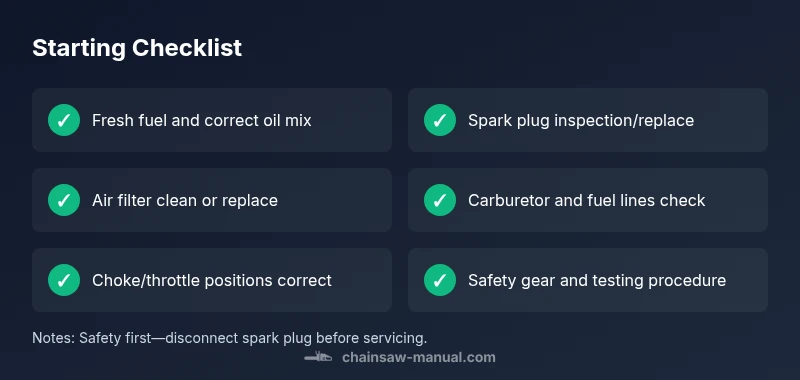
Start with fresh fuel and the correct oil mix; check the spark plug and air filter, then verify choke positions and the carburetor settings. If it still won’t pull smoothly, move to a compression check or seek professional service. This quick diagnostic path keeps you safe and efficient.
Problem overview and common starting issues
A chainsaw that is hard to pull is signaling a starting system mismatch, restricted air/fuel flow, or engine compression trouble. The most common culprits are stale fuel, a fouled spark plug, a clogged air filter, or a carburetor that needs adjustment. According to Chainsaw Manual, diagnosing this condition should begin with the simplest checks and progress toward more involved tests. In 2026, homeowners report that taking a systematic approach reduces pull resistance quickly while keeping safety a priority. Start by inspecting basic elements and verifying that the saw is in a safe starting condition, with the chain brake disengaged and the saw secured on a stable surface.
- Check you are using fresh fuel with the correct two-stroke oil ratio.
- Confirm the choke and throttle are in the correct starting positions for your model.
- Look for obvious mechanical binding in the rope and recoil mechanism.
Fuel, fuel quality, and carburetor basics
Fuel problems account for a large share of hard-to-pull starts. Old fuel or incorrect fuel-oil mixtures cause poor combustion and higher compression resistance. In this section we cover how to test fuel quality, drain stale fuel, and perform a basic carburetor clean. Chainsaw Manual analysis shows that even small amounts of water in fuel or degraded oil can create sticking and poor firing. Replace with fresh fuel, then prime according to your manual. Ensure the fuel lines are intact and that the primer bulb functions properly.
Ignition, spark plug condition, and compression checks
The spark plug is a gatekeeper of reliable starting. Fouled, worn, or incorrect-gap plugs can make starting effortful or fail altogether. Inspect the plug for fouling, oil, or electrode wear and replace if necessary. A simple compression check can reveal worn rings, a scored cylinder, or other mechanical wear that makes pulling difficult. Chainsaw Manual notes that compression issues are a common reason for a hard pull, and addressing them early can prevent further engine damage.
Air intake, air filter, and intake leaks
A clogged air filter or cracked intake manifold reduces the air available for combustion and increases the effort required to pull the rope. Inspect the air filter, clean or replace as needed, and check for leaks around hoses and gaskets. A vacuum leak around the carburetor can also cause poor starting performance.
When basics fail: deeper diagnosis and service options
If fuel, ignition, and air systems look sound, you may be dealing with deeper engine wear or carburetor calibration issues. A professional can perform a teardown, carburetor rebuild, or head replacement if compression remains low. It is prudent to evaluate whether to replace worn parts or the entire saw, depending on cost and use expectations.
Prevention and safe starting practices
Preventive maintenance is the best defense against a chainsaw that is hard to pull. Regularly replace old fuel, clean the air filter, and perform carburetor checks according to the manufacturer’s schedule. Store fuel safely and avoid prolonged exposure to heat. Use PPE and follow safety guidelines at all times.
Steps
Estimated time: 20-45 minutes
- 1
Prepare safety gear and workspace
Put on eye protection, gloves, and hearing protection. Clear a stable, well-ventilated space. Disconnect the spark plug cap before starting any inspection. Ensure the chain brake is engaged until you are ready to test starting.
Tip: Double-check that the spark plug is not energized before touching it. - 2
Check fuel quality and refuel correctly
Inspect the fuel bottle or can, verify the two-stroke oil ratio, and drain stale fuel from the tank. Refill with fresh, properly mixed fuel.
Tip: Never run the saw with old or contaminated fuel; label last fuel change. - 3
Inspect spark plug and ignition
Remove the spark plug, inspect for fouling or wear, and clean or replace as needed. Re-gap to manufacturer specifications and re-install.
Tip: Use a proper gap gauge and avoid overtightening the plug. - 4
Check air filter and intake
Remove and inspect the air filter for dirt; clean or replace. Inspect the intake hose and carb mounting for cracks or leaks.
Tip: A clean air filter improves starting significantly. - 5
Carburetor and compression checks
If the engine still resists, perform a compression check and consider carburetor cleaning or professional adjustment. Check for leaks around carb gaskets and seals.
Tip: Document readings and adjust gradually; large swings indicate wear. - 6
Test start and assess gaps
Reassemble, prime as instructed, disengage the choke, and attempt a gentle pull. If it still won’t start, escalate to professional service.
Tip: Never force the rope — stop if the pull feels unusual.
Diagnosis: Chainsaw is hard to pull or won’t start
Possible Causes
- highLow compression from worn piston rings or scored cylinder
- highStale fuel or incorrect fuel-oil mix
- mediumFlooded carburetor or flooded engine after a failed start
- mediumSpark plug fouled or damaged
- lowAir filter blocked or intake leaks
Fixes
- easyCheck fuel quality and mix; drain old fuel and refill with fresh mix
- easyInspect spark plug; clean or replace if fouled; gap to spec
- easyClean or replace air filter; inspect carb if flooding persists
- mediumPerform a compression test and consult service if compression is low
- mediumReview carburetor adjustment and clean fuel lines; replace faulty fuel hose
FAQ
Why is my chainsaw hard to pull even after priming?
This can be caused by fuel or ignition issues, including stale fuel, a fouled spark plug, or carburetor problems. Perform basic checks first and progress to compression testing if needed.
Hard starts usually come from fuel or ignition issues—start with fresh fuel and a clean spark plug, then progress to compression if needed.
How do I tell if the spark plug is fouled?
Remove and inspect the plug. Black, oily deposits indicate fouling; if present, clean or replace and check the gap. A fouled plug can prevent a clean spark and make starting hard.
A fouled spark plug looks dirty or oily and should be replaced to restore reliable starting.
Is it normal to choke a cold chainsaw?
Yes, most chainsaws require a choke for cold starting. After starting and warming, gradually switch to half-throttle or run position as per the manual.
Yes, use the choke for a cold start and switch to run as it warms.
When should I seek professional service?
If compression is low, if the carburetor is flooding, or there are persistent hard-start symptoms after basic checks, contact a qualified technician or the manufacturer’s service center.
If basic checks don’t fix the issue or you suspect engine wear, seek professional service.
Can a clogged air filter cause starting problems?
Yes. A dirty air filter restricts airflow and makes starting harder. Replace or clean the filter and re-test.
A clogged air filter can make starting hard; clean or replace it and try again.
Is it safe to pull the rope with the chain brake on?
No. The chain brake must be disengaged during starting. Ensure you have a secure stance and keep hands clear of the chain.
Disengage the chain brake before starting and keep clear of the chain.
Watch Video
The Essentials
- Start with fresh fuel and a clean carburetor.
- Check spark plug and compression if starting is hard.
- Inspect air filter and intake for blockages.
- Follow a safe, step-by-step diagnostic flow.
- The Chainsaw Manual team recommends regular maintenance to prevent hard starts.