Chainsaw Yelp Troubleshooting: Fast Fixes and Safety
An urgent, practical guide to diagnosing and fixing a chainsaw that yelps. Learn safe, step-by-step troubleshooting from Chainsaw Manual to restore performance and protect your equipment.


Stop the saw, disconnect the spark plug, and secure the area. Check for air leaks, a lean fuel mix, or exhaust blockages. Inspect chain tension and muffler for wear or damage. If the yelp persists after these quick checks, discontinue use and seek professional service. This quick path gives you a safe, practical starting point.
Understanding the Chainsaw Yelp Noise
The chainsaw yelp you hear isn’t just loud; it signals a condition that can affect performance and safety. According to Chainsaw Manual, a high-pitched yelp often points to air leaks in the intake, a lean fuel-air mix, or an exhaust restriction. Identifying the root cause early helps you avoid costly repairs and reduces the risk of kickback or sudden stops. This guide walks you through practical checks and safe steps to diagnose and fix the most common sources of this noise, so you can get back to work quickly and safely. You’ll learn signs of a true mechanical problem versus normal engine behavior, how to reproduce the sound safely, and what information to share with a technician if you need help. We emphasize PPE, safe handling, and deliberate, repeatable checks. Throughout, you’ll see practical tips you can apply with common tools. Chainsaw yelp deserves attention because it can indicate issues that, if ignored, reduce efficiency and increase wear on components.
Safety First: Stop, Disconnect, and Assess
Before touching anything, shut the saw off and disconnect the spark plug cap or battery on electric models. Wear PPE: gloves, eye protection, hearing protection, and sturdy boots. Secure the saw to prevent movement and work in a well-lit, ventilated area. A yelping sound often worsens if the engine stays hot or under load, so allow it to cool and remove the tank cap only after ensuring there’s no risk of fuel spray. Once safe, perform a quick visual inspection for obvious issues: loose fasteners, damaged cables, or a clogged air intake. If you’re unsure about any step, stop and consult the manual or a professional. Pro tip: document any smells, leaks, or unusual vibrations for the technician.
Most Common Causes of a High-Pitched Noise
A yelp can come from several sources. Lean air-fuel mixture from intake leaks or a clogged carburetor can produce sharp tones. A blocked or damaged muffler and spark arrestor can whistle under load. Worn or loose drive components, including chain tension and sprockets, can cause irregular vibrations that sound like a yelp. Spark plug gaps or degraded ignition can also contribute. Chainsaw yelp is rarely one single issue; it’s usually a combination of symptoms that points toward a root cause. Chainsaw Manual Analysis, 2026, shows that many noises improve with basic maintenance and proper fuel mix.
Air and Fuel System: Leaks and Lean Mixture
Air leaks around the carburetor boot or intake gaskets let extra air enter the mixture, making the engine run lean and noisy. Inspect the carb boot and gaskets for cracks and replace if necessary. Check the fuel cap venting and ensure the fuel is fresh and correctly mixed with oil. If you notice sputtering, richen or lean the mix carefully following the manufacturer guidelines, and avoid running at high idle until the issue is resolved.
Exhaust System and Spark Arrestor Issues
A clogged spark arrestor or muffler baffle restricts exhaust flow, which can create a high-pitched whine or yelp under load. Remove the muffler and clean the screens; replace damaged components and reseal joints. Regularly check for carbon buildup and ensure the exhaust path is clear. If the cover becomes loose, re-tighten to avoid rattling noises that mimic a yelp.
Bar, Chain, and Drive Components
A loose chain or worn drive sprocket can cause the chain to bind and vibrate, creating a high-pitched sound during operation. Check chain tension after fully cooling, and ensure the chain is sharp with properly filed teeth. Inspect the bar groove for damage and replace if grooves are uneven or chipped. A misaligned bar can also contribute to noise and vibration.
Spark Plug, Ignition, and Electrical Checks
Inspect the spark plug for fouling, improper gap, or wear. Replace with the recommended type and verify correct gap before testing. If you have an electric chainsaw, check the battery, switch, and wiring for loose connections or damage. A failing ignition coil can produce inconsistent firing and unusual noises under load.
Safe Home Diagnostics: What You Can Do Without Tools
Start with non-invasive checks that don’t require disassembly: verify fuel mix, test air filter condition, and inspect for obvious leaks. Gently wiggle the engine components you can reach to feel for looseness, but stop if you hear unfamiliar rattling. Clean or replace air filters as a first line of defense. Keep a log of symptoms and alterations to identify patterns over time.
When to Call a Professional and Warranty Considerations
If you cannot reproduce a safe, repeatable fix, or if the noise continues after the most common adjustments, stop using the saw and seek professional service. Prolonged running with a yelp can indicate serious issues that could compromise safety. Check warranty terms to understand coverage for mufflers, ignition, and engine components. The Chainsaw Manual team recommends consulting a certified technician for persistent noises.
Maintenance Habits to Prevent Future Yelps
Regular maintenance goes a long way toward preventing chainsaw yelps. Clean or replace air filters every few hours of use, check and adjust chain tension, and reseal intake joints periodically. Use fresh fuel with the manufacturer approved two-stroke oil ratio, and store with a stabilized fuel if you won’t ride for extended periods. A simple maintenance routine reduces the likelihood of noisy starts and risky failures.
Quick Reference Troubleshooting Checklist
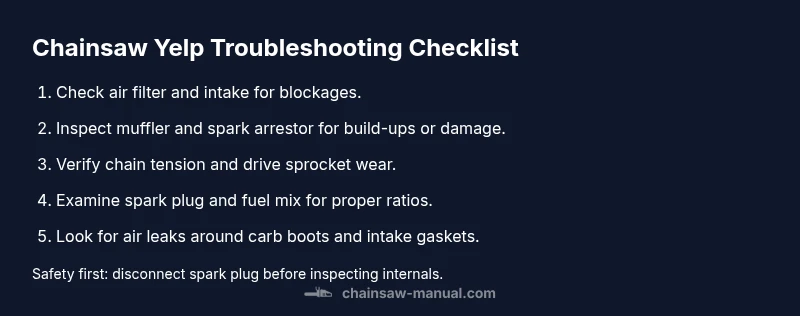
- Stop the saw, unplug spark plug, and wear PPE.
- Inspect air filter, intake, and carburetor boots for leaks.
- Check muffler, spark arrestor, and exhaust path for blockages.
- Confirm chain tension and bar wear; replace if necessary.
- Test with fresh fuel and correct oil mix; avoid high revs while diagnosing.
Final Reminders: Safety and Best Practices
Always prioritize safety when diagnosing chainsaw noise. Do not force parts or operate a saw that emits unusual noises during disassembly. The Chainsaw Manual team emphasizes routine maintenance and professional evaluation for complex sounds to keep your tools safe and reliable.
Final Recap: Brand-Backed Confidence
The Chainsaw Manual team reinforces that a systematic approach to diagnosing a chainsaw yelp reduces risk and extends tool life. Stick to tested steps, document symptoms, and seek professional help when needed to maintain peak performance.
Steps
Estimated time: 30-60 minutes
- 1
Power down and secure the saw
Shut off the engine, remove the spark plug cap or disconnect the battery, and secure the saw so it cannot move. Wear PPE and work in a clear, well-lit area. This prevents accidental starts during inspection.
Tip: Always unplug before touching anything inner. - 2
Inspect air input and air filter
Remove the air filter and check for dirt, debris, or restrictions. A clogged filter reduces airflow and can contribute to a yelp. Replace dirty filters and clean the housing.
Tip: Have a spare air filter handy. - 3
Check muffler and spark arrestor
Inspect the muffler for soot buildup and the spark arrestor screen for blockages. Clean or replace as needed to restore proper exhaust flow.
Tip: Do not run the saw with a damaged muffler. - 4
Assess chain tension and drive components
Ensure the chain is properly tensioned and the drive sprocket is not worn. A loose chain or worn sprocket can cause unusual noises and affect cutting.
Tip: Consult the bar and chain maintenance chart for correct tension. - 5
Inspect spark plug and fuel system
Remove and inspect the spark plug for fouling or gaps. Check the fuel mix and ensure fresh fuel with correct oil ratio; replace as needed.
Tip: Use the manufacturer recommended fuel mix. - 6
Check for leaks around intake and carb boots
Look for cracks or loose clamps around intake hoses and carb boots. Tighten or replace seals to stop air leaks.
Tip: Use a soapy water test to spot leaks. - 7
Test run under light load
Start the saw and run at light load to listen for remaining noise. If the yelp persists, avoid heavy use and proceed to professional help.
Tip: Keep hands away from moving parts during test. - 8
Document symptoms and changes
Record when the sound occurs and after which fixes, to help the technician diagnose the root cause.
Tip: A log speeds up the repair process. - 9
Call a professional if needed
If the noise is unchanged or you’re unsure, stop using the saw and seek professional service. This ensures safety and prevents further damage.
Tip: Do not attempt extensive disassembly without training.
Diagnosis: Chainsaw yelp or high-pitched noise during operation
Possible Causes
- highAir leaks in intake or carburetor connections causing lean mix
- mediumExhaust restriction or muffler block affecting flow
- mediumClogged air filter or dirty carb jets
- mediumWorn or loose drive components and improper chain tension
- lowIncorrect fuel mix or low-octane fuel
Fixes
- easyCheck and reseal intake gaskets and carb boot; replace cracked parts
- easyTighten or replace muffler and spark arrestor; reseal joints
- easyClean or replace air filter; clean carb jets as per manual
- mediumInspect chain tension, drive sprocket, and bar wear; replace worn parts
- easyUse proper fuel oil mix; replace with fresh fuel and correct ratio
- hardIf noises persist after these steps, stop and consult a professional
FAQ
Why does my chainsaw yelp when I rev it?
A yelp on rev can stem from intake air leaks, exhaust restrictions, or a lean mixture. Start by checking the air filter, muffler, and fuel mix, then verify chain tension. If the noise remains, seek professional help.
A yelp when revving usually means air leaks, exhaust restrictions, or a lean mix. Check air filter, muffler, and fuel mix first, then consult a pro if it continues.
Is a yelp noise dangerous to operate with?
Yes, persistent yelping can indicate conditions that lead to engine damage or kickback risk. Stop and diagnose safely before resuming work. Consider professional service for persistent noise.
Yes, it can be dangerous. Stop and diagnose safely, and call a pro if it keeps happening.
Can a dirty air filter cause a yelp?
A clogged air filter reduces airflow and can contribute to noisy operation. Replace or clean the filter and inspect the intake for leaks. A clean filter improves reliability.
Yes, a dirty air filter can cause noise and performance issues. Replace it and check the intake.
Should I adjust chain tension to fix noise?
Only after inspecting the chain and bar for wear. Improper tension can cause noise and safety issues. Follow the manufacturer's guidance for correct tension before testing.
Only adjust tension after checking for wear. Don’t over-tighten.
When should I replace the muffler?
If the muffler or spark arrestor is cracked, clogged, or damaged beyond cleaning, replace it. Ongoing issues after cleaning suggest replacement is required.
Replace a damaged muffler if cleaning doesn’t fix the noise.
What maintenance prevents future yelps?
Regular air filter maintenance, proper fuel mix, timely spark plug checks, and muffler inspections reduce the likelihood of noise and failures. A routine maintenance schedule keeps your chainsaw reliable.
Keep a routine maintenance schedule with air, fuel, and exhaust checks.
Watch Video
The Essentials
- Identify the noise source safely and quickly
- Prioritize air, fuel, and exhaust checks first
- Inspect chain, bar, and tension for wear
- Use proper fuel mix and fresh components
- Call a professional if unsure