Chainsaw Troubleshooting: Chainsaw Is Burning Wood
Urgent, safety-first troubleshooting guide to diagnose and fix why chainsaw is burning wood during use. Learn quick checks, safe fixes, and prevention tips from Chainsaw Manual.


Likely cause: poor lubrication or a dull, overworked chain. Quick fix: stop the saw, engage the chain brake, cool it, inspect chain tension and sharpness, verify bar oil level and oil delivery, and clean or replace a clogged air filter. If symptoms persist, consult a professional. Steps: tighten, sharpen, lubricate, test before resuming.
What the symptom means when the chainsaw is burning wood
When you observe chainsaw is burning wood during operation, it signals overheating from excessive friction or lubrication failure. Chainsaws rely on a thin film of bar oil to reduce heat and wear; when lubrication drops or the chain is dull, friction turns into heat that can scorch wood and produce smoke. This is not a cosmetic issue—it's a safety warning that can escalate to component damage, kickback risk, or fire if ignored. The Chainsaw Manual team recommends treating this symptom as urgent: stop the saw, allow it to cool, and inspect lubrication, chain sharpness, and tension before resuming work. Correct diagnosis now prevents expensive repairs and reduces downtime on the job.
Immediate safety steps you should take
- Stop cutting immediately and engage the chain brake. 2) Place the saw on a nonflammable surface away from combustible materials. 3) Wear PPE including gloves, eye protection, and a helmet with face shield. 4) If you suspect fuel or oil leaks, move the unit away from the work zone and disconnect the spark plug boot in a gas saw when safe to do so. 5) Do not attempt to operate the saw until you’ve completed a basic diagnostic check and it has cooled.
Common mechanical causes behind this symptom
A variety of issues can lead to a situation where the chainsaw seems to burn wood. The most frequent culprits are a dull or misaligned chain causing excessive friction, insufficient lubrication due to a low bar oil level or a failing oil pump, and restricted airflow from a dirty air filter or clogged spark arrestor. Other possibilities include an overworked engine from poor fuel mix, prolonged high RPM cutting, or damage to the bar or chain causing uneven heat distribution. Regular maintenance reduces these risks significantly. The goal is to restore proper lubrication, sharp cutting, and smooth operation.
How to check the basics first
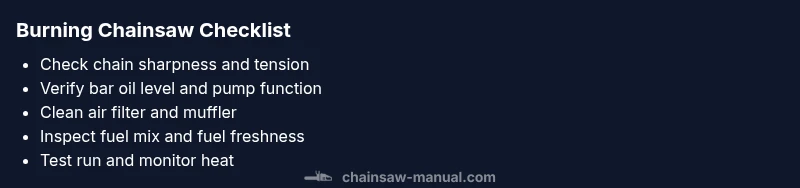
Start with the low-hanging fruit checks before diving into complex diagnostics. Check bar oil level and oiling mechanism to ensure oil reaches the bar. Inspect chain tension and chain sharpness; a loose or dull chain creates heat and extra resistance. Inspect the air filter and remove any debris; a clogged filter reduces air cooling and fuel mixing efficiency. Confirm the fuel mix is correct for your engine and use fresh fuel. Finally, examine the spark arrestor and muffler for carbon buildup that can restrict exhaust flow. Address these basics first; many operators find the issue resolved quickly.
Diagnostic flow you can follow at the jobsite
- Symptom persists after lubricant and chain adjustment? Proceed to check the oil pump and oil passages. - If smoke or heat increases with throttle, inspect carburetion and air intake for blockages. - If the saw cools after a rest but heat returns during use, the problem is likely lubrication or air flow instead of fuel. - If a spark arrestor is blocked, clean or replace it and test again. - If issues continue, stop and seek professional service without forcing the saw through a long cut.
Step-by-step fix for the most common cause
- Stop the saw, engage chain brake, and allow to cool completely. 2) Inspect and adjust chain tension; sharpen if needed. 3) Refill bar oil to the recommended level and inspect the oil pump for leaks or blockages. 4) Clean or replace the air filter and spark arrestor; remove carbon buildup. 5) Verify fuel mixture and ensure fuel is fresh. 6) Perform a short, controlled cut to test performance and heat generation. If heat persists, discontinue use and call a professional.
Safety practices, common mistakes, and PPE
Always wear cut-resistant gloves, eye protection, hearing protection, and sturdy boots. Never work on a hot saw; allow it to cool before touching moving parts. Do not operate the saw with stiff or damaged components. Avoid using a dirty fuel mix or running the engine beyond its rated duty cycle. Regular maintenance, including cleaning the air intake and checking oil delivery, keeps the unit safer and more reliable.
Steps
Estimated time: 30-45 minutes
- 1
Power down and cool
Shut off the engine, engage the chain brake, and move the saw to a safe workspace. Let the chain and bar cool completely before handling. This prevents burns and reduces the risk of heat-related damage during inspection.
Tip: Always disconnect the spark plug cap for gas saw work, if safe to do so, before handling parts. - 2
Check chain tension and sharpness
Remove the bar cover and inspect the chain for sharpness and proper tension. A loose or dull chain increases friction and heat; retension or replace as needed.
Tip: A properly tensioned chain should barely lift away from the guide bar when pressed from above. - 3
Inspect bar oil system
Check bar oil level and test oil flow by revving the engine briefly while observing oil on the tip. If no oil reaches the bar, inspect the oil gallery, pump and seals for blockages or leaks.
Tip: Dip a clean cloth at the bar nose to see fresh oil and confirm flow during operation. - 4
Clean air filter and muffler
Remove the air filter housing and clean or replace the air filter. Inspect the spark arrestor screen in the muffler; clear any carbon buildup that can choke exhaust flow.
Tip: Use a nylon brush to remove stubborn deposits without damaging delicate screen material. - 5
Check fuel mix and quality
Verify you are using the correct fuel mix for your engine and that the fuel is fresh. Old or wrong ratios can overheat the engine and increase heat in the bar area.
Tip: Label fuel containers with the date of fill and the mix ratio to avoid repeats. - 6
Test run and assess
Reinstall components, start the saw, and perform a short controlled cut. Monitor for heat, odd smells, or smoke. If the symptom returns, stop the test and seek professional service.
Tip: Record any changes you made to compare effects on subsequent tests.
Diagnosis: Chainsaw is burning wood during operation
Possible Causes
- highDull or nicked chain causing excessive friction
- highInsufficient lubrication due to low bar oil level or oil pump failure
- mediumClogged air filter or muffler restricting airflow
- mediumIncorrect fuel mix or old fuel leading to overheating
Fixes
- easySharpen/replace chain and adjust tension to factory specs
- easyRefill bar oil, inspect pump, and clear oil passages
- easyClean or replace air filter and spark arrestor; ensure muffler clearance
- easyUse fresh fuel with correct oil ratio; avoid old or contaminated fuel
FAQ
Why does a chainsaw burn wood even after oiling?
Oil helps reduce heat, but a dull chain or misadjusted tension creates friction that causes burning. It can also indicate oil delivery issues or clogged filters impeding cooling. Address lubrication, chain sharpness, and airflow before cutting again.
Oil helps. If the chain is dull or misadjusted, friction burns heat. Fix lubrication, sharpen the chain, and clear airflow before cutting again.
Can I continue working if I see smoke but feel no heat?
Smoke can indicate incipient heat buildup or lubrication problems not yet felt in the bar. Stop cutting, inspect chain condition, oil flow, and air path. If you're unsure, defer to a professional evaluation.
If you see smoke, pause and inspect lubrication and chain condition. If unsure, get a pro to check it.
Is air filter maintenance enough to fix the problem?
Air filter maintenance is critical: a clogged filter reduces cooling and fuel mixing efficiency. Clean or replace the filter, inspect the muffler for carbon buildup, and re-test after adjustments.
Clean or replace the filter and check the muffler. Re-test after fixing airflow.
Should I adjust the carburetor if overheating persists?
Carb adjustments can help, but incorrect tuning risks engine damage. Only adjust if you’re trained or under guidance from a service manual or a professional.
Carb tuning can help, but do not guess. Seek professional guidance if burning persists.
When is professional service required?
If basic lubrication, tension, and air systems checks fail to resolve the issue, or if you notice repeated overheating, exhaust damage, or fuel system concerns, contact a qualified technician.
Call a pro if simple checks don’t fix the overheating or you notice ongoing damage.
How often should I service the chainsaw to prevent overheating?
Perform a basic service after every few use sessions: inspect chain tension, sharpen and lubricate, clean filters, and check oil flow. A formal service schedule depends on usage and manufacturer guidance.
Do basic checks after use and follow a formal schedule per the manual.
Watch Video
The Essentials
- Inspect lubrication first when overheating occurs
- Clean air intake and muffler to restore airflow
- Sharpen and tension chain for proper cutting efficiency
- Use fresh fuel and correct mix to prevent damage
- Call a professional if symptoms continue after basic fixes