Broken Chainsaw Teeth Troubleshooting Guide
Urgent, safety-first guide to diagnosing and fixing broken chainsaw teeth, with step-by-step repairs, a diagnostic flow, and maintenance tips to prevent future breakage.


Most often, broken chainsaw teeth result from an impact with hard material, misalignment, or severe wear. The quickest fix is to stop the saw, remove the chain, and replace the damaged tooth or entire chain. Inspect the bar and other teeth for damage, then reassemble with proper tension. This quick guide from Chainsaw Manual helps you diagnose and fix safely.
Why broken chainsaw teeth happen
Broken chainsaw teeth often occur after a hard impact, running the chain dull and forcing it to bite unevenly, or from misalignment between the chain and bar. Over time, repeated stress on individual teeth can cause chips or fractures. According to Chainsaw Manual, most breakages originate from hitting nails, rocks, or hidden obstacles, or from cutting materials that exceed the bar’s design. In the field, operators sometimes push beyond the safe limits in pursuit of speed, which accelerates wear. When teeth fail, cutting efficiency drops, fuel use spikes, and the risk of kickback increases, making safe operation essential. Understanding why broken chainsaw teeth occur helps you respond quickly and reduce downtime on the job. You’ll notice changes such as increased vibration, uneven feed, and louder cutting sounds before a tooth fully snaps. By recognizing these warning signs early, you can halt work, inspect the chain and bar, and prevent further damage.
Immediate safety steps
Before touching the chain, power off the saw and engage the chain brake. Remove the bar cover and disconnect the spark plug wire if you’re working on a gas model, or unplug a corded electric saw. Wear ANSI-rated gloves, eye protection, and sturdy boots. Do not run the chain at all with broken teeth, as shards can eject and injure nearby workers. Clear the work area of bystanders and tools. Once safe, lay the saw on a stable surface, and inspect the chain for obvious damage. If you see heavy deformation or teeth missing, stop and plan replacement rather than attempting to grind or bend the gear back into place. Use a clean, dry surface and keep the chain flat to avoid additional nicks.
Visual damage assessment: chipped, bent, or broken teeth
Examine each tooth for chips, noticeable bends, or outright breaks. A single broken tooth can throw off the chain’s pitch and tension, causing uneven cutting and possible derailment. Look at the rivets, drive links, and the connecting links; if they show wear or cracks, the chain may need replacement. Compare teeth length and shape with a new chain spec to spot deviations. Remember that a damaged tooth can be a symptom of a worn bar or misaligned guide; if the bar is worn, the chain will not seat correctly, accelerating further damage. Document what you see and set aside any chain that has cracks in the spacer or welds. The goal is to identify whether you can salvage the chain through tooth replacement or if you must replace the whole chain. If multiple teeth are compromised, plan a full-chain replacement to restore performance and safety.
Common root causes in the field
Hard contact with rocks, nails, or hidden metal is the top cause of tooth breakage. Running a dull chain increases stress on individual teeth, making them more prone to chips. A misfitting chain or bar—where pitch, gauge, or depth gauges don’t align—also contributes to tooth failure. Improper tension and aggressive cutting techniques such as plunging can accelerate wear. Overheating from poor lubrication can soften tooth material and cause cracks under load. Chainsaw Manual analysis shows most failures stem from improper maintenance and operator error rather than a faulty tooth design. Understanding these causes helps you plan a proactive maintenance routine, including regular sharpening, correct tension, and using the right bar oil.
Step-by-step repair or replacement pathway
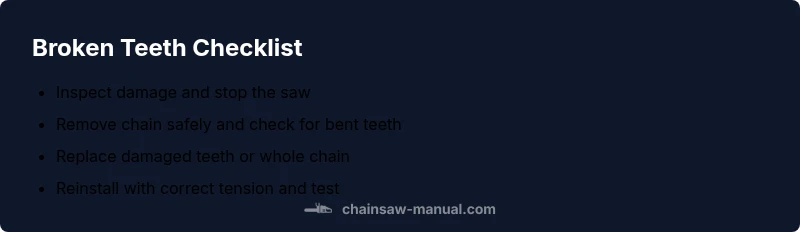
Begin by securing the saw and removing the chain from the bar, following the manufacturer’s instructions. Inspect the entire chain for any other damaged teeth and determine whether a single-tooth replacement is possible (some chains support modular replacements, others require a full chain). If teeth are severely damaged or multiple teeth are broken, replace the entire chain. Check the bar for wear or bending; a worn bar can cause misalignment that leads to future tooth damage. When replacing teeth, use the exact pitch and gauge to maintain proper engagement with the drive sprocket. Reinstall and tension the chain to the correct tightness—loose chains sag, tight chains bind. After assembly, spin the chain by hand to ensure it moves freely without wobble, then start the saw at idle to verify there is no abnormal noise or vibration. If you’re unsure, seek guidance from a trained technician.
How to replace teeth on common chainsaw bars
Some chains are designed with replaceable teeth, others have a welded or riveted tooth pattern. If your chain supports tooth replacement, follow the service manual steps to remove damaged teeth and install new ones in the correct orientation. If replacement isn’t possible, you must replace the chain entirely. When installing new teeth, ensure proper timing with the drive sprocket; mis-timing causes accelerated wear and poor cutting performance. Lubricate the chain properly and check oil flow to the bar during test cuts. This procedure is precise and requires attention to safety and torque specifications specified by the manufacturer. Always use manufacturer-approved parts to avoid warranty issues.
Safety precautions, PPE, and common mistakes
Always wear cut-resistant gloves, eye protection, hearing protection, and sturdy boots. Keep hands clear of the sharp chain, and never reach into the bar well while the chain is rotating. If you are not confident, stop and consult a professional. Common mistakes include attempting to file a broken tooth (which can create more stress), over-tightening the chain, and running the saw without proper lubrication. Maintain a circular chain file and proper files to avoid heat buildup. This is a critical moment where shortcuts can lead to serious injury; take your time and verify every step.
Prevention and maintenance to avoid future breakage
Routine maintenance reduces the risk of broken chainsaw teeth. Sharpen regularly with the correct file type and tooth count, replace dull teeth before they become chips, and use proper bar oil. Inspect the bar groove and rivets for wear and replace worn components promptly. Keep a clean workspace to avoid hidden debris, and store both chain and bar correctly. Replace worn bars and sprockets as part of a long-term maintenance schedule. A proactive approach saves downtime and keeps you productive.
When to seek professional help and warranty considerations
If multiple teeth are broken, or you notice abnormal vibration, unusual noise, or persistent poor cutting even after inspecting and replacing the chain, seek professional service. A chainsaw technician can assess the bar, sprocket, and drive mechanism for hidden damage. Check your warranty or service plan because some chains or bars are covered for wear or manufacturing defects. Chainsaw Manual recommends consulting a qualified technician when in doubt to avoid safety risks and ensure compliance with local regulations.
Steps
Estimated time: 45-60 minutes
- 1
Power down and secure the saw
Ensure the saw is off, engage the chain brake, and disconnect spark plug or unplug if electric. Secure the unit on a stable surface before any inspection.
Tip: Use a vise or clamps to hold the bar and prevent movement during inspection. - 2
Inspect the chain and teeth
Carefully remove the bar cover and inspect each tooth for chips, bends, or breaks. Note any other damaged teeth that may require replacement.
Tip: Take photos from multiple angles to document damage for parts ordering. - 3
Decide repair vs replacement
If only one tooth is damaged and the chain design allows modular replacement, you may swap that tooth. Otherwise, plan replacing the entire chain and possibly the bar.
Tip: Avoid attempting to salvage multiple damaged teeth with hacks or makeshift fixes. - 4
Remove damaged components
Remove the damaged tooth or entire chain according to the manufacturer’s instructions. Check drive links and rivets for wear during this step.
Tip: Keep parts organized to avoid mixing up links with those from a healthy chain. - 5
Install replacement parts
Install new teeth or a new chain with the correct pitch, gauge, and orientation. Recheck alignment with the bar and sprocket.
Tip: Always use manufacturer-approved parts to maintain the warranty and safety standards. - 6
Test and verify
Reinstall the bar cover, retension the chain, and spin the chain by hand. Start the saw at idle to listen for abnormal noises or vibrations.
Tip: If anything feels off, stop and re-check the installation before full operation.
Diagnosis: Visible damage to chain teeth (chipped, bent, or missing) and reduced cutting performance
Possible Causes
- highImpact with nails, rocks, or hidden metal
- mediumRunning a dull or poorly lubricated chain
- lowMisalignment between bar and chain pitch/gauge
Fixes
- easyStop using the saw and remove the chain for inspection
- mediumReplace damaged teeth or the entire chain depending on damage extent
- hardInspect and possibly replace the bar and drive sprocket if wear is detected
FAQ
What causes chainsaw teeth to break?
Broken teeth usually result from impact with hard objects, improper sharpening, or misalignment with the bar. Regular maintenance reduces occurrence.
Broken teeth come from hard impacts, dull chains, or misalignment. Maintain and inspect to prevent.
Can I continue cutting with a chipped tooth?
No. Stop and assess; a chipped tooth can worsen quickly and cause kickback. Replace or repair before resuming.
Don’t cut with a chipped tooth; replace or repair first.
Is it safe to file broken teeth?
Avoid filing broken teeth; filing can weaken teeth further. Replace the damaged chain to restore safe performance.
Don’t file broken teeth; replace the chain for safety.
How do I know if I should replace just one tooth or the entire chain?
If multiple teeth are damaged or the chain shows bent links, replace the entire chain. If only one tooth is damaged and the design allows, you may replace just that tooth.
Many damaged teeth mean replace the chain; one damaged tooth might be repairable.
What PPE should I wear when inspecting or replacing teeth?
Wear gloves, eye protection, hearing protection, and sturdy boots. Ensure the saw is powered off and never reach toward the chain while it’s moving.
Wear proper PPE and ensure the saw is off.
How can I prevent broken teeth in the future?
Keep the chain sharp, maintain proper tension, use correct bar oil, inspect bar and drive links regularly, and avoid cutting through metal or nails.
Keep the chain sharp, tension right, and inspect parts regularly.
Watch Video
The Essentials
- Stop and inspect immediately when damage is suspected
- Replace damaged teeth or chain rather than improvising fixes
- Check bar, drive sprocket, and tension during maintenance
- Test safely after reassembly to confirm no abnormal behavior
- Prevent future breakage with regular sharpening and correct lubrication