Broken Chainsaw for Sale: Urgent Troubleshooting Guide
Urgent troubleshooting guide for buyers of a broken chainsaw for sale. Learn safe diagnostics, common failure modes, and fast fixes with insights from Chainsaw Manual.


Most often, a 'broken' chainsaw for sale suffers from a seized engine, bad spark plug, or fuel issues. Start with quick checks: ensure fresh fuel, verify the ignition switch and safety features, and inspect the bar and chain for binding. If the unit won't start after these simple steps, avoid further testing and seek professional diagnosis.
What to check when you encounter a broken chainsaw for sale
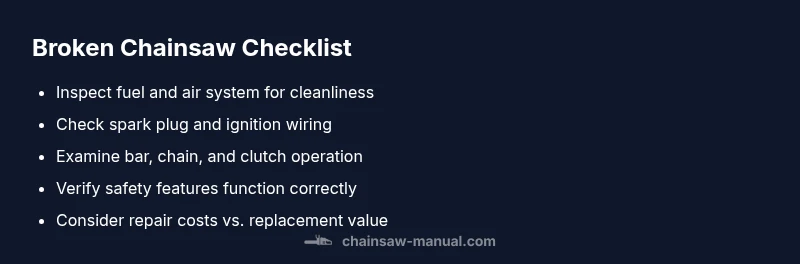
When you come across a chainsaw described as 'broken'—or visibly compromised—in a sale listing, the first step is to separate emotion from judgment. According to Chainsaw Manual, the safest path is to assess the underlying systems: fuel delivery, ignition, compression, and safety interlocks. Begin with a clear, non-destructive checklist: verify the fuel quality and mixture, inspect the spark plug and air filter, and ensure the chain brake is disengaged. Look for obvious signs of abuse, oil leaks, corrosion, or missing parts. Document every issue with photos and notes, so you can compare across listings or discuss repairs with a professional. This initial triage helps you decide whether a repair is feasible and whether the price reflects the work required.
Common failure modes in second-hand units you might buy
Used or damaged chainsaws tend to fail in a handful of predictable ways. The carburetor can become clogged after stale fuel; the fuel lines may be cracked; ignition coils or spark plugs can fail, causing hard starting or no-start conditions. The chain brake, if engaged or stuck, can prevent starting and pose safety hazards. Worn or damaged bars and chains can cause poor cutting or vibration, while sealing rings and piston rings may suffer from improper storage. If the saw has been stored with old bar oil, internal components can rust or gum up. Each of these modes affects performance differently, but they share a common solution pattern: confirm the basics (fuel, air, spark), then inspect mechanical wear and safety systems. Chainsaw Manual analysis shows that many buyers overlook the safety features and the condition of the chain and bar during assessments, which leads to costly mistakes.
Safe initial checks you can perform before attempting to start
Safety should always come first. Start with non-invasive checks:
- Visual inspection: look for oil leaks, loose nuts, cracked handles, or damaged wiring.
- Fuel and oil: drain old fuel, replace with fresh two-stroke mix if applicable, and check the oil level and delivery to the bar.
- Air intake and filter: remove and inspect the air filter; clean or replace if dirty.
- Spark and ignition: remove the spark plug cap and inspect the electrode for fouling or wear; if you have a spark tester, perform a quick spark check.
- Chain and bar: ensure the chain moves freely by hand with the bar cover removed, and inspect for bent guides or missing drive links.
If any of these checks fail, fix or replace the affected part before attempting to start. If you’re unsure, consult the seller’s documentation or a professional. Chainsaw Manual emphasizes conservative testing to avoid kickback or fuel hazards and recommends keeping the unit on a stable, well-ventilated surface while inspecting.
Diagnostic flow: symptom to fix path
Symptoms often follow familiar patterns:
- Won't start after multiple pulls or presses: check fuel, spark, and air; inspect the carburetor and ignition coil.
- Starts briefly then stalls: suspect carburetor float, air leak, or fuel delivery issue.
- Runs rough or lacks power: examine the air filter, spark plug condition, and bar/chain lubrication.
- Chain won’t move or binding: inspect the clutch, drive sprocket, and bar alignment.
For each symptom, work through this ordered flow: confirm basic safety and fuel, test ignition, inspect air intake, evaluate carburetion, then inspect mechanical wear. If a step reveals a fault, address it directly and re-test. If starting remains unreliable after these checks, the problem may be deeper within compression or timing, and professional service is recommended.
Step-by-step repairs for the most common issues
- Fresh fuel and correct mix: drain stale fuel, dispose properly, and mix fresh fuel per manufacturer guidance. Refill, reassemble, and attempt a start. Tip: use a fuel stabilizer for longer storage between uses.
- Spark plug replacement: remove the old plug, inspect the electrode, and install a new, properly gapped plug. Reconnect ignition wires and try starting.
- Carburetor cleaning: remove the carb body, spray with cleaner, and clear any blockages in jets or passages. Reassemble and test with the correct choke sequence.
- Air filter and ventilation: clean or replace a clogged air filter; ensure the carburetor shows no air leaks and that the boot clamps are tight.
- Lubrication and chain tension: verify bar oil delivery to the chain and adjust chain tension to spec. Ensure the chain spins freely by hand before testing under load.
Safety tip: always wear PPE, keep bystanders clear, and work in a dry, ventilated area. If the saw still won’t start after these steps, escalate to professional repair to prevent accidental injury or further damage.
Safety reminders and when to seek professional help
Working on a chainsaw, especially a used or broken one, carries risk of kickback, fuel leaks, and accidental starting. If you notice cracked housings, frayed electrical wiring, a seized crankshaft, or abnormal smoke or odors, stop immediately and seek professional service. Chainsaw Manual recommends consulting a qualified technician for complex issues such as internal engine damage, timing problems, or transmission failures. When in doubt, prioritize safety and invest in a proper inspection rather than risky DIY fixes.
How to evaluate value and decide if you should buy a broken chainsaw for sale
Price is only one factor in evaluating a broken saw. Consider the ease of sourcing replacement parts, the seller’s history, and the potential labor cost. Request maintenance records, inspect the bar, chain, and clutch, and verify that the model is still supported by aftermarket parts. If the repair bill would approach or exceed the price of a working used saw, it may be wiser to walk away. Chainsaw Manual suggests comparing total repair estimates against market value of similar, functioning units and factoring in your own time and workshop readiness. Being methodical reduces the risk of ending up with a liability rather than a productive tool.
Steps
Estimated time: 2-4 hours (depending on parts availability and skill level)
- 1
Assess safety and environmental setup
Move to a clean, dry area; wear PPE and ensure bystanders are clear. Gather tools and drain any spilled fuel safely. Inspect for obvious damage.
Tip: Always have a dry, well-ventilated workspace. - 2
Check fuel and air intake
Drain stale fuel, replace with fresh mix, and inspect air filter. Replace filter if dirty and confirm there are no air leaks around the carb boot.
Tip: Use fresh fuel to avoid varnish buildup. - 3
Test ignition and spark path
Remove the spark plug and inspect for fouling. If possible, perform a spark check or replace with a known-good plug.
Tip: A weak spark is a common cause of no-start. - 4
Inspect carburetor and compression signals
Clean the carb Jets, check for fuel spray from the primer, and perform a basic compression check if you have the tool. Watch for signs of scoring or leakage.
Tip: Compression results guide whether engine repair is feasible. - 5
Evaluate mechanical wear and safety systems
Examine the chain brake, clutch, drive sprocket, and bar for wear. Ensure the chain moves smoothly by hand and the brake disengages properly.
Tip: A stuck brake is a common cause of starting failure.
Diagnosis: Broken chainsaw for sale: appears non-functional or starts inconsistently
Possible Causes
- highFuel system degradation or stale fuel
- highSpark/ignition system failure
- mediumMechanical wear or seized components (bar, chain, clutch, piston)
Fixes
- easyDrain old fuel, clean or replace carburetor, and mix fresh fuel per spec
- easyInspect/replace spark plug and test ignition circuit
- mediumInspect bar/chain, tension, and clutch; perform basic lubrication checks
FAQ
Is it safe to buy a broken chainsaw for sale and attempt repairs myself?
DIY repairs can be feasible for simple issues like air filter or spark plug. However, complex problems such as internal engine damage require professional service. Always assess safety hazards first and avoid testing if you smell fuel or see damaged wiring.
DIY repairs can work for simple tasks, but for engine damage, seek a professional. Always prioritize safety and avoid starting until you’ve confirmed it’s safe.
What is the first test I should perform if it won't start?
Check fuel quality, spark, and air intake. Replace old fuel, inspect the spark plug, and ensure the air filter is clean before attempting to start again.
First check fuel, spark, and air. Replace stale fuel and clean the air filter before retrying.
How can I tell if the chainsaw is worth repairing?
Compare the estimated repair cost to the cost of a similar used, working saw. If labor and parts exceed market value, walking away is prudent. Always factor your own time and skill level.
Weigh repair costs against buying a working used saw; if the price nears or exceeds a working unit, it’s probably not worth it.
What replacement parts are most commonly needed?
Spark plugs, fuel filters, air filters, carburetor components, and bar/chain assemblies are frequent needs in broken units. Availability varies by model, so verify compatibility.
Common parts include spark plugs, filters, and carburetor pieces. Check model compatibility before buying.
Should I store a broken chainsaw before repair?
Store it in a dry, well-ventilated area away from fuel sources. Add fuel stabilizer if you plan to keep it unused for an extended period, and periodically rotate stock to prevent further corrosion.
Store dry and ventilated, away from fuel. Use stabilizer if storing long-term.
Where can I source reliable replacement parts?
Check authorized service centers, reputable aftermarket suppliers, and community forums for compatible parts. Always verify model compatibility and part numbers before purchase.
Look for reputable sellers and verify compatibility before buying parts.
Watch Video
The Essentials
- Inspect fuel, spark, and air first when evaluating a broken saw
- Don’t skip safety checks; repair only if you can verify parts are salvageable
- Estimate repair costs and compare to market value before buying
- When in doubt, consult a professional to avoid injury
- Maintain a clear record of tests and repairs for future use