Broken Chainsaw Bar: Safe Fixes and Replacement Guide
A practical, safety-first guide to diagnosing a broken chainsaw bar, deciding between repair or replacement, and steps to prevent future damage. Learn quick fixes, proper maintenance, and best practices from Chainsaw Manual.


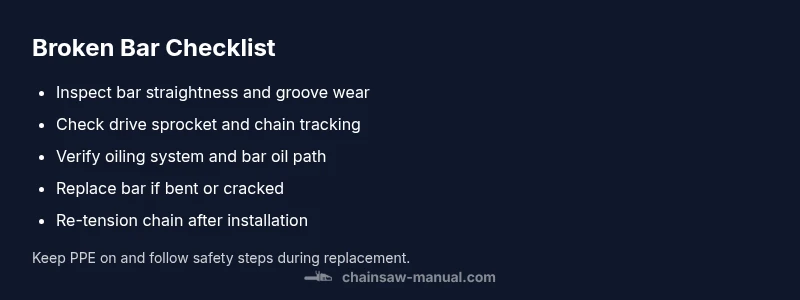
A bent or severely worn bar is the most common cause of a broken chainsaw bar. The quickest fix is to stop cutting, remove the bar and chain, inspect for straightness and groove wear, and replace the bar if there’s any bend, crack, or excessive guide-bar wear. Also verify chain tension, sprocket condition, and proper oiling before resuming.
Understanding the problem: broken chainsaw bar
A broken chainsaw bar can show as visible bending, a crack along the rail, uneven teeth wear, or excessive play in the bar when the chain cycles. When the bar is damaged, the chain can bind, cut inaccurately, or kick back. According to Chainsaw Manual, prolonged use with a damaged bar accelerates wear on the chain, sprocket, and oiling system, increasing safety risks. Recognizing the signs early is essential for safe operation and efficient work. This section lays the groundwork for deciding whether to repair or replace, and explains how bar geometry affects performance and safety during heavy cutting. Always stop and assess before continuing work.
Safety first: gear and preparation
Before inspecting a broken chainsaw bar, switch off the engine, engage the chain brake, and disconnect the spark plug (for gas saws) or remove the battery (for electric models). Put on eye protection, cut-resistant gloves, hearing protection, and chainsaw chaps. Prepare a clean workspace, organized tools, and a stable surface. Safe handling reduces the risk of kickback and accidental contact with the chain. Remember—safety gear is not optional; it’s the first line of defense when a bar issue arises.
Visual checks you can perform in the field
Perform a calm, visual inspection of the bar:
- Check for a visible bend or twist along the bar rails.
- Look for cracks in the bar body or on the mounting holes.
- Inspect the groove for uneven wear or rounded edges. A worn groove can cause the chain to ride high or low, increasing chain tension irregularities.
- Examine the teeth for hooked, chipped, or missing teeth beyond normal wear.
- Ensure the bar is aligned with the drive sprocket and that the clutch cover bolts are snug (but not overtight). These quick checks help decide whether the bar can be saved with maintenance or must be replaced. If any crack is detected or the bar is clearly bent, replacement is usually the safer choice, per Chainsaw Manual guidance.
How to determine if you should repair or replace
Repairing a bar is rarely cost-effective or safe if there is any visible bend, crack, or severe groove wear. Replacement is often the recommended path when:
- The bar shows a warp or twist that affects cutting accuracy.
- The groove has deep or widened wear that reduces lubrication contact.
- The bar is cracked near the mounting holes or along the rail.
- The chain doesn’t track properly after adjustments. In cases of marginal wear, a professional can sometimes grind back minor burrs or replace the groove insert if compatible, but this is not universal. The goal is to maintain straight tracking, even wear, and reliable lubrication.
Step-by-step: removing and replacing the bar (overview)
If replacement is required, follow these steps to replace the bar safely and effectively. Always detach power, secure the saw, and follow the manufacturer’s torque specs. Keep in mind that the chain tension and bar-nut torque must be tuned after replacement to prevent premature wear. This section provides a high-level approach aligned with best practices from Chainsaw Manual, emphasizing methodical checks and safe handling.
Maintenance tips to prevent bar damage
Prevention is better than repair. Regular maintenance reduces the likelihood of a broken chainsaw bar and extends the life of the bar and chain. Essential tips include:
- Keep the bar and chain properly lubricated with the correct bar oil and maintain clean oil passages.
- Regularly check bar rails for straightness and groove wear; replace as needed.
- Use the correct chain for the bar and ensure proper tension to avoid extra stress on the bar.
- Clean debris from the bar groove after each use to prevent dirt buildup that accelerates wear.
- Store the saw in a dry place and inspect the bar after heavy cutting or hitting hard wood.
Final thoughts on safety and maintenance
A broken chainsaw bar is a serious safety issue, and the right action depends on the extent of damage. When in doubt, replace the bar rather than attempting risky repairs. Chainsaw Manual emphasizes consistent inspection, proper lubrication, and correct operating techniques as the best defense against bar damage. By following these guidelines, homeowners, DIY enthusiasts, and professionals can keep their chainsaws productive and safe.
Steps
Estimated time: 45-75 minutes
- 1
Power off and secure the saw
Shut down the engine, engage the chain brake, and unplug or remove the battery. Wear PPE and place the saw on a stable work surface. This initial step prevents accidental starts during the repair.
Tip: Always disconnect power even if you only plan a quick visual check. - 2
Remove the bar and chain
Loosen the tensioning screw, remove the bar nuts, and slide off the bar and chain. Place them on a clean surface. Inspect chain tension while everything is exposed but do not force parts.
Tip: Note the orientation of the chain on the bar for correct reassembly. - 3
Inspect bar for damage
Look for bends, cracks, or a worn groove. Check mounting holes for elongation. A damaged bar is a safety risk even if the chain looks fine.
Tip: If you see any crack or warp, plan for bar replacement. - 4
Check groove and drive sprocket
Examine the groove wear and ensure the drive sprocket engages evenly. Excessive wear on the groove or sprocket can mimic bar damage and cause poor tracking.
Tip: Replace sprocket if it shows missing teeth or uneven wear. - 5
Assess bar alignment and chain tension
Ensure the bar rails are straight and the chain sits properly in the groove without binding. Incorrect tension can worsen wear.
Tip: Never overtighten the chain; it should have slight play when cold. - 6
Decide on repair vs replacement
If the bar is bent or cracked, replace. If only minor burrs or groove wear exist, you may consider light maintenance per manufacturer specs.
Tip: When in doubt, replace—the safer choice. - 7
Install new bar and chain
Reinstall the bar and chain in the correct orientation. Re-tension and recheck alignment with the sprocket before starting.
Tip: Retorque bar nuts to spec after initial run test. - 8
Test cut and finalize maintenance
Make a light test cut on soft wood to verify tracking and lubrication. Stop immediately if there is any unusual vibration or smoke.
Tip: Always clean the bar groove after testing and adjust as needed.
Diagnosis: Saw binds, kicks, or stops cutting due to bar damage
Possible Causes
- highBent or cracked bar
- mediumExcessive groove wear
- lowLoose or damaged bar nuts
Fixes
- easyInspect bar for bend/cracks; replace if damaged
- mediumCheck and replace groove wear or guide bar if necessary
- easyTighten or replace bar nuts and realign bar with sprocket
- mediumReplace bar oiling system components if oiling is inadequate
FAQ
What counts as a broken chainsaw bar?
A bar with visible bend, cracks, or excessive groove wear. If in doubt, replace to avoid kickback or binding.
A bar with bend, crack, or severe groove wear is considered broken and should be replaced.
Can I straighten a bent bar?
Straightening a bar is usually not recommended due to structural weakness. If bent, replacing the bar is safer and more reliable.
Straightening a bent bar isn't usually safe; replace it for reliability.
Is it safe to continue cutting with a damaged bar?
No. Using a damaged bar increases the risk of kickback, chain derailment, and severe injury. Stop and assess immediately.
No, stop and assess immediately; damaged bars are a safety risk.
What parts should I inspect with bar damage?
Inspect the groove wear, drive sprocket, bar nuts, chain tension, and the chain itself for any unusual wear or damage.
Check groove wear, sprocket, nuts, tension, and chain for damage.
How often should I replace the bar?
Replacement depends on wear, cracks, and usage. If in doubt, replace rather than risking failure during work.
Replace the bar when wear or cracks are evident to avoid failure.
Do I need a professional for bar replacement?
Not always, but if the bar mounting or drive system shows damage, or you’re unsure about alignment, consult a professional.
If you’re unsure about alignment or mounting, consult a professional.
Watch Video
The Essentials
- Inspect for bends and cracks before every cut
- Replace a damaged bar promptly to ensure safety
- Maintain proper chain tension and lubrication
- Regularly clean the bar groove to prevent debris buildup
- Use proper PPE and follow safety procedures