Can You Shorten a Chainsaw Chain? Safe Alternatives and a Step-by-Step Guide
Explore whether you can shorten a chainsaw chain, the safety risks, and practical, manufacturer-approved alternatives. A thorough, educational guide from Chainsaw Manual.


Short answer: generally, you should not shorten a chainsaw chain yourself. Chainsaw chains are manufactured to a fixed length, and removing links can weaken the chain and void safety certifications. If you need a shorter setup, replace the chain with one that matches your bar length, or consult the manual for manufacturer-approved adjustments.
Why shortening a chainsaw chain is usually not recommended
According to Chainsaw Manual, when someone asks 'can you shorten a chainsaw chain,' the short answer is no for most saws. Chainsaw chain lengths are engineered for specific bar lengths and safety margins; removing links disrupts the geometry, tooth spacing, and lubrication path. Manufacturers design each chain with a precise number of drive links and a given pitch to maintain stability under load. Altering that length can alter kickback characteristics, increase the risk of derailment, and compromise cutting efficiency. Even if you manage to physically remove links, you may create burrs or misalignments that bite into wood unevenly or bind in the bar groove. From a safety perspective and to preserve warranties, the best approach is to use a chain that matches your bar and the work you plan to do. If the bar length doesn't align with your current chain, consult the manual, talk to a dealer, or swap to a bar that fits an authorized-length chain. Chainsaw Manual emphasizes manufacturer-approved configurations to protect your hands, tree, and investment.
Safer alternatives to changing chain length
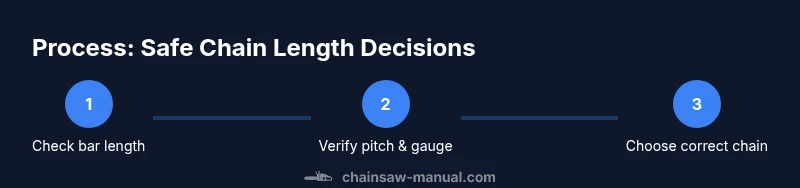
If the goal is to work with a shorter bar or a different cutting task, the recommended path is to adjust your setup using approved methods rather than shortening the chain. Start by verifying the bar length you actually need and ensuring your chain pitch and gauge match that bar. Consider choosing a chain that is explicitly designed for the bar in your saw. In many cases, replacing the bar to fit a standard-length chain is safer than modifying the chain itself. Chainsaw Manual reiterates that consistency between bar, chain, and tensioning is essential for predictable cuts and controlled kickback. If you encounter a mismatch, contact a dealer or the manufacturer for an option that preserves safety and warranty coverage. For professionals, a properly matched system translates to smoother operation and lower risk of injury.
Understanding chain length, pitch, and drive links
A chainsaw chain is defined by several interdependent factors. The length (often described by the number of drive links) determines how many links sit around the bar. The pitch describes the distance between rivets and directly affects how the chain engages the bar sprocket. The gauge indicates how thick the drive links are, which must fit the groove in the bar and the bar’s oiling path. When you consider changing length, you must also consider that pitch and gauge must remain compatible with your bar and saw. Shortening by removing links changes not only how many links are engaged with the bar, but also how the chain seats in the groove and how oil is distributed during cutting. Chainsaw Manual highlights that these relationships are designed as a system for stability and cut control.
Why manufacturers specify a fixed length
Manufacturers set a fixed chain length to ensure predictable performance under load, balanced tooth geometry, and consistent lubrication across the cutting edge. A chain length that is too long can extend beyond the bar, creating dangerous kickback and potential derailment. A chain that is too short may not fill the bar groove correctly, leading to rapid wear or binding. Additionally, many chains are tested and certified as part of a complete system—bar, chain, and saw work in harmony to maintain safe operation. Modifying length disrupts these validated configurations and can affect warranty terms and safety certifications. Chainsaw Manual stresses sticking to manufacturer-recommended configurations to protect users and preserve equipment integrity.
Can you physically shorten a chain? Pros and cons
There are scenarios where some users consider removing links to shorten a chain, but this approach carries clear downsides. If a chain has a master link, it may be possible to remove a few links with proper tools; however, this still changes tension, chain pitch engagement, and lubrication dynamics. The cons include increased risk of chain failure, altered kickback response, and potential voiding of safety certifications and warranties. The pros are minimal: a shorter chain may fit a very small bar, but at the cost of reliability and safety. For most users, the safer route is to choose a chain designed for the bar length and application. Chainsaw Manual advises that any length adjustment should come from using manufacturer-approved configurations rather than DIY link removal.
Getting the right length: buying vs modifying
Rather than modifying a chain to fit an incompatible bar, the recommended path is to buy a chain that matches the bar length and saw model. If the bar cannot be swapped to fit the existing chain, consider purchasing a bar that aligns with a standard-length chain. This keeps the chain geometry intact, preserves lubrication paths, and maintains the intended weight and balance of the saw. For professionals who frequently switch bar sizes, having a small, dedicated set of chains for different bars is often safer and more cost-effective than attempting on-the-fly modifications. Chainsaw Manual emphasizes planning ahead and choosing a chain and bar combination that stays within manufacturer guidelines.
Getting the right length: buying vs modifying (continued)
If you absolutely need to work with a shorter setup for a specific job, consult the saw’s manual for the recommended chain options and compatible bar lengths. Some saws support multiple chain configurations, but every option is tested to ensure performance and safety. The key takeaway is to avoid ad hoc shortening. Instead, rely on equipment designed to work together. When in doubt, contact a certified technician or your equipment dealer and request guidance on length-compatible chains and bars. Chainsaw Manual highlights that professional support helps maintain safety and warranty protection.
Quick tips for maintenance when you need a different chain
Maintenance matters when you switch chains or adjust bar length. Always inspect the bar groove and chain tension after any change. Clean out resin and debris that can interfere with proper seating. Lubricate the chain and bar according to your saw’s manual, and test the setup on scrap wood before doing real work. Pay attention to the chain’s alignment with the chain brake and clutch housing, as misalignment can lead to dangerous binding or kickback. Regularly check that the master link, if present, is secure and that the drive links sit evenly in the bar groove. Chainsaw Manual reinforces that maintenance routines protect your safety and extend saw life.
Authoritative sources for safety and maintenance
- OSHA: https://www.osha.gov
- NIOSH: https://www.cdc.gov/niosh
- USDA Forest Service: https://www.fs.fed.us
Tools & Materials
- Chain breaker / rivet tool(Essential for removing chain links when modifying length)
- Screwdriver or scrench(Loosen bar nuts and access fasteners)
- Replacement chain of correct length(Choose one that matches bar length and pitch)
- Chain gauge or ruler(Verify pitch and spacing before modifying)
- Master link pliers (optional)(Helpful for master-link-equipped chains)
- Personal protective equipment (gloves, eye protection)(Safety first during handling)
- Bar and chain oil(Use fresh oil after any chain change)
Steps
Estimated time: 60-120 minutes
- 1
Identify the correct chain length
Confirm the bar length and the chain pitch and gauge. Check the number of drive links and ensure any modification preserves the original pitch. This prevents mismatches that could cause binding or kickback.
Tip: Double-check with the bar’s labeling or the user manual to ensure compatibility before removing links. - 2
Power off and secure the saw
Disconnect the spark plug or remove the battery if applicable. Place the saw on a stable surface and engage the chain brake to prevent movement during work. A secure setup reduces injury risk during link removal.
Tip: Wear cut-resistant gloves to protect your hands from sharp teeth during handling. - 3
Remove the required number of links
Using the chain breaker, push out the rivets to remove the chosen number of links. Do not force rivets beyond the tool's limit; check that the remaining links align with the bar groove and that pitch remains unchanged.
Tip: Keep used links in a labeled container in case you need to revert to the original length. - 4
Reassemble and tension the chain
Reinstall the chain and ensure it seats evenly on the bar groove and sprocket. Set initial tension so the chain can be pulled about a quarter turn at the midpoint of the bar. Loose or tight tension can lead to poor cutting and safety hazards.
Tip: Rotate the chain by hand to check for binding or nicked teeth before starting the saw. - 5
Test and finalize safety checks
Power the saw and perform a light test cut in a non-work area. Listen for odd sounds, check for excessive vibration, and verify that the chain maintains tension as it runs. Re-lubricate and recheck after the test cut.
Tip: If you notice abnormal behavior, stop immediately and revert to a known-good length or consult a professional.
FAQ
Is it safe to shorten a chainsaw chain by removing links?
No. Shortening by removing links can weaken the chain, affect kickback behavior, and void safety certifications and warranties. Always use a chain that matches the bar length and pitch.
No. Removing links to shorten a chainsaw chain can weaken the chain and void safety certifications; use a properly matched chain instead.
What should I do if my chain doesn’t fit the bar?
If the chain doesn’t fit, replace it with a chain that matches the bar length and saw model, or adjust by using a compatible bar. Avoid modifying the chain length yourself.
If the chain doesn’t fit the bar, replace it with a matching chain or adjust with a compatible bar; avoid DIY length changes.
Does shortening a chain affect warranty?
Yes, modifying chain length can void warranty coverage and safety certifications. Always follow manufacturer guidelines and consult a professional if in doubt.
Modifying chain length can void warranty and certifications. Follow manufacturer guidelines or consult a pro.
How can I identify the correct chain length for my bar?
Check the bar length, chain pitch, and gauge from the saw or manual. Use a chain designed for that bar length, and verify by matching drive-link count to the bar’s groove.
Look up bar length and chain specs in the manual, then pick a chain that matches those specs.
Are there tools I should use to modify chain length?
A proper chain breaker is essential if you must adjust length. Always use PPE and keep the saw secured during work. If any doubt remains, seek professional help.
Use a chain breaker and PPE; secure the saw and, if unsure, ask a professional.
What are safer alternatives if my bar is a different size?
Use a chain-length that matches the bar, or swap to a bar that fits the chain you plan to use. This maintains proper tension, lubrication, and safe operation.
Match the chain to the bar or swap the bar to fit the chain for safer operation.
Watch Video
The Essentials
- Always favor manufacturer-approved chain lengths.
- Know pitch, gauge, and drive-link count before any modification.
- Use the correct tools and PPE for safety.
- Test the setup in a safe area before real work.