How to Remove a Link from a Chainsaw Chain: A Safety Guide
Learn a safe, detailed method to remove a single link from a chainsaw chain, with tools, step-by-step guidance, and safety tips from Chainsaw Manual.


Learn how to safely remove a link from a chainsaw chain and restore proper tension. This how-to covers when to remove a link, the right tools, and safe practice to prevent kickback or derailment. According to Chainsaw Manual, precise steps and PPE reduce risk, and proper maintenance extends chain life.
Why removing a link might be necessary and when to do it
There are legitimate reasons to remove a link from a chainsaw chain, such as restoring proper length after wear, replacing a damaged rivet, or correcting a chain that’s too long for the bar. Shortening the chain changes how drive links engage with the bar and sprocket, and it should be done cautiously. According to Chainsaw Manual, remove only the minimum number of links required to achieve the correct length, and never shorten the chain below the bar length. If rivet integrity is compromised or the link removal would shorten the chain excessively, replacing the entire chain is safer and often more cost-effective. The goal is reliable engagement, consistent tension, and smooth operation under load. Plan your actions, verify measurements, and proceed methodically rather than with guesswork. A deliberate approach reduces the risk of misalignment, which can lead to binding, increased wear, or dangerous kickback.
Safety prerequisites before you start
Before touching any part of the chain, isolate the tool and protect yourself. Power off the saw and disconnect the power source for electric models or remove the battery for cordless units. Engage the chain brake, secure the bar to prevent movement, and use a stable, non-slip work surface. Wear cut-resistant gloves, eye protection, hearing protection, and sturdy clothing. Keep a first-aid kit, a fire extinguisher, and a means to contact help nearby. Ensure you have adequate lighting and enough space to maneuver, and remove any jewelry or loose sleeves that could catch on the chain. A calm, controlled environment minimizes mistakes and helps you follow each step precisely.
Understanding chain anatomy and which links to remove
AChainsaw chain is composed of drive links, tie straps, rivets, and often a master link used for quick disassembly. The rivet secures links together, while the master link (if present) is designed for easier removal without disassembling multiple links. Not all links are equal: removing a drive link affects chain pitch and tension more than removing a non-drive link. Identify the exact link that needs replacement or removal by inspecting for wear on rivets, loose side plates, or deformed drive links. If you’re unsure which link to remove, consult the user manual or a professional; incorrect removal can compromise safety and performance. Chainsaw Manual analysis shows that improper rivet handling increases wear and reduces reliability, so precision matters.
The right tools and choosing between rivet tools
Having the correct tools makes the job safer and faster. A dedicated master link tool or chain link pliers helps separate rivets without gouging metal. You may also need punch tools to drive rivets, a small hammer, and a soft jaw block or wooden surface to rest the chain. A sturdy clamp or vise can keep the chain stable while you work. Never substitute tools that can slip or slip or apply uneven force, as this can nick or broaden rivet sleeves. If you don’t own a rivet tool, you can rent or borrow one from a reputable tool rental service, but ensure it’s the right pitch and width for your chain.
Planning the removal: measuring and marking
Accurate measurement is essential to avoid ending up with a chain that’s too long or too short for the bar. Use a chain gauge or caliper to confirm pitch and width, and compare to your bar’s groove dimensions. Mark the target link visually with a erasable marker, then re-check length against your bar. If you’re shortening the chain, remember that removing more than one link significantly changes engagement with the bar and sprocket, and may require re-setup of the entire drive system. A careful plan saves time and reduces risk of error.
Step-by-step overview of the removal process
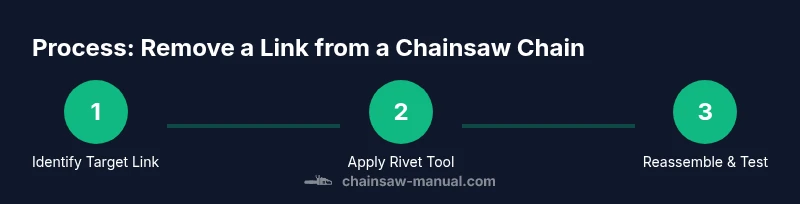
This section provides a high-level view of the removal process to set expectations before the full details in the dedicated STEP-BY-STEP section. You’ll confirm safety, prepare the chain, identify the exact rivet, and position your tools to separate the rivet head without mushrooming the metal. After the rivet is opened, you’ll detach the link, reuse or replace any damaged components, and prepare to reassemble the chain with the correct length. The approach emphasizes slow, deliberate action over rushing, which benefits both safety and accuracy.
Reattaching the chain and ensuring proper length
Reassembly requires aligning all drive links with the bar groove and ensuring the rivet sleeves sit flush within the chain links. If the master link is used, reattach it per the manufacturer’s specification and make sure the clip is seated fully. After reassembly, slowly rotate the bar by hand to confirm there is no binding and that all links move freely. Then adjust the tension according to your saw’s instructions, typically by a small amount of slack near the middle of the chain. A correct length preserves cutting efficiency and reduces wear on the chain and bar.
Post-work: lubrication, tension testing, and storage
Lubricate the chain with the manufacturer-recommended oil and test tension by pulling the chain away from the bar at the midpoint. The chain should snap back into the bar groove with light resistance, not sag excessively. Wipe away excess oil to prevent dirt buildup, and inspect the rivet heads and side plates for any signs of mushrooming or bending. Store the saw in a dry place away from moisture and debris, and recheck tension after a short storage period before the next use. A routine post-work check lowers the risk of unexpected failures during cutting.
Troubleshooting and when to seek professional help
If the chain fails to hold tension, shows persistent stiff spots, or the rivet area appears cracked or excessively worn, stop and consult a professional. Some issues require specialized tools or replacement parts that are not safe to improvise. The Chainsaw Manual team recommends seeking professional maintenance when you notice unusual wear, cracks in the rivet sleeves, or misalignment that you cannot confidently correct with basic tools. Never force a stuck rivet or continue work with a damaged chain, as that can lead to kickback or a broken chain during operation.
Tools & Materials
- Master link tool(For separating rivets without damaging the chain)
- Chain link pliers (long-nose)(Aid in gripping and guiding links)
- Safety PPE(Cut-resistant gloves, eye protection, hearing protection)
- Lockout tool or mechanism(To prevent bar movement while working)
- Hammer and soft jaw block(Light tapping and support if rivets need coaxing)
- Chain gauge or caliper(Confirm pitch and link dimensions match the bar)
Steps
Estimated time: 30-60 minutes
- 1
Prepare the saw and workspace
Power off the saw and secure the bar. Set the chain brake and clamp the bar to prevent movement. Put on PPE and clear the area of clutter. This ensures you can work safely and inspect components without distraction.
Tip: Verify power is fully removed and the workspace is stable before touching the chain. - 2
Identify the exact link to remove
Carefully inspect for a worn rivet or a link that’s too long to fit the bar. Mark the target link and double-check that removing it will not compromise the chain length beyond the bar. If uncertain, consult the manual or a pro before proceeding.
Tip: Use a magnifier or good lighting to spot subtle wear on rivets. - 3
Position tools and support
Lay the master link tool on a flat surface aligned with the rivet and rest the chain on a soft block. Ensure the chain is well supported to avoid bending or twisting during rivet separation.
Tip: Keep tool alignment precise to prevent rivet head mushrooming. - 4
Separate the rivet and remove the link
Apply steady force with the master link tool to loosen the rivet head. Gently drive out the rivet pin from the appropriate side, then slide out the link. If the rivet resists, pause and recheck alignment rather than forcing it.
Tip: Avoid striking rivets with heavy force—this can damage the link and create burrs. - 5
Rejoin chain with correct length
Insert the new or shortened link, reassemble the rivets, and verify the clip if a master link is used. Align all links with the bar groove and ensure the sides sit flush. Do not over-tighten the rivets; they should hold firmly without deforming the metal.
Tip: Recheck the length against the bar with a gauge before putting the saw back into service. - 6
Test tension and lubrication
Manually rotate the chain on the bar to confirm smooth motion. Apply proper bar oil as you test. Check tension at the midpoint and adjust per the saw’s guidelines. Run a short idle and then a test cut on a safe scrap piece to confirm performance.
Tip: If you feel binding or hear unusual noises, stop and re-evaluate the installation.
FAQ
Is it safe to remove a link from a chainsaw chain?
Yes, with proper tools, PPE, and a careful, measured approach. Follow the manufacturer’s guidelines and never rush the process. If in doubt, consult a professional.
Yes, it’s safe if you use the right tools and take your time following guidelines.
Do I need a rivet tool?
A rivet tool or master link tool is highly recommended to minimize damage and ensure smooth removal. If you don’t own one, consider borrowing or renting from a reputable source.
A rivet tool is highly recommended to remove the link safely.
How do I know how many links to remove?
Determine the exact length required for your bar and chain based on manufacturer specs. Remove only the minimum number of links necessary to achieve proper length and tension.
Remove only the minimum needed to reach the correct length.
Can I reattach the chain without a master link?
Some chains require a master link for quick disassembly. If your chain uses one, reinstall it per the manual. If not, reassemble with the riveted joint and verify alignment.
If your chain uses a master link, reattach it per the manual.
What if the rivet is damaged after removal?
If the rivet is mushroomed, bent, or the sleeve is deformed, replace the chain or rivet assembly rather than forcing a repair.
If the rivet is damaged, replace the chain section or whole chain.
When should I seek professional help?
If you encounter persistent resistance, misalignment, or signs of structural damage, stop and consult a professional to avoid safety risks.
Seek professional help if you see signs of damage or persistent issues.
Watch Video
The Essentials
- Identify whether the link removal is truly needed before acting
- Use the correct rivet tools and PPE for safety
- Measure and recheck chain length against the bar after reassembly
- Lubricate and test tension before resuming work
- If you see damage, seek professional help