Wash Chainsaw: Safe Cleaning Guide and Maintenance
Learn how to wash your chainsaw safely with our step-by-step guide. Prepare the right tools, protect bearings, dry thoroughly, and maintain performance with proper storage and routine maintenance.


In this guide, you will learn how to safely wash a chainsaw from start to finish, covering pre-cleaning, choosing appropriate cleaners, protecting the bar and electronics, drying thoroughly, and post-wash maintenance. Follow the steps and safety tips for a reliable, longer-lasting tool. This quick answer outlines what to gather, the key steps, and safety reminders to help you avoid common mistakes.
Why Wash Chainsaw Matters
According to Chainsaw Manual, proper washing protects metal parts from rust, prevents resin buildup that can impair bar and clutch operation, and maintains overall performance. A clean chainsaw is safer and more reliable, especially after heavy cutting or working in damp conditions. Regular washing helps extend the life of seals, bearings, and the bar. It also reduces the risk of gum and pitch obstructing air intakes and cooling pathways. This section outlines the core reasons to wash your saw and what you should expect from a routine wash. The goal is to keep the chainsaw in a safe, ready-to-use state while minimizing downtime and costly repairs.
Key points: clean surfaces, avoid water intrusion into the air intakes, and dry thoroughly to prevent corrosion.
Safety-First Prep for Washing
Before you touch the chainsaw, prepare a safe workspace and the right personal protective equipment (PPE). Wear cut-resistant gloves, eye protection, long sleeves, and sturdy footwear. Work in a well-ventilated area away from children or pets. Disconnect power (for electric chainsaws) or remove the spark plug boot for gasoline models to prevent accidental starts. Place the saw on a stable work surface or clamp it in a vise to reduce movement. Having everything in reach reduces the temptation to rush and skip steps.
This prep step reduces risk and makes the rest of the process smoother, especially for beginners. Chainsaw Manual emphasizes patient, deliberate cleaning to avoid damage.
Exterior Cleaning Techniques and Safe Cleaners
Start with dry brushing to remove loose sawdust and pitch from the housing, bar, and chain. A soft nylon brush works best for delicate surfaces. For stubborn pitch, use a mild, biodegradable cleaner diluted per the label and apply with a sponge. Never spray high-pressure water directly into the air intake or the clutch housing. Wipe the bar and chain with a light lubricant after cleaning to prevent rust and ensure smooth operation when you resume use. If you do remove the bar, clean under the sprocket and behind the clutch cover where debris collects. Always work from clean to dirty to avoid spreading grime.
For electronics and rubber seals, use a damp cloth rather than soaking the saw. This approach minimizes moisture intrusion while still removing grime. You may use a separate brush to reach crevices around the fuel cap, gas cap, and air filter housing. Always follow the degreaser label and never mix cleaners that could corrode metal or degrade rubber seals.
Drying, Lubrication, and Storage after Washing
After cleaning, dry all surfaces thoroughly with a clean cloth and let the saw air-dry for at least 15-20 minutes. Avoid leaving damp metal exposed to humidity for long to prevent rust. Reinstall the bar and chain, lubricate the bar and chain as you would before use, and check the chain tension once dry. Store the saw in a dry, well-ventilated area, ideally on a shelf with good air circulation. If you live in a humid environment, consider a light protective coating on exposed metal to slow corrosion. Routine maintenance after washing should include a quick check of the air filter, spark plug, and fuel system to ensure everything remains in good working order.
Common Mistakes and How to Avoid Them
Common errors include using harsh solvents, spraying water into the air intake, and neglecting to dry the saw completely. Avoid direct, high-pressure water or steam, which can force moisture into internal components and degrade gaskets. Do not disassemble parts you are not comfortable with; reassemble correctly and torque fasteners to the factory specs. Finally, don’t rush the process—allow time for drying and inspection before storage or next use.
AUTHORITY SOURCES
- OSHA Safety and chainsaw guidelines: https://www.osha.gov
- CDC NIOSH: https://www.cdc.gov/niosh
- University Extension: https://extension.illinois.edu
For more in-depth safety guidance, consult these sources and compare with manufacturer recommendations.
Tools & Materials
- Soft nylon brush(For exterior surfaces and removing pitch without scratching metal)
- Mild biodegradable cleaner(Dilute according to label; avoid harsh solvents)
- Soft cloths or microfiber towels(Pat dry and wipe all surfaces)
- Old toothbrush or detail brush(Use for hard-to-reach crevices near the clutch housing)
- Water source (spray bottle or gentle rinse)(Avoid high-pressure flow; just a gentle rinse if needed)
- Personal protective equipment (PPE)(Gloves, eye protection, long sleeves, and sturdy footwear)
- Bar and chain oil for lubrication(Apply after drying and reassembly)
Steps
Estimated time: 45-60 minutes
- 1
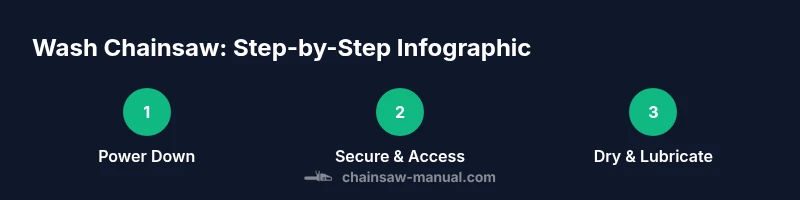
Power down
Turn off the chainsaw and disconnect power (battery or spark plug boot) to prevent accidental starts. This is essential for your safety before you begin cleaning.
Tip: Always confirm the saw cannot start by attempting a gentle trigger press without the chain engaged. - 2
Secure the saw
Position the chainsaw in a stable vise or clamp to prevent movement during cleaning. A secure setup minimizes the risk of slips and injuries.
Tip: Use soft jaw pads to avoid marring the housing. - 3
Engage the chain brake
Activate the chain brake so the chain cannot rotate while you work around the bar and clutch housing. This step reduces cut hazards.
Tip: Double-check the brake engages fully before touching the chain area. - 4
Remove the bar and chain (optional but recommended)
If you’re comfortable, remove the bar and chain to access the bar groove, clutch cover, and behind-parts for thorough cleaning. Reassemble following the steps in reverse order.
Tip: Take a quick photo before removal to ensure correct reassembly. - 5
Clean exterior surfaces
Brush away debris with the nylon brush, wipe with a mild cleaner, and avoid direct water into electrical components. Work from the cleanest areas outward to prevent spreading grime.
Tip: Keep water away from the air intake and electronics. - 6
Inspect and clean under covers
Check behind the clutch cover and around the sprocket for resin buildup. Remove stubborn deposits with a soft brush; dry before reassembly.
Tip: Be mindful of springs and small parts; keep a tray handy. - 7
Dry, lubricate, and reassemble
Dry all parts completely, reassemble the bar and chain, apply bar oil, and verify proper chain tension before storage.
Tip: A properly tensioned chain reduces wear and heat during operation. - 8
Storage and post-wash check
Store the saw in a dry area with good airflow. Do a quick post-wash check of the air filter and spark plug to ensure reliable starts next time.
Tip: Keep the air filter clean to maintain performance.
FAQ
Do I need to remove the chain and bar before washing?
Removing the chain and bar allows thorough cleaning and inspection of internal areas; you can clean around the bar and clutch without removal, but removal makes it easier to clean behind the chain catcher and sprocket.
Removing the chain and bar helps you clean behind the clutch and sprocket; you can still clean around the exterior if you’re new to maintenance.
Can I use water directly on electric chainsaws?
Light, controlled rinsing with a damp cloth is acceptable for electric models; avoid soaking the motor or electrical components. Always follow the manufacturer’s guidance.
Yes, but avoid soaking the motor; use a damp cloth and minimal water.
What cleaners are safe for washing a chainsaw?
Choose a mild biodegradable degreaser or soap diluted per label. Avoid harsh solvents that can degrade rubber seals or corrode metal.
Use a mild biodegradable cleaner and avoid harsh solvents.
How often should I wash my chainsaw?
Wash as part of routine maintenance after heavy use or exposure to resin and dirt. Tailor the cadence to your work environment and manufacturer recommendations.
Wash after heavy use or exposure to dirt; follow manufacturer guidance for cadence.
What should I do after washing?
Dry all parts completely, lubricate the bar and chain, re-tension if needed, and store in a dry place. Check air filter and spark plug as part of the post-wash routine.
Dry thoroughly, oil the chain, reassemble, and store in a dry place.
Watch Video
The Essentials
- Wash chainsaw after heavy use to prevent corrosion
- Wear PPE and work in a ventilated area
- Dry thoroughly and lubricate before storage
- Inspect under the clutch cover for resin buildup
- Follow manufacturer guidelines for routine maintenance