How to Tell When Chainsaw Bar Is Worn Out
Learn how to tell when your chainsaw bar is worn out with clear visuals, measurements, and maintenance tips. This guide covers indicators, safe inspection steps, and replacement guidance for safer, more efficient cuts in 2026.


To tell when a chainsaw bar is worn out, inspect rail and groove wear, nose shape, and chain tracking. Check for excessive side-to-side play and a visibly rounded or grooved bar edge. Compare findings to the manufacturer's replacement guidelines to decide if a new bar or maintenance is needed.
What wearing out a chainsaw bar really means
According to Chainsaw Manual, a worn bar reduces cutting efficiency, increases vibration, and can raise kickback risk. Wear accumulates where the bar contacts the chain during every cut, especially if the chain is sharp but the bar is not properly maintained. When the bar rails, groove, or nose become deformed, you may notice poorer guidance of the chain, uneven cuts, and more torque on the saw. Recognizing these signs early helps you decide whether to sharpen, retime, or replace the bar, protecting both you and the tool. This section lays the groundwork for a practical wear assessment that homeowners, DIY enthusiasts, and professionals can perform safely.
Visual signs you should know before you cut again
Visual inspection is your first line of defense. Look for: rounded or chipped edges along the bar nose, visible burrs on the bar rail, and a groove that looks widened or unusually pronounced. A bar that has been in service for a long period may show discoloration, heat marks, or slight bending. Also check the bar’s edges where the chain sits; if the edge appears concave or deeply grooved, wear is likely advanced. Remember, a quick visual check is not a substitute for measurement, but it helps flag obvious problems before you pull the trigger on a risky cut.
How to assess rail wear, groove wear, and alignment
Rail wear and groove wear affect how the chain seats and tracks. A worn groove can increase the chain’s lateral wobble, reduce precision, and cause uneven feed into the wood. Inspect the groove with a flashlight, running a gloved finger along the bottom to feel for roughness, burrs, or a noticeably widened channel. If you detect excessive roughness or a groove that feels thinner in places, plan a more thorough measurement and consider replacement. Alignment checks—watching how the chain sits in the groove during rotation—help confirm that wear is impacting tracking.
Nose wear and tip condition: why they matter
The bar nose and tip endure intense contact with wood, especially in hard or dense cuts. Worn noses round off and can extend into the nose area, altering the chain’s entry angle and increasing kickback potential. Look for thinning, rounded corners, or chipping at the tip. Severe nose wear often correlates with other bar wear signs and strongly indicates replacement or professional service rather than simple sharpening.
Side-to-side play, chain tracking, and what they tell you
A stable bar should resist noticeable lateral movement when the chain is engaged. If you can feel wobble or alignment drift, wear may be affecting the bar and the bar-rail interface. Check chain tracking as you rotate the bar by hand with the chain removed; if the chain fails to sit evenly on the bar, the bar may be worn or bent. These symptoms, combined with visual wear, strongly point to maintenance needs.
When to replace vs. repair: a practical decision framework
If wear is confined to shallow burrs or minor edge rounding, you may be able to clean and file or retime the chain for renewed accuracy. However, if the groove is visibly widened, the rails are deeply grooved, the nose is worn to the point of edge loss, or the bar can’t track properly, replacement is the safer option. When in doubt, err on the side of safety and default to replacement to maintain cutting control and minimize kickback risk.
Safety-first maintenance: extend bar life with proper care
Routine maintenance can extend bar life: keep the bar clean from resin and sawdust, use fresh bar oil to reduce friction, avoid prohibited lubricants, ensure correct chain tension, and store the bar in a dry environment. Regularly inspect the bar after heavy cuts and during seasonal maintenance. Following best practices from Chainsaw Manual helps you protect your bar and maintain cutting performance.
Tools & Materials
- caliper or digital caliper(Measure groove depth and rail wear accurately)
- ruler or gauge(Quick checks and alignment trials)
- chain pitch gauge(Verify compatibility with the bar)
- bar gauge (optional)(Specialized tool for rail wear regions)
- flashlight(Bright light to inspect grooves and edges)
- marker or chalk(Flag wear spots for later measurement)
- rag or degreaser(Clean bar and chain before inspection)
- gloves(Protect hands during handling)
- bar oil(Maintain proper lubrication during testing)
- scraper or brush(Remove resin and pitch buildup)
- replacement bar (optional)(Keep on hand if wear is significant)
- hex wrenches or socket set(Remove bar and fasteners safely)
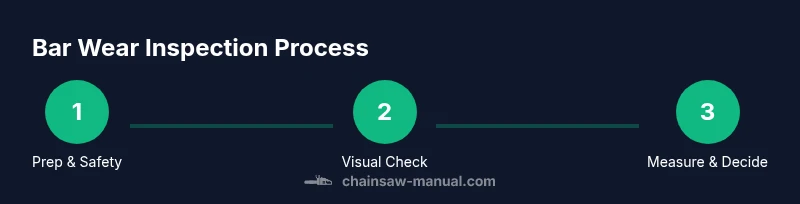
Steps
Estimated time: 25-45 minutes
- 1
Power down and secure the saw
Shut off the engine or disconnect the power, engage the chain brake, and place the saw on a stable surface. This prevents accidental movement during inspection and reduces injury risk.
Tip: Wear gloves and safety glasses; secure loose clothing. - 2
Remove the chain from the bar
Loosen and remove the bar nuts, then slide the bar and chain away from the engine. Note chain orientation and tension for reassembly.
Tip: Take a photo of current setup to ensure correct reassembly. - 3
Clean the bar and chain
Using a rag and degreaser, clean resin, pitch, and wood dust from the bar, groove, and chain. A clean bar reveals wear more clearly.
Tip: Avoid soaking parts; keep electrical components away from liquids. - 4
Inspect the rails and groove
With the bar visible, check for rounded edges, burrs, and deeper grooves along the guide groove. Feel for rough spots with a gloved finger.
Tip: If you find heavy burrs, plan for edge deburring or replacement. - 5
Check the bar nose and tip
Examine the nose for rounding, chipping, or thinning. Compare symmetry with the opposite edge; asymmetry indicates wear.
Tip: A worn nose can change cutting angle and increase kickback risk. - 6
Assess tracking and side play
Reinstall the bar and chain loosely. Manually rotate the chain; observe tracking and any lateral movement in the groove.
Tip: If tracking is poor, the bar may be too worn for safe cuts. - 7
Measure wear and compare to specs
Use a caliper to measure groove and rail wear and consult the manufacturer’s replacement guidelines for your bar model.
Tip: Document measurements for future comparisons. - 8
Decide on maintenance vs. replacement
If wear exceeds guidance or tracking remains unstable, replace the bar. For minor burrs, you may deburr and retune before testing.
Tip: Always prioritize safety over preserving a worn bar.
FAQ
What parts wear first on a chainsaw bar?
The rails, groove, and nose wear most quickly due to constant contact with the chain. Misalignment or poor lubrication accelerates wear.
The rails, groove, and nose wear fastest because they're in constant contact with the chain.
How often should you replace a chainsaw bar?
Replacement depends on wear indicators and usage. If the groove is widened, the rails are grooved deeply, or tracking is poor, replace the bar.
Replacement depends on wear; if the groove or rails are deeply worn, replace the bar.
Can a worn bar be repaired or resurfaced?
Minor burrs can be deburred and edge corrected, but deep wear typically requires replacement for safety and performance.
Minor burrs can be fixed, but deep wear usually means replacing the bar.
Is bar wear dangerous during cutting?
Yes. Worn bars can cause poor tracking, kickback, and unpredictable cuts. Regular inspection reduces risk.
Yes, worn bars can be dangerous; inspect regularly to stay safe.
What’s the difference between bar maintenance and replacement?
Maintenance extends life through cleaning and deburring. Replacement is necessary when wear compromises safety or performance.
Maintenance extends life; replacement is needed when wear impacts safety.
Watch Video
The Essentials
- Inspect rails, groove, and nose regularly.
- Compare wear to manufacturer specs before deciding.
- Replace if tracking is unstable or groove is worn.
- Maintain bar cleanliness and proper lubrication.
- Document wear to guide future maintenance.