When to Replace a Chainsaw Chain: A Practical Guide
Learn how to spot wear, decide when to replace, and choose the right chain for safety and performance. Chainsaw Manual provides safe, practical guidance for homeowners, DIY enthusiasts, and pros.


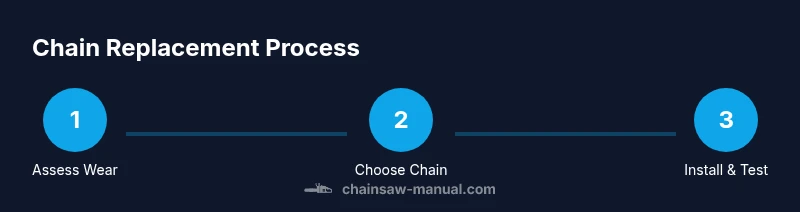
To keep you safe and productive, you will know when to replace a chainsaw chain. Replace a chain when you notice dull edges, chipped teeth, or excessive stretch that affects tension or cutting performance. This guide helps you evaluate wear, choose a compatible replacement, and install it safely.
Why timing matters when to replace chainsaw chain
A worn or damaged chain reduces cutting efficiency, increases kickback, and can shorten bar life. Knowing when to replace a chainsaw chain helps you maintain safe operation and avoid costly downtime. According to Chainsaw Manual, using a chain that is past its prime can compromise control and increase the risk of injury, especially when felling, limbing, or making plunge cuts. The Chainsaw Manual team found that a timely replacement often preserves the bar, sprocket, and overall saw performance, while delaying the change can lead to more frequent dulling, uneven cuts, and heat buildup. By understanding wear indicators early, you protect yourself, your tools, and your worksite. This guide will outline practical signs to watch for, how to verify replacement eligibility, and a clear workflow to choose and install a new chain without compromising safety.
Recognizing wear: signs you may need a new chain
A chain shows visible wear in several ways. Teeth may become chipped or rounded, the drive links may be stretched causing loose operation, the rivets may loosen, and the chain may sit high on the bar groove or skip teeth under load. A dull chain that cannot be sharpened to a functional edge after several passes is another red flag. Pay attention to performance: if the saw seems to pull to one side, stalls frequently, or requires more effort to cut through the same material, it is often time to replace the chain. Safety matters here: a worn chain increases kickback risk and reduces effective lubrication. If you notice these signs, stop using the chain and plan a replacement. This is particularly important for homeowners, DIY enthusiasts, and professionals who rely on consistent performance. Regular inspection during maintenance cycles helps you catch wear early and avoid forceful cutting that could damage the bar or pose a safety hazard.
Sharpening vs replacement: making the call
Sharpening can extend life when the chain shows light edge damage, but it is not a cure for all wear. If you sharpen repeatedly and still can't achieve a clean bite or if the teeth show uneven wear or micro-chips, replacement is wiser. Replacement is also wise when the chain stretches enough that it no longer seats properly on the bar and maintains proper tension. The decision also depends on your work type: routine maintenance for occasional DIY tasks may justify sharpening more often, while professional or heavy-duty work may demand more frequent chain changes. Always verify compatibility with your bar and saw model. Remember: safety first. A fresh chain offers more predictable chip removal and reduces the risk of binding near the bar nose, which is critical for chainsaw control.
Selecting the right replacement chain
Replacement chains must match your bar's pitch, gauge, and drive links. Pitch is the distance between rivets, gauge is the thickness of the drive links, and the number of drive links must fit the bar length. Before buying, check the bar's markings or owner's manual to confirm the correct numbers. Choose a chain designed for your saw's model and the type of work you do. If you do not know the pitch/gauge, measure with a chain pitch gauge or ask your supplier. For safety, prefer reputable brands and avoid overly cheap chains that may lack heat treatment or proper hardening. Keep in mind that chain features like low-kickback designs vary; ensure compatibility with your saw's engine power and your cutting tasks. When in doubt, consult your manual or a professional.
Safety, maintenance, and storage around chain replacement
Always disconnect power and engage the chain brake, wear PPE, and perform replacement in a dry, well-ventilated area. After installation, check tension as recommended and run the saw on idle to seat the chain before starting full cuts. Maintain lubrication: ensure bar oil reservoir is full and the bar groove is clean to prevent chain stalling. Inspect the bar and sprocket for wear after a few cuts, and tighten or replace as needed. When not in use, store replacement chains in a cool, dry place away from moisture and sunlight to preserve chain life.
Common mistakes to avoid
Do not install chain backwards. Do not overtighten; too tight can cause binding and wear the bar. Do not run chain dry. Do not skip maintenance; replace the bar if the groove is worn to prevent chain derailment.
Tools & Materials
- Replacement chains (correct pitch and gauge)(Check bar markings to match the exact pitch, gauge, and drive-link count)
- Screwdriver or scrench(For bar cover screws and tensioner adjustment)
- Chain pitch gauge(Used to confirm correct pitch (distance between rivets))
- Bar oil(Ensure reservoir is full before testing)
- Leather work gloves(Protect hands while handling chain and bar)
- Rags or brush(Clean bar groove and oil ports)
- Safety glasses(Eye protection during replacement)
Steps
Estimated time: 20-30 minutes
- 1
Secure the saw and remove the bar cover
Power off the saw and allow it to cool. Engage the chain brake, then use a screwdriver or scrench to remove the bar cover screws and lift the cover away. Keep all fasteners in a safe place for reassembly.
Tip: Wear gloves and keep track of small parts to avoid losing screws or washers. - 2
Loosen tension and remove the old chain
Loosen the tensioning screw just enough to loosen the chain. Lift the chain off the bar, taking care not to drop pieces into the saw or onto the floor.
Tip: Do not force the chain off if it binds; recheck tension and align drive links with the groove. - 3
Inspect the bar and drive sprocket
Look for wear in the bar groove, burrs, or hooking on one side. Check the drive sprocket for hooked or worn teeth. If either shows significant wear, plan to replace those parts too.
Tip: If you see shiny, sharp burrs or a visibly worn groove, replace the bar before installing a new chain. - 4
Select and prepare the replacement chain
Match the chain pitch and gauge to your bar and saw model. Count the drive links and confirm the chain direction (teeth should bite into the wood when moving forward).
Tip: If unsure, consult the owner's manual or clerk at the hardware store to verify compatibility. - 5
Install the new chain around the bar and sprocket
Place the chain on the bar, aligning drive links with the groove and ensuring the cutting teeth face the correct direction. Re-seat the chain onto the sprocket and bar, then reattach the bar cover loosely.
Tip: Double-check that the chain sits evenly in the groove before tightening. - 6
Tension the chain correctly and test idle
Tension the chain while the saw is cold, then rotate the chain by hand to ensure it moves smoothly. Start the saw and let it idle briefly to seat the chain. Recheck tension when cool and adjust as needed.
Tip: If the chain rides high on the bar or binds, re-seat and tension again. - 7
Lubricate and perform a light cut test
Fill the bar oil reservoir and perform a few shallow cuts on scrap wood to seat the chain. Observe lubrication as the chain runs; stop if there is no oil reaching the bar.
Tip: Start with light cuts to avoid binding and heat buildup. - 8
Clean up and re-check tension
Wipe the work area, re-check tension after cooling, and replace any worn parts if necessary. Store replacement chains in a cool, dry place.
Tip: Document the replacement date for future maintenance planning.
FAQ
How do I know if my chain is too worn to sharpen?
Look for significant wear on the tooth tips; if sharpening cannot restore a uniform edge or teeth become chipped, replacement is advised. If sharpening repeatedly fails to regain cutting performance, replacing the chain is safer and more effective.
If the teeth are chipped or the edge can't be restored after multiple sharpenings, replace the chain.
Can I replace a chainsaw chain myself at home?
Yes. With the right chain and tools, and by following safe steps, you can replace a chainsaw chain yourself. Always follow the saw's manual and use proper PPE.
Yes, you can replace a chain yourself by following safety steps.
What’s the difference between chain pitch and gauge, and how do I know which to buy?
Pitch is the distance between rivets; gauge is the drive-link thickness. Check your bar markings and the chain specification to confirm compatibility, then buy a chain that matches.
Pitch is rivet spacing, gauge is drive-link thickness.
How often should I replace the chain during heavy use?
It varies with workload; heavy use wears chains faster. Inspect wear signs daily and replace when you notice dullness, missing teeth, or excessive stretch that affects performance.
Heavy use wears chains faster; inspect daily and replace when you see wear signs.
Is it safe to operate a chainsaw with a dull chain?
No. A dull chain increases effort, heat, and kickback risk. Sharpen if feasible, or replace the chain to restore safe performance.
No—do not operate a chainsaw with a dull chain.
Do I need to replace the bar when replacing the chain?
Only if the bar is worn or damaged. If the groove shows significant wear, replace the bar; otherwise you can continue using the current bar with a new chain.
Only replace the bar if it’s worn or damaged.
How do I choose the right chain for my saw model?
Consult the saw’s manual or manufacturer specifications to confirm the correct pitch, gauge, and drive-link count. If in doubt, ask a professional or your supplier for help.
Check the saw's manual for pitch and gauge, or ask a professional.
Watch Video
The Essentials
- Match pitch, gauge, and drive links for a safe fit.
- Replace when wear signs appear to maintain control and efficiency.
- Tension, oil, and test on scrap wood before full cuts.
- Follow safety steps and consult the manual for compatibility.