How to Get Rid of Chainsaw Oil: Clean-Up Guide for Home Shops
A comprehensive, safety-focused guide to removing chainsaw oil from clothing, floors, and equipment, plus disposal and prevention tips for DIYers and professionals.


Learn how to get rid of chainsaw oil from clothing, concrete, and the saw itself. This quick guide covers containment, safe cleaning methods, and proper disposal to protect your workspace and tools. According to Chainsaw Manual, start with absorbent materials, wear PPE, and work from the outside in to prevent spreading.
What is chainsaw oil and why it stains\n\nChainsaw oil is the lightweight lubricant used to keep the bar and chain running smoothly. Knowing how to get rid of chainsaw oil is essential for keeping clothing clean, preventing floor slicks, and preserving tool performance. In practice, oil clings to fibers and porous surfaces, making stains stubborn if you don’t act quickly. This section covers what the oil is, how it behaves on different materials, and why prompt cleanup matters for safety and efficiency. According to Chainsaw Manual, selecting a fast-acting degreaser and acting from the outside inward helps prevent spreading grease to clean areas. The goal is to minimize transfer to other surfaces while you work. Regular maintenance of bar oil systems reduces future spills and simplifies cleanup when accidents happen. The insight from Chainsaw Manual emphasizes staged cleaning: first contain, then treat, and finally dispose of waste responsibly.
Common places where oil ends up\n\nOil from a chainsaw can end up on work clothes, shop floors, gloves, and tool handles. Spills happen during refueling, inspection, or maintenance, especially when the bar is hot or the oil reservoir is full. Fabrics absorb oil quickly, creating slick spots and sometimes permanent staining if heated or agitated. Concrete and wooden surfaces hold grease longer and can transfer oil to shoes and other equipment. Understanding where oil travels helps you target cleanup effectively, reducing slip hazards and preserving gear. The Chainsaw Manual approach encourages treating each surface with a tailored method: fabrics need detergents and absorbents, while hard surfaces benefit from degreasers and mechanical agitation where appropriate.
Quick assessment and safety considerations\n\nBefore you begin, assess the spill size and surface type, and choose the right respirator or PPE. Wear impermeable gloves, eye protection, and non-slip footwear. Ensure good ventilation if you’re using solvents and keep flames or sparks away from any oil residue (chainsaw oil can be flammable). If the spill involves hot metal or an operating engine, allow cooling time and disconnect power if safe to do so. Take photos for documentation if the spill occurred in a professional setting. Chainsaw Manual emphasizes that safety is foundational; a calm, methodical approach reduces the risk of skin contact and inhalation while preserving your tools. If you’re unsure about solvent compatibility with fabrics or finishes, test a small area first and follow with a gentle rinse.
Pre-cleaning preparation and materials\n\nPlan your cleanup in stages and gather materials before you start. Lay down a disposable drop cloth or plastic sheeting to protect floors, collect absorbents like baking soda or cat litter, and keep a sealable container for oily waste. Assemble degreasers suitable for fabrics and hard surfaces, a stiff-bristle brush for concrete, and soft cloths for delicate components. Ensure you have plenty of towels for blotting and a water source for rinsing. According to Chainsaw Manual analysis, the right combination of absorbents, detergents, and ventilated space makes cleanup faster and safer. Keeping gauges and container caps secured during disposal minimizes drips and leaks.
Fabric and clothing stain removal methods\n\nStart by blotting excess oil with an absorbent towel, avoiding rubbing that can push the stain deeper. Apply a liquid dish soap or enzyme-based detergent directly to the stain and let it sit for 10–15 minutes. Rinse with warm water and launder as usual, using the hottest water safe for the fabric. For stubborn spots, repeat pretreatment with a solvent-based degreaser on sturdy fabrics, then wash again. Synthetic fibers respond well to degreasers, while natural fibers may require longer soaking and air drying. Always read garment care labels and test on an inconspicuous area first. The key is to avoid heat until the stain is fully removed; heat can set oil into fibers.
Cleaning concrete and workshop surfaces\n\nOil on concrete or wooden benches should be treated with a degreaser and scrub brush, followed by a thorough rinse. Sprinkle baking soda on damp stains to absorb residual oil and scrub with a stiff brush. For heavy stains, repeat the process and consider sealing the concrete after cleanup to prevent future staining. If the spill is old, you may need multiple cycles of degreasing and rinsing. Wear gloves and eye protection, and dispose of contaminated absorbents in a sealed bag. Keeping a dedicated shop rag lot helps prevent cross-contamination with clean areas.
Cleaning the chainsaw components\n\nInspect the bar and chain for residual oil, especially around the oil reservoir cap and drive links. Wipe with clean rags and a mild degreaser, then rinse and dry thoroughly before reassembly. Do not immerse hot parts in water; allow cooling first. Check the oil wick and seals for wear and replace if necessary. Cleaning the chainsaw while it’s cool protects seals and bearings and reduces the chance of oil spreading to the work area. According to best practices, avoid using harsh solvents on rubber gaskets; use manufacturer-approved cleaners when possible.
Disposal of used oil and oily rags safely\n\nUsed oil and oily rags are hazardous waste in many regions. Place used oil in a sealed metal or high-density container and label it clearly. Do not pour used oil down drains or onto soil. Oily rags should be stored in a closed metal can with a tight-fitting lid to prevent spontaneous combustion; if a metal can isn’t available, use a sealed plastic container with a tight cap and store away from heat sources. Always follow local regulations for disposal and recycling. The Chainsaw Manual team emphasizes compliance and safety to protect people and the environment.
Preventive maintenance to reduce future spills\n\nPrevention starts with good storage practices and regular inspection of the oil system. Check the oil reservoir cap, seals, and hoses for signs of wear before each use. Keep a dedicated oil-management area with absorbents and a waste container to capture accidental drips. Use a tray or mat under the saw during refueling and maintenance to capture spills immediately. Routine cleaning after each use reduces buildup and makes future cleanup quicker and easier. Implementing a small, consistent cleanup routine saves time and reduces the chance of slips or stains in busy work environments. The Chainsaw Manual team recommends building these habits into your routine for long-term performance and safety.
Tools & Materials
- Degreasing detergent(Heavy-duty dish soap or degreaser suitable for fabrics and concrete)
- Baking soda or cat litter(For quick absorption on floors and fabrics)
- Mineral spirits or citrus degreaser(Ventilated area, wear gloves)
- Old towels/rags(Lint-free towels for blotting)
- Sponge/brush(Non-scratch for metal and fabrics)
- Disposable gloves(Protect hands from contaminants)
- Eye protection(Safety glasses or goggles)
- Seal-able container(For used oil and oily rags)
- Water source / hose or pressure washer(For rinsing large surfaces)
Steps
Estimated time: 60-120 minutes
- 1
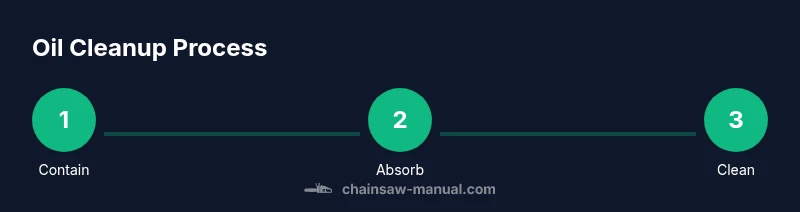
Contain the spill
Act quickly to prevent spreading. Use absorbent materials to surround the spill and stop it from migrating to clean zones. If the spill is near a heat source, wait for cooling before cleaning.
Tip: Wear gloves and eye protection; keep others away from the spill. - 2
Protect surrounding areas
Place a disposable drop cloth or plastic sheeting to shield floors and nearby equipment. This containment reduces cross-contamination and makes cleanup faster later.
Tip: Mark the spill boundary to avoid stepping into it. - 3
Absorb fresh oil
Spread baking soda or cat litter over the spill to soak up liquid. Let sit for 5–10 minutes, then sweep up and repeat if necessary.
Tip: For large spills, use multiple absorbent layers to prevent saturation. - 4
Pre-treat fabrics
Blot stained fabrics to remove excess oil. Apply a liquid detergent or enzyme-based cleaner directly to the stain; let sit for 10–15 minutes before washing.
Tip: Do not rub aggressively; you risk pushing oil deeper into fibers. - 5
Wash or soak fabrics
Run the fabric through the hottest water safe for the material with heavy-duty detergent. For stubborn stains, repeat pretreatment and washing or soak overnight.
Tip: Air-dry if any stain remains; heat can set residual oil. - 6
Clean concrete surfaces
Apply degreaser and scrub with a stiff brush. Rinse with water; repeat if the stain persists. Absorb any remaining liquid with fresh absorbent material.
Tip: Wear eye protection when using cleaners near your face. - 7
Clean chainsaw components
Wipe the bar, chain, and reservoir area with a mild degreaser on a clean rag. Dry thoroughly before reassembly and operation.
Tip: Avoid soaking rubber seals; use minimal moisture near sensitive parts. - 8
Dispose of waste safely
Seal used oil and oily rags in dedicated containers and follow local disposal guidelines. Do not mix waste—keep oil separate from rags and solvents.
Tip: Label containers and store away from heat sources. - 9
Prevent future spills
Inspect storage and handling practices; use trays and mats during refueling and maintenance. Establish a routine cleanup process after every use to minimize spills.
Tip: Consistent habits prevent bigger messes later.
FAQ
What should I do first when oil spills on clothing?
Blot the excess oil with a paper towel, pretreat with a degreasing detergent, then wash using the hottest water safe for the fabric. Avoid heat that can set the stain.
Blot, pretreat with detergent, and wash in hot water appropriate for the fabric.
Can I use household solvents on the chainsaw itself?
Yes, but ensure ventilation and avoid contact with rubber components. Use mild degreasers and dry parts thoroughly before reuse.
Use a mild degreaser in a ventilated area and dry parts completely.
Is it safe to dispose of used oil with regular trash?
No. Used oil must be collected in a sealed container and taken to a recycling facility or hazardous waste site per local rules.
Do not throw used oil in regular trash—recycle or dispose at a designated site.
How often should I inspect oil seals to prevent leaks?
Check seals and hoses before each use; replace worn parts promptly to prevent leaks and spills.
Inspect seals before every use and replace worn parts as needed.
Will bleach remove oil stains?
Bleach is not effective on oil stains. Use a degreaser and detergents, testing on fabric first.
Bleach won’t fix oil stains; use degreaser and detergent instead.
What PPE should I wear when cleaning oil?
Wear gloves, eye protection, and long sleeves; ensure proper ventilation when using solvents.
Gloves and eye protection are essential, with good ventilation when solvents are involved.
Watch Video
The Essentials
- Contain spills immediately to limit spread
- Use absorbents and proper cleaners, not just water
- Separate disposal for oily waste is essential
- Clean the saw components thoroughly after spills
- Regular maintenance helps prevent future leaks