How to Remove Chainsaw Chain: A Safe, Practical Guide
Learn how to safely remove a chainsaw chain with this detailed guide. From safety gear to step-by-step removal, inspection, and maintenance tips, Chainsaw Manual helps homeowners and professionals.


You will learn to remove a chainsaw chain safely by stopping the engine, engaging the chain brake, isolating the power source, relieving tension, and freeing the bar and chain in a controlled sequence. Essential prerequisites include PPE, a stable workspace, and the right tools. This guide also covers inspection and reassembly steps to ensure you can resume work confidently.
Why removing the chainsaw chain safely matters
According to Chainsaw Manual, removing a chainsaw chain safely is essential to prevent kickback, protect your hands, and extend the life of the bar and chain. This is not a task to rush or improvise, because a misstep can lead to severe injuries or a damaged saw. There are several common reasons to remove the chain: replacing a dull or damaged chain, cleaning residue and sap buildup, or transporting the saw where the chain could snag. Proper removal also helps you inspect the bar groove, the clutch side, and the drive sprocket for wear. Before you begin, plan your actions: gather the right tools, set up a stable work surface, and ensure the saw is fully powered down. When done correctly, chain removal becomes a straightforward maintenance task rather than an emergency fix. In the following sections, you’ll find a practical, safety-first approach that works for most homeowner and professional saws alike.
Safety prerequisites before you touch the chain
Before you handle the chain, put on PPE and prepare your workspace. Wear cut-resistant gloves, safety glasses or a face shield, hearing protection, and sturdy boots. Clear the area of bystanders and loose clothing. If your saw has a chain brake, engage it fully and keep it engaged as you work. Ensure the saw is on a stable surface, away from flammables, and that the engine is fully cooled. Some models require you to unplug the spark plug boot to completely isolate the battery or ignition. Always consult your owner’s manual for model-specific steps. Finally, have a plan for the chain and bar after removal: you may replace the chain, clean the bar groove, or inspect for damage before reassembly.
Step-by-Step process overview
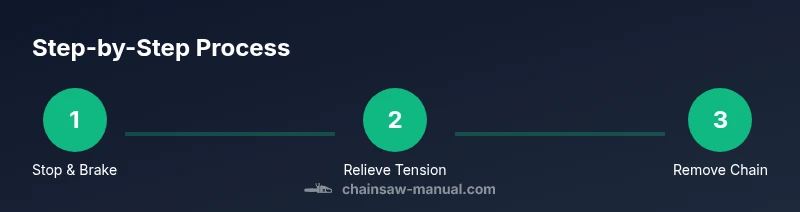
Removing a chain involves securing the saw, relieving tension, freeing the bar, sliding off the chain, and performing a quick inspection. This section outlines the logical flow you’ll follow, then the STEP-BY-STEP section provides exact actions. Start with a stabilized saw and a calm workspace, then move through tension relief, bar nut removal, chain detachment, and post-removal checks. The goal is to keep your hands clear of sharp teeth, avoid pinching the chain, and prevent any unexpected starts. By following a deliberate sequence, you reduce risk and improve the quality of the subsequent maintenance—whether you’re replacing, sharpening, or storing the chain. Always re-check torque on the bar nuts after reassembly and test the operation with the chain brake engaged before resuming work.
Step 1: Stop the engine and engage the brake; isolate power
- Move the saw to a stable work surface and switch the engine off. Wait for the bar and chain to stop completely to avoid contacting moving parts. 2) Engage the chain brake firmly to immobilize the chain, and if possible, unplug the spark plug boot or disconnect the battery to prevent accidental starts. 3) Verify the saw cannot start by giving the chain a gentle shake while keeping hands clear of the teeth. 4) Use a rag to wipe away excess oil near the bar and keep the area clean for safer handling.
Step 2-5: Loosen, free, and remove the chain from the bar
Step 2: Relieve tension on the chain by using the tensioner screw or by manipulating the bar to reduce load on the teeth. Step 3: With the bar still supported, remove the bar nuts using the appropriate wrench or socket, keeping track of hardware so you don’t lose small pieces. Step 4: Gently slide the bar away from the body and lift the chain off the drive sprocket and guide bar. Step 5: Once the chain is free, lay it flat on a clean surface or place it into a protective sleeve to prevent accidental cuts. Pro tip: keep the chain aligned to preserve its sharp edges and avoid kinks.
Step 6: Inspect, clean, and plan for reassembly
Inspect both chain and bar for wear, cracks, or damaged teeth. Wipe off old oil and debris with a clean rag and inspect the bar groove for groove wear. If you plan to sharpen or replace the chain, do so before reassembly. When finished, reattach the chain in the reverse order of removal, ensure the chain tension is correct (slight sag when pinned in the middle of the span), and verify the bar nuts are tightened to spec. Finally, test the saw in a safe location with the chain brake engaged before resuming normal operation.
Step 7: Storage and final checks
Store the chain in a protective container or sleeve to prevent damage and keep the teeth from dulling or chipping. If you replaced the chain, verify that the new chain length matches the bar and drive sprocket. Re-check all safety devices (chain brake, ignition isolation, and guards). If anything feels off or tight, revisit the tension settings and consult the user manual. Proper storage and periodic inspection extend the life of the chain and bar and reduce the risk of accidents when you next start the saw.
Tools & Materials
- Socket wrench or nut driver(Use the correct size for your bar nuts; common sizes are 8-12 mm)
- Ratchet and extension (optional)(Useful for hard-to-reach bar nuts)
- Protective gloves (cut-resistant)(Keep hands safe from teeth and sharp edges)
- Safety glasses or face shield(Eye protection against flying chips)
- Chain oil and clean rag(Useful for cleaning and lubrication during reassembly)
- Screwdriver (flat or Phillips)(Aid stubborn fasteners if needed)
- Spark plug boot disconnector (or insulated pliers)(Isolate ignition when required by model)
- Stable work surface or vise(Prevents slips and injuries)
Steps
Estimated time: 20-40 minutes
- 1
Stop engine and engage brake
Turn off the engine and wait for the bar to stop completely. Engage the chain brake firmly to immobilize the chain. If possible, unplug the spark plug boot to remove ignition power. This ensures the saw cannot start unexpectedly during maintenance.
Tip: Always perform maintenance on a cool saw to avoid burns and oil splatter. - 2
Relieve tension
Locate the tensioning system and relieve tension gradually. If your model uses a bar-mounted tensioner, rotate it slowly to loosen the chain. Do not force the chain; abrupt moves can pinch your fingers or damage the bar.
Tip: Keep the chain aligned to avoid teeth digging into the bar. - 3
Loosen bar nuts
Use the appropriate wrench to loosen the bar nuts while supporting the bar to prevent it from shifting. Do not remove them completely yet; back them out just enough to release the bar from the saw body.
Tip: Keep the nuts in a magnet tray or on a clean surface to avoid losing them. - 4
Remove the bar and lift the chain
Carefully slide the bar away from the sprocket and lift the chain off the drive sprocket and guide bar. Maintain control of the chain to prevent contact with teeth. Place the bar and chain on a clean surface.
Tip: Do not yank the chain; a slow, controlled motion reduces risk. - 5
Inspect and clean
Inspect the chain and bar for wear, damage, and sharpness. Wipe away oil and debris and check the bar groove for wear. If sharpening or replacement is needed, perform that before reassembly.
Tip: Measure chain pitch and gauge against the bar to ensure compatibility. - 6
Reassemble or store
Reattach the chain in the reverse order of removal, ensuring correct orientation and tension. Tighten the bar nuts securely and test the chain brake before starting the saw. Store the chain safely if you’re not reinstalling it immediately.
Tip: Always test with the chain brake engaged in a safe test location.
FAQ
Is it safe to remove a chainsaw chain while the engine is hot?
No. Allow the engine and bar to cool before attempting removal. The heat can cause burns and oily surfaces can be slippery. Cooling also reduces the risk of accidental starts while you work.
No, wait for the saw to cool before removing the chain.
Do I need to remove the chain to sharpen it?
Not always. Many chains can be sharpened on the bar with appropriate files or guides. Removing the chain is necessary only when replacing, cleaning deeply, or performing bar or sprocket inspections.
You can usually sharpen on the bar, but remove if you need full inspection or replacement.
What if the chain won’t come off after loosening tension?
Double-check that the chain brake is fully engaged and that the tensioner is fully released. If the bar is dry, apply a little lubricant and carefully work the chain back and forth while maintaining control. If stubborn, consult the manual for model-specific steps.
If stubborn, recheck brake and tensioner, then consult your manual.
Is it safe to store the saw with the chain removed?
Yes, with the chain carefully covered or stored in a protective sleeve to prevent accidental contact. Store in a dry place away from children and pets.
Yes—store the chain safely in a cover to prevent contact.
How do I reattach the chain correctly?
Position the chain over the drive sprocket and guide bar, ensure correct orientation, then tighten the bar nuts and test movement with the brake engaged before starting.
Line up the chain on the bar, tighten, and test safely.
Watch Video
The Essentials
- Always power down and engage the brake before touching the chain.
- Use the correct tools and keep hardware organized.
- Relieve tension gradually to avoid pinching or kickback.
- Inspect chain and bar for wear; replace damaged parts.
- Test safety systems after reassembly before cutting again.