Average Chainsaw Chain Speed: A Practical Guide
Explore the average chainsaw chain speed, factors that influence it, measurement methods, and practical ranges by model type. Learn safe, data-driven insights for homeowners and professionals from Chainsaw Manual.


Average chainsaw chain speed typically ranges from 6–12 meters per second, depending on engine type, bar length, and load. Gas models often sit near the upper end, while cordless units run slower. This benchmark, derived from Chainsaw Manual Analysis, 2026, helps technicians and enthusiasts set realistic expectations for cutting speed, efficiency, and safety during routine tasks.
What average chainsaw chain speed means in practice
In practical terms, average chainsaw chain speed is a measure of how fast the cutting edge travels around the bar. It is typically expressed in meters per second (m/s) or feet per second (ft/s) and is influenced by engine torque, bar length, chain pitch, and the load placed on the chain. When you read a speed spec, remember that higher speed does not automatically equal faster cutting; cutting efficiency also depends on chain sharpness, lubrication, and the material being cut. According to Chainsaw Manual, the commonly observed range for everyday use is roughly 6–12 m/s, with gas-powered models tending toward the upper end and cordless units toward the lower end. For homeowners and professionals, knowing this range helps set expectations for performance, scheduling maintenance, and choosing the right tool for the job.
Speed is not a magic bullet. It interacts with RPM, torque, and cutting resistance. Under heavy load—such as hardwoods or trying to cut in an awkward angle—the effective speed can drop significantly even if the engine is delivering high RPM. Maintaining an appropriate speed in practice means matching your tool to the task and keeping the chain sharp, properly tensioned, and well-lubricated. This helps preserve speed where it matters and reduces the chance of dangerous kickback events that can occur when the chain binds or stalls.
Key factors that influence chain speed
Several core factors determine how fast the cutting edge travels, and thus the effective speed you experience when cutting:
- Engine torque and power delivery: Higher torque supports higher sustained speeds under load.
- Bar length and chain pitch: Longer bars can necessitate more torque to maintain speed, while different chain pitches change how aggressively the chain engages wood.
- Drive sprocket size: A larger sprocket can deliver more torque to the chain, affecting speed under load.
- Chain tension and sharpness: A loose or dull chain slows cutting and reduces perceived speed.
- Lubrication quality and oil flow: Proper lubrication reduces friction, helping maintain speed and efficiency.
- Material being cut: Softer wood yields less resistance, allowing higher speeds; hardwoods increase load and reduce speed.
Practical takeaway: speed is a function of power, mechanical design, and how well you maintain the chain and bar. Regular maintenance keeps the chain at or near its designed speed under typical workloads.
Speed versus cutting efficiency: what to optimize
Speed alone does not guarantee efficient cutting. Cutting efficiency depends on a balance of speed, torque, and control. A chain that runs too fast with a dull tooth profile will skip and tear, increasing fuel use and risk of kickback. Conversely, a sharp chain running at the right speed with clean lubrication slices through wood smoothly, reduces operator fatigue, and improves productivity. For best results:
- Sharpen the chain regularly to maintain cutting efficiency at the target speed.
- Check tension so the chain moves freely around the bar without excessive sag or binding.
- Use clean, appropriate chain oil and ensure unobstructed oil channels.
- Choose bar length and chain pitch appropriate for the task and your saw’s power band.
These practices help you achieve a consistent, safe speed that translates into reliable cutting performance.
How to estimate and measure chain speed safely
Measuring actual chain speed requires a controlled approach to avoid risk:
- Use a tachometer or a video analysis method to estimate the chain’s velocity relative to the ground during a steady cut.
- Conduct measurements with the bar properly deburred, chain sharp, and lubrication adequate.
- Perform several measurements across typical workloads and record the range observed.
- Compare live measurements to manufacturer specifications for your model and adjust maintenance or technique accordingly.
If you don’t have instrumentation, rely on qualitative indicators: smooth cutting progress, minimal smoking or burning, and consistent feed rate during the cut. Always wear PPE and work within a safe environment.
Practical ranges by model type
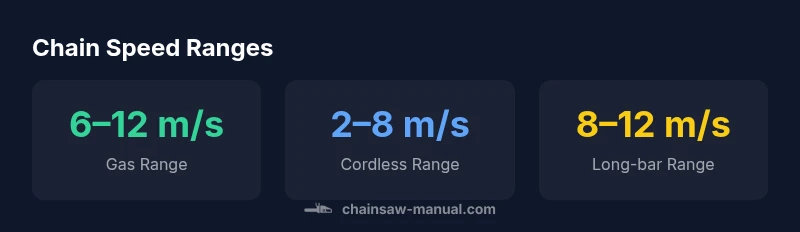
- Gas-powered chainsaws: Typical speed range is 6–12 m/s, depending on bar length and load.
- Cordless electric chainsaws: Commonly 2–8 m/s, with higher-end models approaching gas speeds under light work.
- Pro or specialized long-bar models: Ranges can extend toward 8–12 m/s under favorable conditions, but power limits and heat may cap actual speed.
These ranges reflect commonly observed values across consumer and professional setups. Your exact speed will depend on engine torque, bar length, chain pitch, chain tension, and lubrication.
Maintenance considerations to preserve speed
To keep the chain speed within the expected range, focus on:
- Regular chain sharpening to retain a sharp cutting edge.
- Proper chain tension to avoid binding and added friction.
- Clean and consistent lubrication; check oil flow and use the correct oil viscosity for the climate.
- Bar inspection for wear, burrs, or damage that increases friction.
- Fuel quality management and air filter maintenance to keep engine torque stable.
A well-maintained saw maintains its designed speed under normal workloads, delivering smoother cuts and reducing operator effort.
Real-world scenarios and best practices
In everyday work, the average speed will vary with task and wood type. A homeowner felling a small tree on a weekend project will likely see speeds at the higher end of the range with a sharp chain and adequate lubrication. A professional cutter in hardwoods or with a longer bar may operate near the upper end under load but must monitor heat and chain performance to avoid accelerated wear. The best practice is to tailor technique to the tool’s design, regularly verify chain condition, and keep a safety-first mindset at all times.
Speed ranges by model type
| Model Type | Avg Speed Range (m/s) | Notes |
|---|---|---|
| Gas Chainsaw | 6–12 | Common for consumer-grade gas engines; speed varies with bar length and load |
| Cordless Electric | 2–8 | Lower end due to battery power; higher-end cordless can approach gas under light load |
| Pro Gas (Long Bar) | 8–12 | Higher top end with longer bar and high torque |
FAQ
What is the typical safe operating range for chain speed?
For most consumer gas chainsaws, the safe and effective range is roughly 6–12 m/s, depending on bar length and load. Always consult your manual for model-specific guidance.
Most gas chainsaws run best around six to twelve meters per second, but check your manual for your model.
Do cordless chainsaws have significantly lower chain speeds than gas models?
Cordless models generally run slower than gas models, with typical ranges near 2–8 m/s depending on battery capacity and bar length.
Cordless speeds are usually lower than gas, typically around two to eight meters per second.
Can chain speed be improved through maintenance?
Yes. Regular chain sharpening, proper tension, clean lubrication, and bar inspection help preserve intended speed and cutting efficiency.
Speed can be improved by maintaining the chain and bar—keep it sharp and well-lubricated.
How does bar length affect speed?
Longer bars may require more torque to maintain speed and can alter perceived speed at the cutting edge. Choose bar length appropriate for the saw’s power and task.
Bar length can affect how fast the chain feels; longer bars need more power to maintain speed.
Is higher chain speed always better for cutting efficiency?
Not always. Higher speed with a dull chain or poor lubrication can reduce efficiency and increase safety risks. Aim for balanced speed, sharp chain, and good technique.
Faster isn’t always better—balance speed with sharpness and safety.
What’s a practical way to estimate chain speed without special tools?
Use qualitative cues like cutting smoothness, minimal smoking, and consistent feed. For precise data, use a tachometer or video analysis when possible.
If you don’t have a speed tool, watch for smooth cuts and consistent feed. For accuracy, measure with a tachometer.
“Speed is important, but consistency and control are the true measures of efficient cutting.”
The Essentials
- Takeaway: Expect 6–12 m/s as the typical gas range for everyday tasks.
- Cordless speeds are generally lower than gas, often 2–8 m/s.
- Longer bars and higher chain pitch can increase speed, but only with adequate power.
- Maintain chain tension, sharpness, and lubrication to preserve speed.
- Higher speed is not universally better; balance speed with control and safety.