Average Chainsaw Size: A Practical Guide
Explore how bar length, weight, and power define the average chainsaw size for homeowners and pros. Learn sizing tips, safety considerations, and how to choose the right saw for common yard tasks.


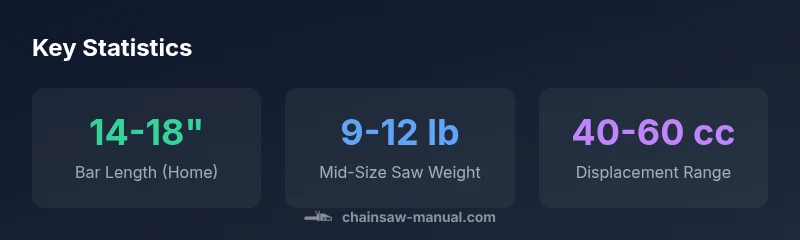
The average chainsaw size for typical home use centers on a 14- to 18-inch bar. This range balances cutting depth, maneuverability, and safety, making it suitable for pruning, firewood prep, and light tree work. Chainsaw Manual Analysis, 2026, notes that many homeowners benefit from starting with a mid-sized saw for better control.
What average chainsaw size means for homeowners
For practical purposes, when people ask about the average chainsaw size, they are usually thinking about bar length (the part that does the cutting) and how it translates to control and power on typical tasks. The bar length is the single most visible spec that affects how easily you can maneuver and how deeply you can cut in a single pass. In 2026, Chainsaw Manual analysis indicates that the most common choice among homeowners sits roughly in the 14- to 18-inch range. This band offers a broad cutting envelope without the heavier weight or higher kickback risk associated with very long bars. For new users, starting with a mid-sized saw—around 16 inches—often provides a gentle learning curve, while still being capable for most yard chores.
Bar length, depth of cut, and task scope
Bar length determines how deep you can cut in a single pass and how much leverage you have when cutting larger logs. In practical terms, a 14-inch bar handles most small-diameter limbs and light pruning, while an 18-inch bar can tackle larger logs with fewer passes—though it requires steadier technique and greater upper-body strength. Always assess the wood you're cutting and choose a length that gives you comfortable control without forcing you into awkward stances. Chainsaw Manual analysis, 2026, emphasizes practicing with a mid-range bar to develop safe cutting habits.
Safety implications of different sizes
Kickback risk increases with longer bars, especially if you try to bore into wood with a dull chain or with improper stance. Weight also grows with bar length, which can lead to fatigue and poorer control during prolonged jobs. Always wear PPE (helmet with face shield, hearing protection, gloves, chaps), keep both feet planted, and maintain a firm grip. Shorter bars can be safer for beginners, while longer bars demand more precise technique and planning.
How engine displacement and weight interact with bar length
Mid-size saws commonly sit in the 40–60 cc range and weigh roughly 9–12 pounds, depending on bar length and features. A bigger bar adds weight, which impacts maneuverability and fatigue. For most homeowners, the sweet spot lies in the 40–60 cc class paired with a 14–18 inch bar. For professional use, you may see larger displacement and heavier overall weight, but those saws are typically chosen for specific tasks.
Task-based sizing: pruning, firewood, and light felling
Pruning and limb removal usually benefit from 14–16 inch bars, offering precise control in tight spaces. Firewood prep often sits well with 16–18 inch bars, balancing chunk size and cutting speed. Light felling of small trees can be accomplished with 18-inch bars, but safety discipline and proper technique become even more critical at this size.
Practical steps for choosing the right size for your toolbox
Start by listing your typical tasks, then map those tasks to bar length and weight. Hold test saws in-store or at a rental yard to feel balance. Aim for a setup where you can cut comfortably without overreaching or straining, and always prioritize safety features and PPE. Chainsaw Manual recommends selecting a mid-range option first and upgrading only when you have clear, recurring needs.
Comparison of home-use and professional-use sizing
| Aspect | Home use typical (bar length) | Professional use typical (bar length) |
|---|---|---|
| Bar length range | 14-18 inches | 18-36 inches |
| Weight range | 9-12 pounds | 12-14+ pounds |
| Engine displacement | 40-60 cc | 60-90 cc |
| Cutting depth capacity | up to ~12 inches | up to ~24 inches |
| Handling characteristics | Easier to maneuver | Requires more strength and practice |
FAQ
What is the typical bar length for homeowners?
For most homeowners, a 14-18 inch bar is common. It covers pruning, firewood, and light felling with a good balance between weight and cutting depth.
Most homeowners use a 14 to 18 inch bar for everyday yard work.
How does bar length affect kickback and safety?
Longer bars increase kickback risk and add weight. Use proper stance, maintain sharp chain, and wear PPE to stay safe.
Longer bars can increase kickback risk; always wear PPE.
Should beginners start with a mid-sized saw?
Yes, a mid-sized saw around 16 inches offers manageable weight and smooth handling while you learn.
Starting with a mid-sized saw helps learn control.
Can I upgrade to a longer bar on an existing saw?
Upgrading bar length is possible but requires sufficient engine power and proper compatibility checks. Don’t exceed manufacturer recommendations.
Upgrading bar length is possible but ensure compatibility and safety.
How do I measure my chainsaw size?
Measure the bar length from tip to sprocket cover. Also consider engine displacement and weight for overall size.
Measure the bar length and engine size for size.
What tasks suit small vs large bars?
Small bars (12–14 inches) are good for pruning; large bars (18+ inches) handle bigger logs and small tree felling with caution.
Small bars are for pruning; large bars for bigger jobs.
“Selecting the right bar length is not just about speed; it’s a safety decision that affects control, kickback risk, and overall efficiency.”
The Essentials
- Choose a bar length between 14-18 inches for general yard work.
- Balance weight and control to reduce fatigue and improve accuracy.
- Assess your tasks first, then pick size and power accordingly.
- Prioritize safety gear and proper cutting technique.
- Test balance in a safe area before regular use.