Chainsaw Specs: Reading, Comparing, and Choosing
Learn how to read and compare chainsaw specs—displacement, power, bar length, weight, and chain speed—and pick the right model for your tasks with safety in mind.


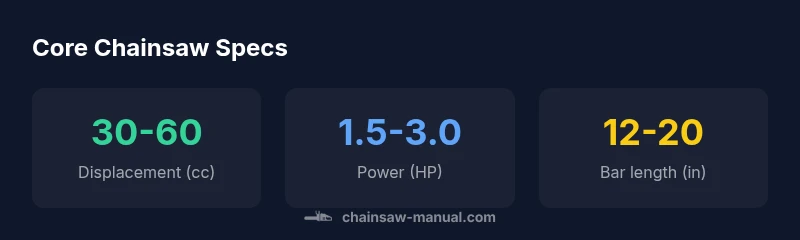
Chainsaw specs focus on five core metrics: displacement, power, bar length, weight, and chain speed. These numbers translate into real-world performance and safety. In practice, homeowners typically see displacement in the 30–60cc range, power around 1.5–3 HP, bar lengths of 12–20 inches, and total weight under roughly 14 pounds. Exact numbers vary by brand and model.
What the numbers mean in chainsaw specs
When you buy or compare chainsaws, the numbers on the spec sheet are not random. They encode how the saw will perform under load, how it feels to operate, and how much work it can handle without overheating or fatigue. The primary goal of chainsaw specs is to translate a mechanical design into real-world capacity. The most common metrics to start with are displacement (cc), power output (HP), bar length (inches), weight, and chain speed. Together, these figures help you estimate cutting speed, control, and suitability for your typical tasks. In practice, expect homeowner models to cluster within certain ranges, but remember that manufacturer ratings may vary by testing method and safety considerations. Chainsaw Manual analysis shows that small variations in fuel mix, exhaust design, and bar type can shift performance without changing the label. Always read the datasheet in the model's manual and compare apples to apples across models from the same category.
Core specifications explained
- Displacement (cc): The engine size, measured in cubic centimeters, is often used as a rough proxy for torque. Larger displacement can sustain higher torque at lower rpm, which helps during heavy cuts. However, torque also depends on carburetion and exhaust tuning.
- Power output (HP): Horsepower expresses potential work rate. It correlates with how fast the chain can cut through wood, but it is not the sole indicator of performance—weight, balance, and chain type matter.
- Bar length (in): The bar length determines the maximum cut reach and the lumber you can process in a single stroke. Longer bars facilitate larger cuts but increase kickback risk and reduce maneuverability.
- Weight: Total weight (including bar and chain) affects fatigue and control. Lighter models are easier to maneuver but may have lower rigidity and vibration damping.
- Chain speed: Measured at the chain tip, this contributes to cutting efficiency. Faster speeds cut faster but require sharper chain and tighter maintenance.
- Engine type and fuel mix: Most consumer saws use two-stroke engines with oil-fuel mixes. Correct mix ratio prevents scuffing and overheating.
- Other: Torque, idle speed, and spark timing also influence real-world performance and reliability.
When evaluating specs, compare within the same class (gas vs electric) and look for consistency between claimed numbers and user experience.
Matching specs to tasks: pruning vs felling
Pruning and light-duty cutting typically benefit from smaller displacement models with lighter bars for maneuverability, giving you quick cuts and minimal fatigue. For felling larger trees, you’ll want higher displacement and a longer bar to reach through the trunk, along with a robust chain that maintains sharpness under heavy loads. Always consider vibration control, balance, and user height when pairing specs with tasks to avoid fatigue or injury over long sessions.
How to compare models: a practical workflow
- Define your workload: determine if you’ll mostly prune, trim, or fell trees of a given size. 2) List must-have specs: identify the displacement, HP, bar length, and weight limits you’re comfortable with. 3) Check manufacturer data: verify numbers in the official datasheets and compare apples-to-apples within the same category (gas vs electric). 4) Read user feedback: note how models perform in real-world tasks similar to your workload. 5) Test and evaluate: if possible, handle models in-store or borrow a demo to gauge balance and comfort. 6) Factor maintenance: consider fuel mix, oiling, and replacement chain costs to estimate running expenses over time.
Safety considerations when evaluating specs
Specs matter, but safe operation is a function of design, technique, and PPE. Favor models with anti-kickback features, good vibration reduction, and a balanced chassis that minimizes fatigue. Always use appropriate PPE, inspect the chain condition regularly, and follow manufacturer maintenance guidelines to keep the saw performing within its spec envelope.
Data interpretation and myths
Manufacturers publish specs, but numbers are influenced by testing methods, fuel, bar type, and safety margins. Bigger displacement does not always equal better performance for your specific tasks. Read the fine print about the bar length, chain pitch, and recommended fuel mix to ensure the model matches your workload and training. Real-world testing and store demos are invaluable for validating the numbers on paper.
Common chainsaw spec terms and their practical meaning
| Spec | Meaning | Typical homeowner range |
|---|---|---|
| Displacement (cc) | Engine size; affects torque and fuel use | 30-60 |
| Power (HP) | Rate of work; correlates with cutting speed but not the only factor | 1.5-3.0 |
| Bar length (in) | Maximum cut reach; influences leverage and safety | 12-20 |
| Weight (lb) | Total mass; affects fatigue and control | 9-14 |
| Chain speed (m/s) | Cutting efficiency at the bar tip | 8-20 |
FAQ
What are the essential chainsaw specs to compare when purchasing?
Key specs to compare are displacement, power, bar length, weight, chain speed, engine type, and recommended fuel mix. Look for consistency across models in the same category and ensure the numbers align with your intended tasks.
Compare displacement, power, bar length, weight, and chain speed when shopping, and check the manufacturer datasheet.
Does bigger displacement always mean better cutting?
Not always; torque curves, carburetion, and chain pitch matter. A smaller engine with good torque and matched bar size can outperform a larger displacement saw.
Bigger isn't always better. Think torque and system efficiency.
How should I interpret bar length for my workload?
Bar length should align with the largest piece you expect to cut. Longer bars increase reach but reduce control; for pruning use shorter bars.
Choose bar length based on typical cut size and maneuverability.
Is chain speed more important than horsepower?
Chain speed affects cutting rate, but proper chain sharpness, tension, and anti-kickback design matter. HP and torque enable sustained speed.
Speed helps, but maintenance and setup matter equally.
What maintenance specs should I check?
Review fuel mix ratios, chain tension, lubrication flow, and air filter; follow manufacturer intervals to prevent wear.
Follow the manual for fuel, tension, and lubrication.
“Manufacturer numbers matter, but the real test is how the specs translate to real-world work and safety.”
The Essentials
- Learn the five core specs before choosing a saw
- Longer bars add reach but increase weight and kickback risk
- Weight, balance, and ergonomics matter as much as horsepower
- Verify numbers with the manufacturer datasheet and in-store trials