What Size Is a Chainsaw Tool? A Practical Guide for Users
A data-driven guide on chainsaw tool size, covering bar length, engine displacement, and chain pitch to help homeowners, DIYers, and professionals choose the right size safely and efficiently.


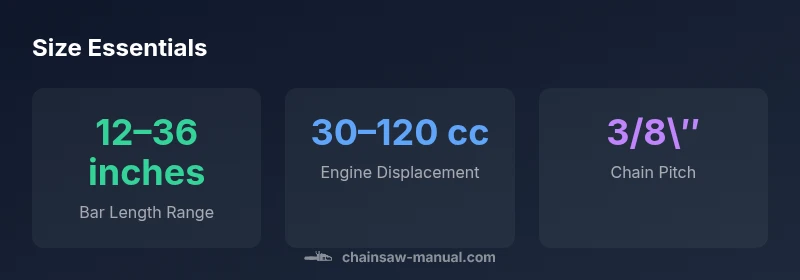
Understanding what size is chainsaw tool helps you pick a model that fits your tasks and keeps you safe. Chainsaw tool size covers bar length, engine displacement, and chain pitch. Bar lengths typically range from 12 to 36 inches, engines from 30cc to 120cc, and common pitches include 3/8 inch or 0.404 inch. Choose size based on task, weight, and safety needs.
Why size matters for performance and safety
Size is not a vanity metric; it defines your control, cutting speed, and fatigue. According to Chainsaw Manual, understanding the relationship between bar length, engine displacement, and chain pitch helps you match a tool to tasks and reduce injury risk. When you pick a size that’s too large for a given job, you sacrifice maneuverability and raise the chance of losing control, especially on uneven terrain or when cutting overhead limbs. Conversely, a size that’s too small can stall under heavy loads, require more passes to complete a job, and increase overall work time. The key is to balance power with portability and to plan for the most common tasks you perform. This balance improves accuracy, reduces kickback risk, and makes routine maintenance more predictable.
The Chainsaw Manual team highlights that a proper size choice lowers stress on joints and improves cutting precision, which is especially important for DIYers and professionals who spend long hours at the worksite. Keep safety gear ready and practice steady, controlled cuts to maximize benefits from any chosen size.
Bar length: Matching the task
Bar length is the most visible dimension of a chainsaw and often the first choice a buyer makes. Longer bars (28–36 inches) move more wood with fewer passes but demand more strength and better technique. They’re ideal for felling larger trees, heavy-duty bucking, and professionals who often work from a standing position with stability. Shorter bars (12–18 inches) excel in pruning, light limb removal, and one-handed operation, where precise cuts and portability matter. For DIY homeowners, a mid-length bar of 16–20 inches offers a versatile compromise. Always consider the weight distribution: longer bars shift the center of gravity forward and can affect fatigue on long sessions. Remember to verify that your bar length is within the tool’s design specifications and that you have a robust protective stance when cutting.
Engine displacement and power: What you feel
Engine displacement correlates with available power, but bigger isn’t always better for every user. In consumer chainsaws, displacement typically ranges from about 30cc to 120cc, with larger engines providing more cutting torque and faster bar speed. For light-duty tasks, a 30–45cc saw can handle pruning and small limbs with good control. For medium tasks, 45–60cc offers a balance of speed and manageability. For heavy jobs like large-diameter logs or frequent bucking, 70–120cc models deliver reliable performance, though they require more operator strength and technique. When choosing size, consider your experience level, routine workload, and the kind of wood you encounter. The Chainsaw Manual team notes that selecting an engine within your capacity improves control and reduces operator fatigue.
Chain pitch and gauge: How they affect cutting
Chain pitch and gauge determine how the chain fits the bar and how aggressively it cuts. Common consumer pitches include 3/8 inch and 0.404 inch; the 3/8" option is more common in mid-sized saws and provides a good balance of durability and speed. The 0.404" pitch is typically found on larger professional models and tends to stay sharp longer under heavy use. Matching the pitch to the chain’s sharpening file size is essential to maintain performance. A larger pitch can cut faster but requires more precise technique and more robust bars, while a smaller pitch gives smoother cuts and is easier to sharpen for beginners. Always use the correct gauge for the bar and ensure the chain is properly tensioned before each cut.
Weight and balance: Handling different sizes
Weight distribution matters almost as much as raw bar length. A heavier saw with a long bar concentrates mass forward, affecting balance and control, particularly for overhead or extended cuts. Lightweight models with shorter bars are easier to maneuver and reduce arm fatigue, benefiting beginners and homeowners who perform shorter sessions. Ergonomics play a critical role in safety: a well-balanced saw reduces kickback potential and improves posture during extended use. If you’re transitioning from a small to a larger size, practice with shorter tasks and gradually increase bar length as your technique improves.
Practical selection guide: Common tasks and recommended sizes
This section provides practical pairings to help you pick quickly:
- Pruning and limbing: 12–14 inch bars, 30–40cc engines
- Home tree trimming and small jobs: 14–18 inch bars, 40–60cc engines
- Firewood cutting and bucking medium logs: 18–24 inch bars, 60–90cc engines
- Large trees and heavy-duty cutting: 28–36 inch bars, 70–120cc engines
- Professional felling: 36+ inch bars with high-displacement engines Note: For safety, always choose the smallest tool that fits the job; heavier tools require learning and strength. Verify that you have the correct protective gear and training.
Maintenance considerations when size changes
Changing size necessitates updating routine maintenance routines. Bar and chain maintenance should reflect the new size: ensure proper chain tension, correct oil flow, and appropriate sharpening intervals. Larger bars may require more frequent chain adjustments and occasional bar replacement as the wear pattern changes. Always inspect the bar groove, sprocket, and oiling system after long sessions and clean the air filter to maintain optimal performance. When moving to a noticeably larger size, plan for a gradual learning curve and allocate time for practice and safety training.
Size-related specifications for typical consumer chainsaws
| Aspect | Typical size range | Notes |
|---|---|---|
| Bar length | 12–36 inches | Versatile for pruning through large-diameter logs |
| Engine displacement | 30–120 cc | Power vs. weight trade-off; choose by task |
| Chain pitch | 3/8" or 0.404" | Higher pitch cuts faster but harder to sharpen |
| Weight (tool only) | 8–15 lb | Heavier tools require more control and strength |
FAQ
What size chainsaw should I buy for light pruning?
For light pruning, aim for a small-to-mid sized saw—around 12–16 inches with a 30–45cc engine. This combination provides good maneuverability and enough cutting power for small limbs while minimizing fatigue. Always wear proper PPE and work within your comfort level.
For light pruning, choose a compact saw with a short bar and modest power. It’s easier to handle and safer for beginners.
How do I determine the right bar length for felling trees?
Bar length for felling should be matched to the tree diameter and your technique. Larger trees typically require longer bars (28–36 inches) and more operator experience. Start with smaller trees to build skill, then progress to longer bars as confidence grows.
For felling, pick a bar length close to the target tree diameter and grow your skills gradually.
Is a larger engine always better for cutting?
Not necessarily. A larger engine adds power but increases weight and reduces maneuverability. For home use, a balanced option in the 40–70cc range often delivers adequate power with better control.
More horsepower isn’t always better; balance power with weight and handling.
What is chain pitch and why does it matter?
Chain pitch affects how the chain engages the bar and the cutting speed. Common pitches are 3/8 inch and 0.404 inch. Match the pitch to the bar, tune the chain correctly, and sharpen regularly to maintain performance.
Pitch matters for fit and sharpness; keep it matched and sharpened.
Can I upgrade size later after buying?
Yes, but upgrading often means a different bar, chain, and sometimes a more powerful engine. Plan for a learning curve and ensure compatibility with protective gear and training when changing sizes.
Upgrading later is possible but requires compatible components and training.
“In selecting chainsaw size, prioritize task fit, weight, and control; bigger isn't always safer or more productive.”
The Essentials
- Choose bar length based on task to optimize control.
- Balance engine power with fatigue when selecting size.
- Understand chain pitch to match sharpening and performance.
- Prioritize safety gear and training with any size.