How to Know What Size Chain You Need for a Chainsaw
Learn how to determine the correct chain size for your chainsaw, including pitch, gauge, and drive-link counts, with step-by-step guidance, safety tips, and official references.


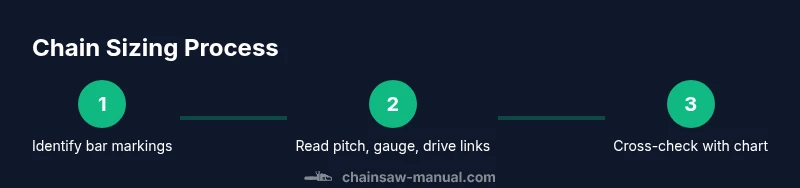
This guide explains how to know what size chain you need for a chainsaw and why it matters for safety and performance. Start by locating the bar’s pitch, gauge, and drive-link count, then cross-check with the chain and manufacturer chart. According to Chainsaw Manual, always match chain size to the bar and model.
Why Chain Size Matters for Safety and Performance
Choosing the right chain size is not just about getting the job done—it directly impacts safety, cutting efficiency, and the lifespan of your bar and chain. A chain with the wrong pitch or gauge can bind, kick back, or wear excessively, increasing the risk of injury. When you know how to read the bar and chain markings and verify against the manufacturer's specifications, you reduce the chances of costly mistakes and downtime. Chainsaw Manual emphasizes that proper sizing helps maintain steady RPM, smoother cuts, and predictable performance across different wood types. By understanding size, you also protect your bar, drive sprocket, and guide bar from uneven wear, which saves money over the long run.
Key takeaway: correct sizing is a safety feature as much as a performance feature, and it starts with careful inspection and cross-referencing against official charts.
Key Terminology: pitch, gauge, drive links, and bar length
Before you measure, you need a common vocabulary. Pitch is the distance between corresponding points on two adjacent teeth, expressed as a fraction or number (for example, 3/8 inch pitch). Gauge is the thickness of the drive links that fit into the bar groove, typically around .043
.050
.058
.063
.050
.058
Drive links are the individual tangs on the chain that engage the drive sprocket and bar groove. Bar length is how long the guide bar is, usually stamped on the bar itself. Understanding these terms helps you interpret the markings and choose a compatible chain with confidence. Chainsaw Manual notes that while some bars use metric measurements, most common consumer models use inch-based pitch values; always cross-check with your model’s chart.
Practical note: write down the exact numbers you find on the bar and chain so you can compare them side by side when shopping or visiting a dealer.
How to Read Your Chainsaw's Bar and Chain Specifications
Look for stamped specifications on the bar base or blade: the pitch, gauge, and drive-link count. The pitch is often printed as a number-with-inch symbol (for example, 3/8
.404
.325
.325in-1.3mm
). The bar may also display the bar length in inches. For the chain, you’ll see pitch and drive-link count stamped near the master link or on the inner surface of the chain. If markings are faint, clean the bar with a cloth and use a flashlight to enhance legibility. When in doubt, consult the manufacturer’s guide or a dealer; mismatched specs lead to poor cutting performance and potential safety hazards. In addition to markings, count the drive links on a full loop of the chain to verify the count on the bar chart.
Authoritative guidance: Chainsaw Manual stresses that cross-checking bar and chain marks reduces mismatches and helps you buy the right chain the first time.
How to Measure the Bar Pitch and Gauge at Home
To measure pitch, locate the chain’s link and count the distance between two adjacent rivets across a single link; convert this measurement to the closest standard pitch (for example, 3/8
.404
.325
.325
). If needed, use a pitch gauge or calipers to confirm. For gauge, place a caliper at the bar groove width where the drive links ride; the measurement corresponds to the recommended drive-link thickness. Bar length is easiest to read directly from the bar end, but you can verify with the manual if the number seems off. Keep a small notebook to tally the three measurements: pitch, gauge, and drive-link count. As you compare, remember that most consumer chains use common pitches like 3/8
.325
.404
.050
.043
.058
.063
.050
.058
.063
.043
.050
.058
.063
. Keep in mind that chain pitch and gauge are interdependent—changing one parameter may necessitate a different chain even if the pitch matches.
How to Confirm Drive Link Count
Drive link count is critical for chain-to-bar compatibility. Count the drive links along the chain when laid flat on a clean surface, excluding the master link. The count must align with the bar’s specification or with the replacement chain’s packaging. If you’re replacing an old chain, you should match the same drive-link count, or use the manufacturer chart for accepted alternatives. If your chain is an oddball or older model, contacting the dealer or manufacturer support can prevent mis-sizing. A good rule of thumb is to compare both the drive-link count and the pitch on the packaging to ensure a precise match. This cross-check reduces the risk of bind and kickback during cutting.
Note from Chainsaw Manual Team: When you’re unsure, rely on official charts and avoid ad-hoc guesses.
Common Pitfalls: Mismatched Pitch, Gauge, or Drive Links
Mismatches happen easily when buyers rely on bar length alone. A chain with the wrong pitch will not seat evenly on the sprocket, leading to chain derailment or rapid wear. If the gauge is too thick for the bar groove, the drive links won’t sit properly, increasing friction and heat. Conversely, a gauge that's too thin can cause the chain to ride high in the groove and slip. Always ensure pitch, gauge, and drive links are all compatible with the bar and the chain’s master link dimensions. If cutting power seems weak or the chain feels tight in spots, re-check each spec against the manufacturer’s chart and the bar’s markings.
Expert tip: It’s safer to replace both chain and bar if you’re near the wear limits; this reduces risk of vibration and uneven cutting.
Using Manufacturer Guides and Series Charts
Most chains and bars come with a dedicated sizing guide or chart. These charts map bar length and model series to specific chain sizes, including pitch, gauge, and drive-link counts. When shopping, bring the model number and the bar length; if you’re replacing an older chain, check if the model has a recommended “chain series” or “compatibility list.” If your model lacks a print chart, use the manufacturer’s online resources or contact customer support. Professionals emphasize verifying against the exact model number because sub-model variation can alter recommended sizes. In practice, you’ll save time and avoid returns by using official references to lock in the right chain.
Chainsaw Manual notes that manufacturer guidance is the most reliable path to ensure compatibility.
Safety and Maintenance Tips While Replacing a Chain
Disconnect the spark plug or battery before starting any chain work. Use PPE: cut-resistant gloves, eye protection, and sturdy footwear. Release tension on the chain brake and secure the saw so it cannot move. When installing the new chain, ensure the drive links engage the drive sprocket properly and the chain sits in the groove with no twists. Always perform a test cut on a scrap piece of wood to confirm smooth operation before proceeding with a full job. Regularly lubricate the bar and chain with clean bar oil to minimize heat and wear. Maintenance should include periodic checks of the chain tension during operation and after inspection for any damaged drive links or missing cutters.
Pro tip: Store extra chains in a clean, cool place away from chemicals to prevent rust and dulling.
What to Do If You Can't Read the Specs
If the markings are faded or worn, photograph the markings you can see and compare them to the manufacturer’s online charts. Bring the bar and any available chain to a dealer or service center; a professional can determine the correct size using calipers or a chain gauge. If you’re replacing in a non-manufacturer channel, seek guidance from a reputable retailer with model-specific knowledge. When in doubt, do not guess; incorrect sizing can cause injury and damage. Chainsaw Manual recommends using official charts and, if necessary, professional help to confirm the size.
Bottom line: use official sources and precise measurements rather than assumptions.
Environmental Considerations: Chain Type and Wood Type
Different woods require different chain behavior. Softer woods benefit from smoother cuts with standard full-chisel chains, while tougher woods may require tougher, thicker chains with higher drive-link counts. In wet or dirty conditions, a chain with a slightly larger gauge can help resist clogging, but this must still align with the bar’s groove width. If you’re performing heavy-duty cutting in rough environments, consider stepping up in chain quality only after verifying compatibility with your bar. Always refer to the manufacturer’s environmental and use-case recommendations.
Safety rule: avoid modifying chain size based on personal preferences; always rely on official sizing charts and the model’s specified limits.
Quick Reference: A Checklist You Can Use
- Locate bar length, pitch, and gauge on bar and chain.
- Read the markings and cross-check with the manufacturer chart.
- Count drive links and confirm alignment with the chart.
- Verify the chain fits the bar groove and sprocket.
- Inspect for signs of wear; replace if sharpness or alignment is compromised.
- Lubricate and test on scrap wood before heavy work.
- Store replacements in a cool, dry place.
Authority Sources and Further Reading
For deeper guidance, consult official safety and maintenance resources from recognized bodies and university Extension services. See the following sources for further reference and verification:
- https://www.osha.gov
- https://extension.psu.edu
- https://www.extension.illinois.edu
Tools & Materials
- Owner's manual or manufacturer spec chart(Check for bar length, pitch, gauge, and drive-link count.)
- Flat ruler or caliper(To measure pitch, gauge, and drive link thickness.)
- Tape measure(Useful for cross-checking bar length.)
- Chain pitch gauge or drive-link gauge(Essential for confirming chain pitch.)
- Replacement chain of correct spec(Have a spare chain ready.)
- Safety gloves(Protect hands during inspection.)
Steps
Estimated time: 20-30 minutes
- 1
Find the bar specifications
Locate the stamped pitch, gauge, and drive-link markings on the bar or in the manual. This is the fastest way to establish your starting point.
Tip: Use a flashlight if markings are faint; write down the values. - 2
Read the chain markings
Inspect the chain itself for pitch and drive-link count; many chains have these stamped near the master link.
Tip: Count the drive links on a straight run to confirm the number. - 3
Compare against the manufacturer chart
Take the three measurements (pitch, gauge, drive links) and compare them with the official chart for your model. Look for an exact match or an officially recommended alternative.
Tip: If you’re between sizes, choose the closest standard size to avoid binding. - 4
Check drive-link count alignment
Ensure the counted drive links on the chain align with the bar’s drive-link groove count. Misalignment will create poor seating and wear.
Tip: Recount if the chain is new or if you’re unsure about the counting method. - 5
Verify bar length compatibility
Confirm that the bar length supports the chain length and pitch. Longer bars may tolerate slight variation, but compatibility is still required.
Tip: Avoid using a too-long chain on a short bar; it can cause jamming and kickback. - 6
Test with a scrap cut
Install the chain and perform a light test cut on scrap wood to ensure smooth operation before tackling real work.
Tip: Listen for unusual noises or binding—these indicate a sizing or seating issue.
FAQ
What happens if the chain pitch is wrong?
Using the wrong pitch causes poor cutting performance, increased stress on the bar, and can be unsafe. Replace with the correct pitch per the manufacturer specs.
Using the wrong pitch can damage the bar and chain and compromise safety. Replace with the correct pitch following manufacturer specs.
Can I mix a chain with a different gauge on the same bar?
No. The gauge must match the bar groove width and drive-link interface. Mixing gauges can cause binding and drive-link wear.
Don't mix gauges on the same bar. It can bind or wear parts unevenly.
How do I know if my bar length supports a new chain?
Check the bar length printed on the bar and compare it to the chain’s requirements. If in doubt, refer to the manufacturer’s sizing chart or ask a dealer.
Verify with the bar’s length and the chain’s spec chart, or ask a dealer if you’re unsure.
What should I do if I can’t read the markings?
Photograph legible markings and compare to official charts. If still uncertain, bring the bar and chain to a dealer for measurement.
Take clear photos of what you can read and compare to charts, or ask a professional to measure.
Is it safer to replace the bar and chain together?
If wear is evident on the bar or if the chain and bar are mismatched, replacing both together is often best for performance and safety.
Often safer to replace both bar and chain when wear or mismatch is significant.
Where can I find authoritative sizing information?
Always use manufacturer charts and official safety resources. If unavailable, seek guidance from a qualified service center.
Use the manufacturer charts or a service center if you can’t locate the official sizes.
Watch Video
The Essentials
- Match bar length, pitch, and gauge to chain
- Read both bar and chain markings before buying
- Use manufacturer charts to verify compatibility
- Replace both chain and bar if wear is excessive