How Much HP Does a Chainsaw Make: A Practical Guide
Explore real-world horsepower ranges for consumer and professional chainsaws, how horsepower is measured, and what it means for cutting performance and safety.


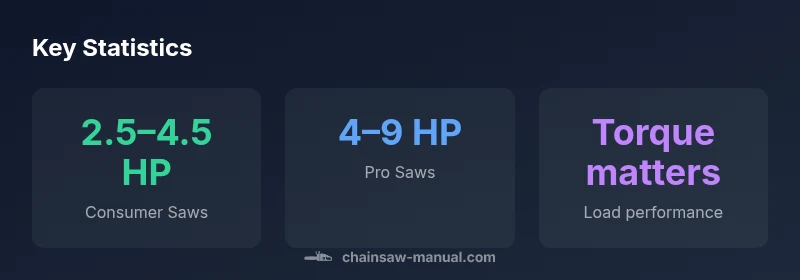
According to Chainsaw Manual, most consumer chainsaws produce about 2.5–4.5 HP, while many professional models run roughly 4–9 HP. This horsepower range reflects engine design, displacement, and tuning, but real-world cutting power also depends on bar length, chain pitch, and maintenance. Use HP in combination with torque and weight to assess suitability for your tasks.
How horsepower is defined for chainsaws
Horsepower (HP) is a metric that expresses the rate at which an engine can do work. For chainsaws, HP is usually measured at the crankshaft under specified test conditions and then reported by manufacturers. In practice, many readers conflate HP with torque, RPM, and clutch engagement. According to Chainsaw Manual, HP is a useful proxy for a saw's potential power, but it is not the whole story. Real cutting performance depends on torque delivered at the chain, the RPM at the bar, and how the saw is loaded during a cut. Additionally, the conversion between HP and kW (1 HP ≈ 0.746 kW) helps when comparing international specifications. Understanding HP in isolation provides a starting point, but always read torque curves and duty ratings for a complete picture.
- Distinguish crank horsepower (engine output) from effective horsepower at the bar (what you actually feel during a cut).
- Recognize that two saws with similar HP can behave differently if one has higher torque or a faster clutch engagement.
- Check whether the published HP is a peak value or a continuous rating; many consumer saws report peak HP, which may drop under heavy load.
Practical takeaway: HP is a foundational metric, but torque, weight, bar length, and chain choice lock in real-world performance. When evaluating options, reference the manufacturer’s torque curves and field tests rather than HP alone.
Consumer vs professional horsepower ranges
HP bands by class drive expectations about cutting speed and log handling. Consumer or homeowner saws commonly land in the 2.5–4.5 HP range, which is adequate for modest firewood tasks, limbs, and smaller-diameter logs. Professional or commercial saws typically range from 4–9 HP, enabling faster cuts in larger diameter material and longer bar lengths. It’s important to remember that higher HP often comes with increased weight and consumption, so the trade-off between power, maneuverability, and fatigue matters for long jobs. The Chainsaw Manual team emphasizes that many professionals prioritize torque stability and clutch performance in addition to HP, especially when felling or limbing with heavy gear.
- Bar length matters: longer bars require more torque to maintain chain speed.
- Fuel economy and maintenance impact sustained performance during long cuts.
- Weight distribution affects user fatigue; a higher-HP saw that’s heavy may be harder to control over time.
Guidance for choosing by class: For homeowners, a mid-range HP saw paired with a comfortable weight and reliable cooling works well for most yard work. For professionals, prioritize robust torque delivery and durable components over peak HP alone.
Factors that influence horsepower ratings
Hp, torque, displacement, and engine design interact in complex ways. Several factors influence how HP translates to cutting power:
- Engine displacement and compression ratio determine potential power output.
- Two-stroke design, fuel mix, and muffler design shape torque delivery across RPM bands.
- Altitude, temperature, and air density affect engine breathing and can reduce observed HP under load.
- Maintenance quality—clean air filters, fresh fuel, proper spark plug gaps, and correct chain tension—helps preserve HP output during work.
- Clutch and centrifugal force: how quickly the chain engages and maintains speed under resistance impacts perceived HP during a cut.
Notes for readers: Some saws publish peak horsepower, not continuous HP. In practice, the sustained HP under load is usually lower than peak numbers, especially in hot conditions or when the bar digging into hardwood.
How horsepower translates to real-world cutting performance
A higher HP rating can speed up cuts in suitable conditions, but it does not automatically guarantee faster felling or limbing. Cutting performance depends on a mix of HP, torque, chain speed, and operator technique. For typical firewood tasks, a saw in the 3–6 HP range can handle common hardwood and softwood with a manageable bar length (16–20 inches). When felling larger trees or crossing dense material, torque stability and clutch responsiveness become more important than pure horsepower. Practically, the difference between 4 HP and 6 HP may be felt when the log diameter increases, the wood density rises, or when you’re operating at the upper end of the bar length. The Chainsaw Manual approach emphasizes field testing: compare two saws on the same log with equivalent chains to observe actual performance.
- In circular or cross-cutting tasks, HP contributes to fast chain speed, but torque ensures the chain maintains speed under load.
- Ergonomics matter: a lighter, well-balanced saw with lower HP can outperform a heavier high-HP model in repetitive tasks.
- Real-world results improve when you pair HP with the right chain pitch, bar length, and season-appropriate fuel/air mixture.
Design choices that affect horsepower and performance
Most gasoline-powered chainsaws use two-stroke engines, which combine fuel and oil in a premix. Several design choices influence how horsepower is realized in practice:
- Engine displacement and stroke design set the baseline power potential.
- Exhaust and intake port timing affect the engine’s breathing efficiency, especially at higher RPMs.
- Carburetion tuning, pilots, and metering jets shape how the engine responds to throttle inputs under different loads.
- Cooling strategies (airflow and fin design) help prevent power loss due to heat soak during long cuts.
- Clutch systems and anti-vibration features affect perceived power by reducing fatigue and keeping the chain at peak speed under load.
Takeaway: A higher HP number is meaningful when the saw’s torque curve aligns with your typical workload. Look for robust torque across the RPM range and a reliable clutch that maintains chain speed when you’re cutting through dense wood.
Practical guidelines for choosing by HP for different users
- Homeowners and DIY enthusiasts: Target a seesaw of power and weight—roughly 2.5–4.5 HP with 16–18 inch bars. Prioritize good ergonomics, simple maintenance, and reliable starting.
- Professionals with long jobs and heavy logs: Seek 6–9 HP in a well-balanced package with durable components, a longer bar option, and an efficient cooling system. Look for a proven clutch, easy filter access, and strong bar-oil delivery.
- Safety first: HP is only one factor. Ensure the saw has an effective chain brake, anti-kickback features, proper PPE compatibility, and a solid maintenance plan for peak performance.
Decision checklist: Compare published HP ranges, torque curves, dry weight, bar length options, and user reviews. When in doubt, test a few models side-by-side to observe how they behave under your typical workload.
Measuring HP in the field and common misconceptions
Field measurements of HP are challenging without lab-grade dynamometers. In practice, homeowners rely on manufacturer ratings, field tests, and proxy indicators like chain speed at a given throttle, run-time under load, and observed cutting speed. Common misconceptions include:
- Higher HP always means faster cuts: True in some scenarios, but torque, chain speed, and bar length also govern performance.
- All HP is created equal across brands: Different testing standards and calibration can lead to apparent HP differences; always compare torque and RPM data as well.
- HP is the only metric worth considering: HP matters, but total power output, weight, balance, and maintenance all contribute to real-world results.
For best accuracy, consult manufacturer torque curves and field-test data, and consider professional reviews or independent testing from safety-focused outlets.
Maintenance tips to maximize HP output
To preserve horsepower potential over time, commit to consistent maintenance:
- Use the manufacturer-recommended fuel/oil mix and high-quality, fresh fuel. Poor fuel can lower performance and efficiency.
- Clean or replace air filters regularly and inspect the spark plug; a fouled plug reduces efficiency and HP output under load.
- Keep the chain properly tensioned and sharp; a dull chain creates higher resistance, reducing effective power delivery.
- Check bar oil delivery to ensure the chain stays lubricated, reducing friction that drains power.
- Inspect cooling fins and remove debris to prevent overheating, which can temporarily reduce power and shorten service life.
Following these practices helps maintain peak horsepower and extends the saw’s usable life for those demanding jobs.
HP ranges by chainsaw class and powertrain
| Category | Typical HP Range | Notes |
|---|---|---|
| Consumer DIY | 2.5–4.5 HP | Common for yard work and smaller logs |
| Professional/Commercial | 4–9 HP | Higher torque and longer bar options |
| Mid-range/Balanced | 3.0–6.0 HP | Good compromise for frequent use |
| Electric chainsaw | 1.5–2.5 HP (equivalent) | Torque curves differ from gas models |
FAQ
How is horsepower measured for chainsaws?
Manufacturers typically measure crank horsepower under standardized conditions, then publish peak or continuous horsepower. Real-world results depend on engine load, throttle position, and test methodology. Always check torque curves and RPM data in addition to HP.
Manufacturers test horsepower at the engine, but real cuts depend on load and torque.
Do higher HP chainsaws cut faster?
Higher HP can speed cuts in large or dense material, but torque delivery, bar length, chain speed, and operator technique often have a greater impact on actual cutting speed.
Higher HP helps with heavy cuts, but torque and technique matter just as much.
Does fuel mix affect horsepower?
Yes. Using the recommended fuel-oil mix and high-quality fuel helps preserve engine efficiency and output. Poor fuel can reduce power, responsiveness, and sustained HP under load.
Fuel quality and correct mixture matter for peak performance.
How can I estimate HP when buying a chainsaw?
Look for published HP ranges, check the torque curve, and compare displacement and weight. Consider field tests or reviews that report real-world performance on similar tasks.
Check HP alongside torque, weight, and test data.
Is horsepower the best metric for cutting power?
HP is important but not the sole predictor. Torque, RPM stability, clutch engagement, bar and chain quality, and user technique all contribute to actual cutting power.
HP helps, but torque and overall design matter too.
Does altitude affect horsepower?
Yes. Higher altitude reduces air density, which can lower engine power output. Saw designs with higher torque efficiency help mitigate some of this loss.
Altitude can reduce HP; torque and design help offset it.
“HP is a useful guide, but cutting performance comes from the synergy of power, torque, and mechanical design.”
The Essentials
- Compare HP with torque and weight for real performance
- Consumer saws typically deliver 2.5–4.5 HP; pro models 4–9 HP
- Bar length, chain, and maintenance influence cutting speed as much as HP
- HP alone is not a sole predictor of performance
- Prioritize torque curves and field tests when choosing a saw