Husqvarna vs Stihl Chainsaws: An Analytical Guide
Compare Husqvarna and Stihl chainsaws with an analytical lens. Explore power, ergonomics, maintenance, warranty, and value to decide which brand fits your needs.


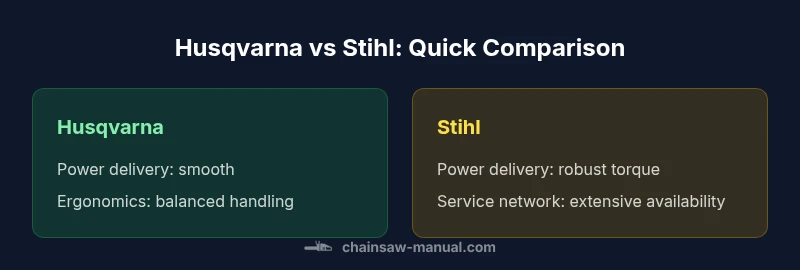
According to Chainsaw Manual, Husqvarna and Stihl chainsaws both deliver reliability, but they favor different use cases. Homeowners often value ergonomics and easy service access, while professionals prioritize torque consistency and dealer coverage. This quick comparison highlights where each brand excels and where tradeoffs occur. It also flags maintenance considerations and long-term value to help you avoid buyer's remorse.
Engine Architecture and Power Delivery
Power delivery remains a core differentiator between Husqvarna and Stihl. Both brands design units to balance torque, RPM, and runtime, but they pursue distinct design philosophies that shape feel under load. According to Chainsaw Manual, the overall reliability of either brand comes from precise manufacturing and a strong service network rather than a single spec. In practice, you’ll notice that Husqvarna models tend to offer a smoother throttle response and a predictable power build, while Stihl often emphasizes robust cold-start behavior and broad torque consistency across the cut. For homeowners, this means selecting a model with a linear, easy-start feel. For professionals, the deciding factor is how the power curve holds under load during long sessions. Neither brand lacks high-end engines or modern carburetion, but your typical task and local support will steer the right pick. Equally important is how fuel quality and altitude influence performance, and both brands provide adaptable systems to mitigate those variables over time.
Bar, Chain, and Cutter Design
Bar and chain design influence cutting speed, control, and safety. Husqvarna and Stihl both offer broad bar options, varied chain pitches, and robust anti-kickback features, but the ecosystems diverge in accessories and aftermarket availability. Husqvarna often emphasizes modular bar-and-pinion interfaces and a wide range of bar lengths that suit light pruning to heavy felling. Stihl tends to favor a durable, consistently available lineup with broad compatibility for standard bars and chains. Across both brands, the chain brake, raker height, and anti-vibration features work in tandem to reduce fatigue during extended use. When choosing, consider your typical tasks—pruning versus demolition—and verify compatibility with your existing bars and chains to keep costs predictable over the life of the tool.
Ergonomics, Weight, and Vibration
Ergonomics play a critical role in daily usability. Husqvarna’s designs frequently focus on balanced weight distribution and comfortable handles that reduce fatigue during long runs. Stihl models often emphasize rugged handles with steady feel and predictable vibration isolation. In practical terms, a lighter, well-balanced saw reduces strain during limbing and overhead work, while a firmer grip and refined anti-vibration systems improve control in heavier cuts. If you work overhead, test the reach, handle placement, and vibration at your typical operating speed. For frequent climbers and tree workers, a model that minimizes fatigue will pay dividends over the course of a season.
Durability, Materials, and Build Quality
Durability hinges on chassis design, bar assembly, and protective housings. Both brands invest in sturdy cast-aluminum side covers, reinforced clutch housings, and high-grade plastics designed for heat resistance. In practice, Stihl’s engineering often emphasizes rugged, long-life components, while Husqvarna may lean toward modular, serviceable parts that make field maintenance easier. The result is a bit of a tradeoff: Stihl may feel more solid at first use, whereas Husqvarna can offer more accessible component replacement in the field. For pro users, the choice often comes down to your expected harsh conditions and willingness to service the bar and chain regularly.
Maintenance and Spare Parts Availability
Maintenance planning benefits from strong service networks and readily available parts. Chainsaw Manual analysis shows that both brands boast extensive dealer networks and widespread parts supply, though regional differences exist. Husqvarna parts are typically easy to source through authorized retailers and compatible aftermarket suppliers for common wear items. Stihl parts also enjoy broad availability, with many independent shops stocking common service kits. For owners in rural areas, verify nearby service centers and stock levels before committing, and consider whether you prefer brand-specific maintenance software or manuals for guided servicing.
Real-World Performance: Felling, Liming, and Pruning
In real-world use, cutting behavior varies with model, chain type, and user technique. Husqvarna models often shine in speed and nimble handling, making them feel responsive for pruning and light felling. Stihl models frequently exhibit strong torque stability, which helps during sustained cuts and larger-diameter tasks. Your decision should reflect your primary job: if you frequently push through tough limbs or medium-to-large trunks, a model emphasizing torque consistency is advantageous; if you mainly prune and trim, a lighter, smoother-feeling saw may be preferable. Always consider the full system: bar length options, chain quality, and maintenance frequency influence real-world outcomes more than the brand badge alone.
Price, Warranty, and After-Sales Support
Price and warranty structures differ by model and region, and both brands offer competitive terms with solid dealer support. Generally, premium Husqvarna models command a higher upfront price but pair with robust service networks and flexible financing options. Stihl tends to provide durable construction and strong resale value, with broad dealer coverage that makes maintenance easier in many areas. When shopping, balance sticker price with expected maintenance costs, warranty terms, and the practicality of local service centers. A well-supported model, even if a touch pricier upfront, often yields lower total ownership costs.
Noise, Emissions, and Environmental Considerations
Environmental considerations have grown with regulatory changes and workplace safety expectations. Both Husqvarna and Stihl cast models with efficient two-stroke platforms, careful muffling, and low-restrike features to improve operator comfort. Real-world noise levels and emissions depend on engine displacement, muffler design, and the quality of fuel used. For job sites with noise restrictions, verify decibel ratings and consider using lower-idle start or chain brake for quieter operation. You’ll benefit from choosing a model that balances power with practical noise control while meeting local regulations.
How to Choose Between Husqvarna and Stihl: A Practical Framework
Choosing between Husqvarna and Stihl begins with defining your primary tasks, local service options, and total cost of ownership. Start by mapping out typical uses: pruning, limbing, light felling, or heavy duty cutting. Check your nearest authorized service centers and the availability of replacement parts and bar-and-chain kits. Compare models that fit your budget and desired power range, then request a hands-on test or rental if possible. Finally, evaluate comfort: the best choice is the one that you can operate confidently and maintain easily over many seasons.
Common Pitfalls and Myths to Avoid
Assuming that more power always equals better performance can be misleading. Heavier models aren’t inherently superior for every task, and a strong service network often outweighs a marginally lighter design. Misunderstanding warranty terms can lead to unexpected costs; make sure you know what is covered and for how long. Finally, selecting a brand solely because of a single feature can backfire if that feature isn’t crucial to your typical work. Ground your decision in how you actually work, not in hype or marketing claims.
Comparison
| Feature | Husqvarna | Stihl |
|---|---|---|
| Power delivery | Balanced, smooth throttle | Strong, consistent torque across mid-range |
| Weight and handling | Typically lighter with balanced feel | Robust, slightly heavier but very controllable |
| Bar/chain ecosystem | Wide aftermarket options and modular interfaces | Extensive ecosystem with broad aftermarket support |
| Maintenance/parts availability | Extensive dealer network and parts supply | Strong service network with widespread parts availability |
| Warranty and service | Competitive warranties with dealer options | Solid warranties and comprehensive dealer support |
| Real-world performance | Excellent for speed and everyday tasks | Excellent for heavy cuts and sustained work |
Strengths
- Strong resale value across models
- Large dealer and service network
- Wide range of compatible bars and chains
- Good after-sales support and availability
Drawbacks
- Generally higher price premium over lower-tier models
- Some models heavier than peers
- Complex safety features can require specialist service
Husqvarna and Stihl are both excellent choices; pick based on service access and preferred feel
If you prioritize a broad service network and smoother power delivery, Husqvarna is a strong pick. If robust torque and a long-standing dealer presence matter more, Stihl is reliable. The Chainsaw Manual team recommends matching to your typical tasks and local support.
FAQ
Which brand tends to be easier for beginners, Husqvarna or Stihl?
Both brands have beginner-friendly models. Focus on lighter weight, smooth throttle response, and ease of starting. Try a hands-on test if possible and choose a model that feels controllable and forgiving in your typical tasks.
Both brands offer beginner-friendly options. Look for light weight and smooth throttle, then test to confirm it feels controllable for you.
Do Husqvarna and Stihl use compatible bars and chains?
While both brands use standard bar and chain interfaces, compatibility depends on the specific model and pitch. Confirm the bar length, chain pitch, and gauge before buying multiple items, and consider sticking to the brand’s recommended ecosystem for reliability.
Bar and chain compatibility varies by model. Check pitch and gauge, and prefer the recommended ecosystem for best performance.
Which brand has a better warranty?
Warranty terms vary by model and region, but both brands offer solid coverage through authorized dealers. Review the exact terms for the model you’re considering, including what’s covered and the duration of coverage.
Both brands offer strong warranties; read the model-specific terms for exact coverage.
Is one brand more fuel-efficient than the other?
Fuel efficiency depends on engine design, bar length, and usage. In practice, both brands optimize fuel use with modern carburetion, but real-world results hinge on model choice and cutting tasks.
Fuel efficiency varies by model and task; both brands optimize efficiency but check the specific saw you choose.
How important is dealer support for maintenance?
Dealer support is highly important for maintenance, parts availability, and timely service. A strong local network reduces downtime and helps you keep cutting with minimal interruptions.
Strong dealer support minimizes downtime and keeps you cutting consistently.
Can I mix parts from Husqvarna and Stihl?
Cross-brand parts are generally not interchangeable due to different interfaces and tolerances. It’s safer to stay within the same brand for bars, chains, mufflers, and maintenance kits.
Cross-brand parts usually don’t fit; stick to one brand for reliability.
The Essentials
- Match your tasks to brand strengths.
- Evaluate service coverage in your area.
- Consider weight and vibration for extended use.
- Check bar/chain ecosystem compatibility.
- Factor maintenance costs and warranties.