Why Is My Chainsaw Not Spinning? A Practical Troubleshooting Guide
Urgent, safety-first troubleshooting for a chainsaw that won't spin. Learn common causes, quick checks, a step-by-step fix path, and when to call a pro. Stay safe with Chainsaw Manual.


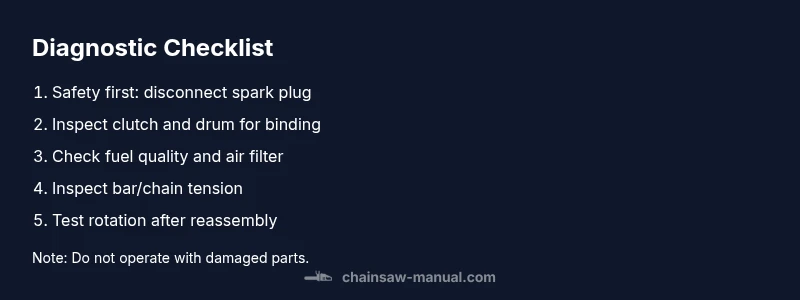
Most often, a chainsaw won’t spin because the clutch is seized or damaged, fuel delivery is impaired, or the bar/chain is jammed. Quick fixes: stop the saw, disconnect the spark plug, and inspect the clutch and drum for binding; check the fuel mixture, fuel filter, and air filter; if it still won’t spin, seek professional service.
Why the Chainsaw Won't Spin: An urgent overview
If you’re asking why is my chainsaw not spinning, you’re facing a symptom that can range from a simple jam to a serious clutch failure. The chain must rotate freely when the engine is running; if it doesn’t, you risk further damage and potential injury. This guide prioritizes safety, then speed, so you can diagnose confidently and act decisively. In most cases, issues fall into a few reliable categories: clutch problems, fuel delivery faults, bar/chain binding, or air/fuel system restrictions. By tackling the easiest checks first, you reduce risk and save time. The goal is to restore rotation safely, not to guess or rush repairs.
According to Chainsaw Manual, the fastest path is to verify basic safety steps, perform a quick visual inspection, and then move to targeted checks. This approach minimizes danger and helps you determine whether a pro is needed. Whether you’re a homeowner, DIY enthusiast, or pro, staying methodical protects you and your tool.
Quick safety reminders before you begin
- Always disconnect the spark plug cap before inspecting components.
- Engage the chain brake and wear cut-resistant gloves when touching the chain area.
- Work in a clean, well-lit space with a stable surface.
- If the saw is hot, allow it to cool before handling internal parts.
If you follow these steps, you’ll reduce the risk of injury and make later checks easier.
Common culprits when the chain won’t spin
- Seized or damaged clutch: A stuck clutch drum prevents the chain from rotating even if the engine turns. This is a frequent cause and often requires replacement.
- Fuel delivery issues: Stale fuel, clogged filter, or a dirty carburetor can prevent the engine from producing enough torque to spin the chain.
- Bar/chain binding: Debris or a kinked chain can jam the drum and stop rotation.
- Air intake or ignition problems: A clogged air filter or fouled spark plug reduces engine performance and can stop rotation.
- Internal engine problems: Severe wear or crankcase issues can prevent the engine from turning over properly.
By categorizing the issue, you can prioritize fixes and avoid unnecessary disassembly.
How to approach diagnosis safely
- Start with the easiest checks: verify fuel freshness, inspect air filter, and examine the chain tension.
- Move to mechanical checks: inspect the clutch/drum for binding; look for signs of wear, heat damage, or oil leakage.
- Test rotation by hand where safe; feel for rough surfaces or binding, which indicates a mechanical fault.
- If the engine won’t turn over or you detect significant damage, stop and consult a professional to avoid further harm.
Quick fixes you can perform (with limits)
- Clean or replace the air filter and fuel filter to restore proper air-fuel mixture.
- Inspect and clean carburetor jets if you notice poor throttle response but the engine turns.
- Free a jammed bar/chain by carefully removing the chain and checking for obstructions, then reinstall with correct tension.
- Inspect the clutch and drum for binding; if the clutch looks worn or seized, replacement is often required.
- Avoid running the saw with any security concerns; if in doubt, stop and seek professional service.
Steps
Estimated time: 60-90 minutes
- 1
Power down and prepare for inspection
Ensure the chain brake is engaged, unplug the spark plug boot, and set the saw on a stable work surface. Remove any debris around the clutch cover to avoid contamination. This first step minimizes injury and keeps components clean for accurate inspection.
Tip: Have a flashlight handy to spot tiny debris or wear. - 2
Check the spark plug and ignition
Remove the spark plug and inspect for fouling, scorching, or gap wear. Clean or replace if needed; re-gap per the manufacturer spec. A bad plug can prevent the engine from delivering torque to the clutch.
Tip: Always ground the plug before turning over the engine to avoid shocks. - 3
Inspect the fuel system
Drain old fuel from the tank and inspect the fuel filter. Refill with fresh two-stroke mix at the correct ratio. If the carburetor is suspect, a professional cleaning may be required to restore proper fuel delivery.
Tip: Use stabilized fuel if storing for more than a month. - 4
Evaluate the air intake and carburetor
Remove and clean the air filter; check for blockages. If the engine shows poor throttle response or stalls under light load, clean the carburetor jets or seek professional service.
Tip: Avoid using compressed air to blow debris into the engine—this can push debris further inside. - 5
Check the bar and chain binding
Inspect chain tension and bar alignment; remove the bar and chain if necessary to inspect for burrs, warps, or obstruction. Reinstall with correct tension and verify free rotation before testing.
Tip: Never start the saw with the bar removed. - 6
Test run and assess
Reconnect the spark plug, mount the cover, and perform a cautious test run. Observe whether the chain spins smoothly. If rotation remains blocked, discontinue and contact a technician for deeper diagnostics.
Tip: Wear protective gear and keep hands clear of moving parts.
Diagnosis: Chainsaw won't spin / chain not rotating when engine runs
Possible Causes
- highPower/engine issue preventing clutch engagement
- highSeized clutch or damaged clutch drum
- mediumFuel delivery problems (stale fuel, clogged filter, dirty carb)
- mediumBar/chain jam or binding
- lowAir filter clogged or spark plug fouled
Fixes
- easyDisconnect spark plug, inspect clutch and drum for binding, free any seized parts
- mediumDrain stale fuel, replace with fresh two-stroke mix, and clean/rebuild carb jets if needed
- easyRemove bar/chain, clear obstructions, and re-tension chain properly
- easyClean or replace air filter and spark plug; verify ignition timing if available
- hardIf clutch or engine internals are damaged or continued failure, seek professional service
FAQ
What is the most common reason a chainsaw won't spin?
Clutch binding or a fuel delivery problem is typically the cause. Start with safety checks, then inspect the clutch and fuel system.
The most common reason is clutch binding or fuel delivery issues. Start with safety checks and inspect the clutch and fuel system.
Can a clogged air filter stop a chainsaw from spinning?
Yes. A clogged air filter can lean the mixture or starve the engine of air, causing poor rotation or stalling. Clean or replace the filter.
Yes. A clogged air filter can prevent proper rotation; clean or replace it.
Should I replace the fuel filter or carb jets?
Start with replacing the fuel filter and cleaning the carburetor jets if needed. Persistent issues may require a carburetor rebuild by a pro.
Replace the fuel filter and clean the carb jets; if issues persist, a pro may be needed.
Is it safe to troubleshoot while the engine is hot?
No. Allow the engine to cool for 10-15 minutes before handling internal parts to avoid burns or damage.
Let the engine cool for 10-15 minutes before inspecting.
When should I seek professional help?
If the clutch, crank, or internal components show damage, or if the saw still won’t spin after basic checks, consult a technician.
If you see damage or the issue persists after checks, call a professional.
What maintenance prevents spin issues?
Regular cleaning, proper fuel, timely air-filter changes, and periodic clutch inspection help prevent spin issues.
Keep filters clean, use fresh fuel, and inspect the clutch regularly to prevent problems.
Watch Video
The Essentials
- Prioritize safety before any inspection.
- Clutch binding and fuel issues are the most common culprits.
- Check air, fuel, and ignition in sequence for efficient troubleshooting.
- If uncertainty remains, contact a professional for repair.
- Prevent spin issues with regular maintenance and proper storage.