Why Is My Chainsaw Not Cutting With a New Chain? A Practical Troubleshooting Guide
A practical, safety-first guide to diagnose why your chainsaw won't cut with a new chain and how to fix common installation, tension, and bar issues.


Most often a new chain won’t cut because of improper installation, incorrect tension, or a worn bar. Start by ensuring the chain is mounted in the correct orientation, set the tension while the bar is warm, and clean the bar groove. If it still won’t bite, inspect the drive sprocket and bar rails for wear.
Why a brand new chain still won't cut
When homeowners ask why is my chainsaw not cutting with a new chain, the most common culprits are installation errors, improper tension, and bar or drive sprocket wear. A brand-new chain is sharp by design, but it cannot bite if it isn't installed correctly or if the bar groove is loaded with debris or the chain rides on the edge instead of the groove. In this guide, we’ll walk you through the exact checks that restore cutting performance safely and quickly, with practical steps you can follow today. By focusing on installation, tension, and bar/sprocket condition, you can identify the culprit fast and avoid costly downtime or unsafe operation.
This article uses practical tests you can perform in your shop or yard, with safety as the first concern. The goal is to get you back to cutting efficiently, not to overwhelm you with theory. Chainsaw Manual’s guidance emphasizes deliberate, safety-first troubleshooting so you can handle minor repairs and know when to call a professional.
Check the basics before you panic: orientation, tension, and bar cleanliness
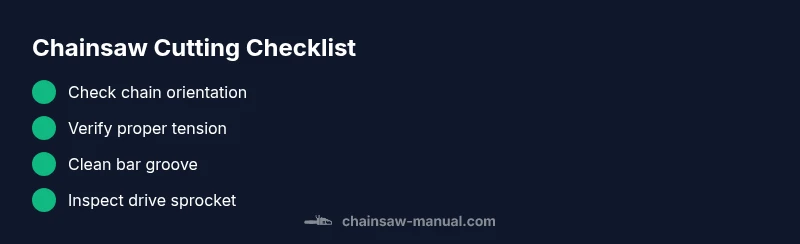
A new chain can fail to cut if it is installed backwards, the chain tension is incorrect, or the bar groove is blocked or worn. Start with the simplest checks:
- Verify the chain orientation against the bar’s guide marks and ensure teeth point toward the tip of the bar. A misoriented chain will ride on the wood rather than bite it.
- Confirm that the chain tension allows you to lift the chain away from the bar slightly with normal drag. If you can’t lift it or it sags excessively, adjust tension following the manual.
- Inspect the bar groove for packed sawdust, resin, or wood, and clean it. A clogged groove reduces contact area and can prevent cutting even with a sharp chain.
If these basics don’t fix the problem, move to more involved checks. Chainsaw Manual emphasizes starting with simple fixes before moving to more complex diagnostics to minimize risk and downtime.
Tension and tracking: the quick fix
Tension and tracking are the two most common culprits after installation. A chain that is too tight can bind in a cut, stall the bar, or overload the clutch, while a chain that’s too loose can come off the bar during operation. Proper tension lets the drive links sit in the bar groove without dragging on the bar’s rails. With the saw off, rotate the chain by hand and watch how it moves along the groove. If the chain binds or climbs up, you’ll need to adjust tension and ensure the bar is tracked correctly. Tracking also means the chain should run centered on the bar; if it’s wandering to one side, you may have a bent bar or worn sprocket and need to address those parts.
Bar condition and drive sprocket wear
Even a brand-new chain loses effectiveness if the bar groove is damaged or the drive sprocket has worn teeth. Inspect the bar rails for burrs, cracks, or uneven grooves. Worn bar rails can cause the chain to ride high and fail to engage the wood. Similarly, examine the drive sprocket: a worn or chipped sprocket teeth reduce engagement with the chain, making cutting laborious and inconsistent. If you find signs of wear, replace the bar or sprocket according to the manufacturer’s guidance. This step is often the deciding factor between a quick fix and a costly replacement.
In practice, many users discover that a combination of clean grooves, proper tension, and a fresh, well-installed chain makes a dramatic difference in cutting performance. If your bar and sprocket look good but the chain still won’t cut, move to the next steps to verify compatibility between chain pitch, gauge, and bar groove.
Pitch, gauge, and bar compatibility: ensuring proper fit
A new chain still won’t cut if it doesn’t match your bar’s pitch and gauge. Pitch describes the distance between the chain’s drive links, while gauge is the thickness of the drive links that fit into the bar groove. If the pitch or gauge is mismatched with the bar, the chain will not seat properly, causing binding or skipping. Always verify that the chain’s pitch and gauge align with the bar’s specifications printed on the bar itself or in the saw’s manual. If you’re unsure, replace with a chain and bar that are explicitly matched to your saw’s model and guide plate.
Additionally, ensure the chain’s drive links fit cleanly into the bar groove without gaps that let the chain ride up. A small mismatch can dramatically impact cutting efficiency and may damage the bar over time.
Common mistakes that prevent cutting (and how to avoid them)
There are several frequent errors that prevent a brand-new chain from cutting properly:
- Installing the chain backwards or upside down. Look for directional marks and the chain’s sharp edge facing the cutting direction.
- Running the chain with the wrong tension—either too tight or too loose. Adjust per the manual and recheck after a brief run.
- Not cleaning the bar groove or letting debris accumulate. Regular cleaning reduces resistance and improves bite.
- Over-tightening during initial starting attempts, which can bind the chain and stress the drive system. Start with proper tension and verify after a short warm-up run.
- Using an incompatible bar or sprocket. If components aren’t matched to your model, cutting will be compromised or unsafe.
By avoiding these common mistakes and sticking to the manual’s guidelines, you’ll maximize your new chain’s cutting performance and reduce downtime.
Safety first: checks before you test cut
Before you perform any cutting test, ensure all safety measures are in place. Wear eye protection, cut-resistant gloves, hearing protection, and sturdy boots. Check that the chain brake works, the chain is properly engaged, and the engine is warmed up. Never operate a chainsaw with a damaged bar or chain—if you notice visible cracks, teeth missing, or severe wear, replace the affected components before testing. A carefully staged test cut on a controlled piece of wood will reveal whether the chain engages properly and whether tension and tracking are correct.
How to verify cutting performance with a test cut
Select a small, stable piece of wood and perform a controlled cut with the chain running at a steady speed. Observe how the chain bites, whether there’s smoke or excessive vibration, and whether the cut progresses smoothly without binding. If the chain climbs or stalls, recheck tension, orientation, and bar groove cleanliness. If the test cut shows continued stalling or poor bite, do not push the saw beyond its safe limits—reassess the chain/bar compatibility and inspect the sprocket for wear. In many cases, a properly tensioned chain with a clean bar and matching pitch yields immediate, noticeable improvements.
Prevention tips: maintenance routines to keep it cutting well
To prevent this issue from recurring, establish a routine that includes cleaning the bar groove after each use, inspecting the chain for straightness and wear, and checking tension before each job. Keep the bar and chain lubricated with clean, appropriate bar oil, and replace worn components promptly. Store your saw in a dry environment to prevent corrosion and keep cutting teeth sharp with regular sharpening or professional resharpening when needed. This proactive approach saves time and reduces the risk of accidents or damage to the bar and chain.
Steps
Estimated time: 45-60 minutes
- 1
Power down and secure the saw
Keep the engine off and disconnect the spark plug lead (gas saw) or remove the battery (electric saw). Engage the chain brake and place the saw on a stable surface to inspect the chain safely.
Tip: Wear gloves and eye protection; keep hands away from the bar tip. - 2
Inspect chain orientation
Check the direction arrows and ensure the chain teeth point toward the bar tip when the saw rotates. If in doubt, remove and re-install following the manual.
Tip: If any marks are unclear, recheck the manual for your specific model. - 3
Check chain tension
With the saw off, test the slack by lifting the chain away from the bar. It should have a small amount of give but not so loose that it sags to the bar. Adjust until it passes the test.
Tip: Tension changes as the bar warms; recheck after a few minutes of light cuts. - 4
Install chain correctly
Place the chain into the bar groove, ensuring drive links align with the bar’s sprocket track. Re-seat the chain evenly around the bar and re-tighten to the manual specification.
Tip: Avoid forcing the chain; let the drive links locate themselves in the groove. - 5
Inspect bar groove and sprocket
Look for burrs, residue, or wear in the groove. Check the drive sprocket for missing teeth or visible wear. Clean and replace worn parts as needed.
Tip: A clean groove makes a big difference in bite and smooth operation. - 6
Test cut and verify performance
After secure checks, perform a small test cut on a stable block of wood. If the chain still won’t cut, reassess chain/bar compatibility and consider professional service.
Tip: If you hear unusual grinding or see sparking, stop immediately.
Diagnosis: New chainsaw chain won't cut
Possible Causes
- highChain installed backwards or wrong orientation
- highChain tension incorrect (too loose or too tight)
- mediumBar groove clogged or bar worn
- lowDrive sprocket worn or damaged
Fixes
- easyReinstall chain with correct orientation and ensure drive links sit in the bar groove
- easyAdjust chain tension per the manual and recheck after running the saw briefly
- easyClean the bar groove and inspect for burrs or damage; remove debris and lubricate
- mediumInspect drive sprocket for wear; replace if teeth are damaged or missing
FAQ
Why won't a brand-new chain cut even when it's new?
A new chain may not cut if installed incorrectly, tension is wrong, or the bar/sprocket is worn. Begin with orientation and tension checks, then inspect the bar groove and sprocket for wear.
A brand-new chain may not bite if it's installed incorrectly or if the bar and sprocket are worn; start with orientation and tension checks, then inspect the bar groove and sprocket.
How do I check chain tension correctly?
With the saw off, try lifting the chain away from the bar. It should have a small amount of play but not be loose enough to leave the bar. Adjust using the tension screw per your manual.
With the saw off, lift the chain; it should have a little play. If not, loosen or tighten per the manual until proper tension is achieved.
Can a new chain be dull out of the box?
It's rare but possible with manufacturing defects. If the chain looks dull or burrs are present, return it for replacement and verify the bar and sprocket are clean and compatible.
A truly new chain can occasionally be dull or burred; check for defects and ensure compatibility with the bar.
What if the bar groove is damaged?
A damaged groove prevents proper seating of the chain. Inspect for burrs, deepen or smooth the groove with care if allowed by the manufacturer, or replace the bar.
If the groove is damaged, the chain won’t seat properly; either fix carefully or replace the bar.
When should I replace the drive sprocket?
Replace the sprocket if you observe missing teeth, excessive wear, or if the chain doesn’t engage properly after other checks. This is usually a mid-level repair.
Replace the sprocket if teeth are worn or engagement is poor after other checks.
Is professional help needed for persistent issues?
Yes. If tension, orientation, bar, and sprocket checks don’t restore cutting performance, a professional service can diagnose hidden wear or internal issues safely.
If basic checks don’t fix the issue, seek professional service for safety and accuracy.
Watch Video
The Essentials
- Check orientation before tension
- Ensure correct chain tension and tracking
- Inspect bar groove and sprocket wear
- Match chain pitch and gauge to the bar
- Perform a controlled test cut safely