How to Install Chainsaw: A Safe, Practical Guide
Learn how to install chainsaw chain and bar safely and correctly. This practical guide covers required tools, step-by-step instructions, safety tips, and maintenance checks for reliable operation.


Master the basics of how to install chainsaw chain and bar safely and correctly. This quick guide highlights compatibility checks, required tools, and a safety-first sequence to ensure smooth operation, reduced kickback, and reliable cutting. After this quick answer, read the detailed steps and tips in the middle of the article.
Why installing the right chain and bar matters
Installing the correct chain and bar is foundational to safe, efficient cutting. A mismatched pitch, gauge, or bar length can increase kickback risk, reduce power transfer, and accelerate wear on the drive system. When you know how to install chainsaw components properly, you improve control, reduce vibration, and extend the life of your equipment. In this section we explore the core reasons why compatibility and correct assembly matter, and how these choices affect your day-to-day results on the job site. Chainsaw users—from homeowners to professionals—benefit from a procedure that respects model specifications, correct torque on bar nuts, and clean, precise seating of the chain.
Understanding chain pitch, gauge, and bar length
Before you install a new chain and bar, you must understand three key specifications: pitch, gauge, and bar length. Pitch refers to the distance between drive links and helps determine whether a chain will mesh properly with the bar and the drive sprocket. Gauge is the thickness of the drive links and affects how the chain sits in the bar groove. Bar length should match the saw’s compatibility and the intended cutting task. Keeping these specs aligned across chain, bar, and the saw minimizes wear, prevents binding, and delivers predictable performance. Always consult the saw’s manual or the manufacturer’s labeling on the chain for exact numbers, and verify them with a simple pitch gauge if unsure.
Tools and safety gear you’ll need
Having the right tools and PPE ready makes installation safer and faster. Essential items include a new chainsaw chain, a compatible guide bar, chain oil, and a combined tool (srench) for tensioning. A flat-head screwdriver, an adjustable wrench, and needle-nose pliers are commonly useful. PPE is non-negotiable: cut-resistant gloves, safety glasses or goggles, hearing protection, and a hard hat if working nearby. A copy of the owner’s manual for your model provides model-specific torque specs and steps. Organize your workspace, wipe down the bar groove, and ensure you have good lighting before you begin.
Step-by-step: preparing the saw and removing old chain
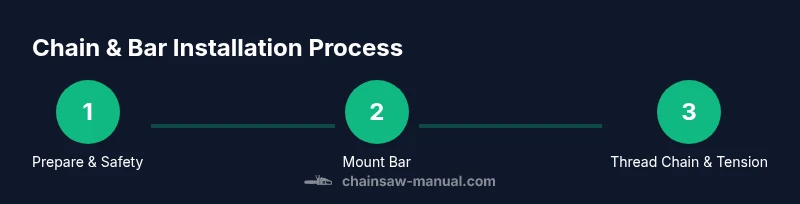
- Disconnect power or fuel supply and engage the chain brake. This ensures the saw cannot start while you work. 2) Remove the bar cover and set the screws aside in a safe place. 3) Lift off the old chain from the bar and drive sprocket, keeping the pieces in order. 4) Inspect the bar groove for debris and any signs of wear or damage. 5) Clean the clutch housing area to prevent grit from entering the drive system. A tidy workspace reduces the risk of misassembly and helps you verify all components are compatible with your new chain and bar.
Step-by-step: Installing the new bar onto the saw
- Align the bar’s mounting holes with the saw body and insert the bar bolts loosely. 2) Check that the bar’s groove is clean and free of obstructions. 3) Make sure the sprocket engages the bar’s drive teeth properly if your model uses a sprocket-driven bar. 4) Tighten bar nuts evenly in a cross pattern to the manufacturer’s recommended torque. Keeping the bar aligned minimizes sprocket wear and ensures smooth rotation during operation.
Step-by-step: Threading and seating the new chain
- Lay the chain out and identify the correct direction by the guide teeth pointing toward the bar. 2) Place the chain around the bar first, then over the drive sprocket. 3) Ensure the drive links sit in the groove of the bar and that the cutting teeth face forward in the direction of rotation. 4) Bring the tensioning system into play by placing the chain on the bar and preparing to seat it under the bar. A little guidance from the manual can prevent misalignment and binding.
Step-by-step: tensioning the chain and alignment
- With the bar in place, loosen the bar nuts slightly so the bar can move. 2) Use the tensioning tool to slip the chain into the groove and over the drive sprocket, ensuring it sits flat along the bar. 3) Tighten the bar nuts in a cross pattern to the recommended torque. 4) Check the chain tension by pulling the chain away from the bar; there should be a slight give. Too tight or too loose can cause rapid wear or dangerous binding.
Step-by-step: lubrication, testing, and adjustments
- Refill the oil reservoir with the recommended bar oil. 2) Spin the chain by hand to confirm smooth rotation and proper seating. 3) If your saw has an oil pump setting, verify it distributes oil to the bar and chain during operation. 4) Perform a live test outdoors with the chain brake engaged, listening for odd noises, vibrations, or resistance. 5) Recheck tension after a short run and adjust if necessary. Regular lubrication and periodic checks are essential for sustained performance.
Common mistakes and safety reminders during installation
Common errors include neglecting bar oil, mismatched chain pitch, improper tension, and forgetting to engage the chain brake. Always verify all fasteners are snug, and never bypass safety features to speed up installation. Keep tools clean and organized, and never wear loose clothing that could snag the chain. If anything feels uncertain, stop and consult the manual or seek professional guidance.
Post-install safety checks and maintenance plan
After installation, create a simple maintenance plan: check tension before each use, confirm there is adequate lubrication, and clean the bar groove regularly. Store spare parts properly and dispose of damaged components. Document any issues and adjust your process for future installations. A routine upkeep mindset reduces downtime and extends the life of your chainsaw.
Tools & Materials
- Chainsaw chain (new)(Ensure pitch, gauge, and drive link count match bar and saw model)
- Guide bar (bar/guide)(Correct length for your saw model and compatible with chain pitch)
- Chain oil (bar oil)(Quality oil recommended; check viscosity per manual)
- Srench / combination tool(Combo screwdriver and tensioner tool)
- Flat-head screwdriver(For retaining screws on some models)
- Adjustable wrench(Loosen/tighten bar nuts)
- Needle-nose pliers(Grip chain links if needed)
- Safety gear (gloves, goggles, hearing protection, helmet)(Always wear PPE when handling chain and bar)
- Owner’s manual(Model-specific procedures and torque specs)
Steps
Estimated time: Estimated total time: 45-60 minutes
- 1
Prepare and safety-check
Disconnect power or fuel supply and engage the chain brake. Confirm you are working outdoors or in a well-ventilated area. Gather all tools and PPE before you touch the saw, to avoid interruptions during the procedure.
Tip: Engage chain brake and wear cut-resistant gloves to prevent injury if the saw shifts unexpectedly. - 2
Remove old chain and bar
Loosen the bar nuts and remove the bar cover. Lift the old chain from the bar and drive sprocket, keeping the pieces in order. Clean the bar groove and frits of debris to ensure a smooth seating of the new components.
Tip: Take photos during disassembly to reference the order of parts if you’re unsure during reassembly. - 3
Inspect the bar and drive area
Check the groove for wear, cracks, or embedded debris. Inspect the drive sprocket and oil hole for clogging or wear. If the bar shows heavy wear, replace it before installing the new chain to avoid premature failure.
Tip: If you see shiny metal or burrs along the groove, file them smooth before proceeding. - 4
Mount the new bar
Align the bar mounting holes with the saw and mount the bar loosely. Ensure the bar groove is clean and the sprocket engages correctly. Tighten the bar nuts gradually and evenly to the recommended torque.
Tip: Do not overtighten; excessive torque can bend the bar or strip threads. - 5
Thread the new chain onto the bar
Lay out the chain and identify the correct direction. Place the chain around the bar and over the drive sprocket, ensuring the drive links seat in the groove. Confirm the chain is sitting correctly and that cutting teeth point in the correct direction.
Tip: Double-check the chain orientation before seating it to avoid binding or misalignment. - 6
Tension and align the chain
Loosen the bar nuts if needed and set the chain with slight tension by the guide bar. Tighten the nuts while keeping gentle tension consistent around the bar. Ensure the chain can be moved by hand with a small amount of slack.
Tip: A common rule is that you should be able to lift the chain about 1/8 inch from the bar in the middle when new. - 7
Lubricate and test
Fill the oil reservoir with the recommended bar oil. Spin the chain by hand to ensure smooth movement and lubrication distribution. Run the saw briefly with the chain brake engaged to distribute oil before full operation.
Tip: Never run the saw indoors or near flammables; perform initial tests outside and away from people. - 8
Final safety checks
Recheck tension and alignment after the brief test. Confirm all fasteners are tight and components are secure. Clean up your workspace and store the spare parts properly for next use.
Tip: If you notice unusual noise, heat, or binding, stop and consult the manual or a professional. - 9
Post-install maintenance plan
Create a routine that includes regular tension checks, oil level monitoring, and periodic inspection for wear on the chain and bar. Keep spare parts on hand and log any adjustments you make for future reference.
Tip: A simple maintenance habit saves time and reduces the risk of sudden failure on the job.
FAQ
Do I need to remove the spark plug before installation?
For safety, disconnect power and, if gas saw, remove the spark plug boot. This prevents accidental starts while you work. Always follow your model’s safety checklist before handling moving parts.
Always unplug or disconnect the spark plug boot to prevent accidental starts during maintenance.
How do I know the chain fits my bar?
Check the chain pitch, gauge, and drive link count and compare them to the bar and saw specifications. A mismatch can cause poor cutting performance or chain derailment. If in doubt, consult the manual or a service technician.
Make sure the chain matches your bar’s pitch and gauge exactly.
What is proper chain tension?
There should be a small amount of slack when the chain is in the middle of the bar, but it should not sag noticeably or come off the bar. Adjust tension after a short test run as the chain settles.
The chain should have a little slack when tested in the middle of the bar.
How often should I replace the chain or bar?
Replace when there are signs of wear, damage, or stretching beyond the manufacturer’s limits. Regular inspections help you catch issues early and maintain safe operation.
Check regularly for wear; replace damaged parts promptly.
Can I install a chain without a bar?
No. A chain needs a bar and drive mechanism to function safely. Installing a chain without a bar is dangerous and will not perform correctly.
You must install both chain and bar together for safe operation.
Is it safe to run the saw indoors after installation?
No. Always operate outdoors or in a well-ventilated area away from people and pets. Use appropriate PPE and follow local safety guidelines for outdoor use.
Always run the saw outside with proper safety gear.
Watch Video
The Essentials
- Confirm chain pitch and bar length match the saw model.
- Tension the chain properly to prevent derailment.
- Lubricate and test before full operation.
- Follow safety protocols and PPE every time.
- Perform routine maintenance checks after installation.