Why Is a Chainsaw So Hard to Pull? Troubleshooting Guide
Urgent chainsaw troubleshooting: discover the top causes for a hard pull-start, quick safety-first fixes, and a clear diagnostic flow to restore reliable starting performance.


Common pull-start trouble is usually fuel, compression, or safety-related. Start with the simplest checks: disengage the chain brake, make sure the spark plug is clean, and verify there’s fresh, properly mixed fuel. If it still won’t pull, follow our diagnostic flow and step-by-step fixes to identify the root cause and restore safe operation.
why is chainsaw so hard to pull
If your chainsaw has suddenly become difficult to pull, you're not alone. This is one of the most frequent complaints among homeowners, hobbyists, and professionals who depend on a reliable cutting tool. The question why is chainsaw so hard to pull often points to a few easily addressed culprits rather than a mysterious defect. In many cases, a stubborn pull is caused by safety features, fuel quality, air intake, or ignition timing. Addressing these areas in a logical order can restore a smooth, consistent starting action without forcing the engine and risking damage.
First, verify safety features: is the chain brake engaged? Is the throttle lock engaged? Modern saws include safety interlocks that can create resistance if engaged during starting. If the brake is on, release it, then try again with the choke in the correct position. This simple step alone fixes a surprising number of hard-pull starts.
Next, inspect the fuel system. Old or poor-quality fuel gums the carburetor and creates a vacuum that makes pulling hard. Ensure your fuel is fresh and mixed to the manufacturer’s ratio for two-stroke engines. If you recently refueled, drain the carb and replace with fresh fuel. Look for fuel lines that are brittle or cracked, which can also create pull resistance.
Third, examine the air path. A clogged air filter or a dirty carb throat can prevent enough air from entering, making starting harder. Remove the air-filter housing and inspect the element; replace if dirty or torn. Clean the carb throat and throat gasket with approved cleaner, taking care not to damage seals.
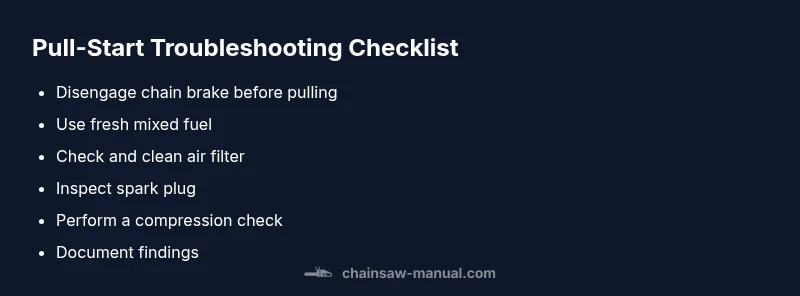
Finally, check ignition and compression. A fouled spark plug or weak compression can prevent a smooth draw. Remove and inspect the spark plug; replace if foul or worn. A quick compression check with a gauge will reveal ring wear or cylinder issues. If compression is low, piston rings or cylinder wear may be at fault and require professional service.
If you’re unsure about any step, prioritize safety and seek professional help rather than forcing the engine. Chainsaw Manual emphasizes a calm, methodical approach and using the proper starting sequence to avoid injury and ensure reliable operation.
gas tank and seal checks
Beyond the initial checks, don’t overlook the fuel-cap seal and venting. A clogged vent can create a vacuum that resists piston movement, making the pull feel heavy. Inspect the fuel cap and vent for blockages; clean or replace as needed. A properly vented fuel system improves starting torque and reduces hot-start struggles on longer jobs.
concluding thought on common culprits
Most hard-start issues boil down to these categories: safety interlocks, stale fuel, restricted air, and weak ignition/compression. By systematically testing each area in order, you’ll often uncover the root cause without expensive diagnostics. Chainsaw Manual recommends documenting findings and maintaining routine checks to keep pulls smooth.
user experience and practical notes
Users frequently report that a hard pull is not just a mechanical problem but a user-limited one—the saw isn’t warmed up, the fuel is stale, or the choke position is incorrect. Keep the choke settings in mind: a cold engine typically requires the choke fully closed, while a warmed engine starts with the choke open. If you’re still stuck, step back, reset your approach, and recheck the fundamentals. The path to a reliable pull is methodical, safe, and repeatable.
Steps
Estimated time: 30-60 minutes
- 1
Check safety features and choke
Ensure chain brake is disengaged. Verify the choke is in the correct starting position for cold or warm conditions. A wrong setting can create heavy resistance and poor starting torque.
Tip: Never force the rope; adjust the choke in small increments and test pull after each change. - 2
Inspect the fuel system
Drain any stale fuel from the tank and carburetor. Refill with fresh, correctly mixed fuel. Look for brittle lines or leaks that could affect crankcase pressure and cause a hard pull.
Tip: Use fresh fuel within 30 days of opening the container; store in a sealed container to minimize moisture absorption. - 3
Check the air intake
Remove the air-filter cover and inspect the element for dirt, oil, or clogging. Replace if dirty. Clean the carburetor throat and confirm seals are intact.
Tip: Do not scrub the filter with water if the element is paper-based; use manufacturer-approved cleaning methods. - 4
Test spark and ignition
Remove the spark plug and inspect for fouling, glazing, or wear. If needed, replace with a fresh plug of the correct heat range. Reconnect the spark lead securely.
Tip: Ground the plug body on the cylinder while cranking to get a clear spark indication. - 5
Perform a compression check
Use a compression gauge to verify readings within the manufacturer’s spec. Low compression could indicate worn rings or cylinder wear that requires professional service.
Tip: If you’re unsure how to interpret numbers, compare against a known-good baseline from a similar model. - 6
Reassemble and test start
Reassemble all components, prime if designed, and attempt a gentle pull. Avoid rapid, forceful pulls; a controlled, sustained motion is more effective and safer.
Tip: Document steps and outcomes to track recurring issues and inform a technician if needed.
Diagnosis: Chainsaw won’t start or is hard to pull
Possible Causes
- highChain brake engaged or safety interlock active
- mediumStale fuel or incorrect fuel-oil mix
- mediumClogged air filter or dirty carburetor throat
- lowWeak ignition or low compression
Fixes
- easyDisengage chain brake and retry with proper choke position
- easyDrain old fuel; fill with fresh two-stroke mix at correct ratio
- easyClean or replace air filter; clean carburetor throat as needed
- mediumPerform a compression test and inspect spark plug; replace worn parts or seek pro
FAQ
What is the most common reason a chainsaw is hard to start?
The most common reason is a chain brake or safety interlock engaged during startup, followed by stale fuel or a clogged air filter. Correcting these usually resolves most pull-start issues.
The most common reason is safety interlocks being on, followed by stale fuel or a dirty air filter.
Can stale fuel cause starting problems?
Yes. Stale fuel can gum the carburetor and create vacuum resistance. Replacing with fresh two-stroke mix often improves starting torque quickly.
Yes, stale fuel can gum the carb and make it hard to pull.
Should I test compression if it won’t start?
If the saw won’t start after basic checks, a compression test reveals ring wear or piston issues. Low compression usually requires professional service.
If it still won’t start, test compression to check for worn rings or cylinder wear.
Is it safe to start a chainsaw indoors?
No. Start chainsaws outdoors on a clear, stable surface with plenty of ventilation to avoid fumes and kickback hazards.
No, always start outdoors in a well-ventilated area.
When should I replace the starter rope or recoil?
If the rope or recoil feels frayed, sticks, or won’t return smoothly, replace them to prevent kickback and ensure reliable starts.
Replace a frayed or sticking starter rope promptly for safe starts.
What maintenance helps prevent hard starts?
Regular cleaning of the air filter, fresh fuel, proper storage, and timely spark plug checks are key to preventing hard starts.
Keep filters clean, fuel fresh, and plugs in good shape to prevent hard starts.
Watch Video
The Essentials
- Identify safety interlocks first before other checks
- Fresh fuel and clean air paths are common fixes
- Compression issues often require professional service
- Follow a calm, methodical diagnostic flow
- Document findings to prevent repeat problems