How to Port a Chainsaw: Safe, Practical Guide
A comprehensive, safety-first guide on porting a chainsaw. Learn planning, tools, steps, and aftercare to optimize performance while protecting your saw and yourself.


Learn how to port a chainsaw safely and effectively. This step-by-step guide covers the concepts, safety steps, and a practical workflow to plan, perform, and evaluate porting work. We'll discuss why porting is done, how to assess compatibility, and how to avoid common mistakes that can damage engine performance. Always prioritize PPE, model-specific manuals, and conservative, incremental testing.
What porting a chainsaw is and why people do it
Porting a chainsaw involves reshaping or enlarging intake and sometimes exhaust ports to influence how the engine breathes. The goal is to improve scavenging, throttle response, and overall efficiency for specific fuels, bar lengths, or operating conditions. It’s a niche modification that can offer noticeable gains on certain models, especially when paired with correct carburetor timing and fuel mix. However, porting is not a universal upgrade; outcomes vary by engine design, reed valves, and the saw’s current condition. For many users, the potential benefits do not justify the risk of warping components, overheating, or creating a lean fuel condition. Before you begin, study your saw’s service manual and consult model-specific guidance to gauge whether porting is appropriate for your situation. If done properly and conservatively, porting can be a legitimate performance tweak; if done poorly, it can shorten engine life and void warranties.
This section sets the foundation: understand what porting aims to change, the limits of your particular saw, and the importance of careful planning.
Safety and legal considerations before porting
Before any modification, verify local rules about exhaust and performance modifications. Some jurisdictions regulate emissions-related changes that could affect air quality or noise levels. Porting often requires revamping air intake, exhaust routing, and potentially fuel mixtures, which can alter emissions in ways that aren’t compliant with standards. Always disconnect the spark plug, drain fuel, and work in a well-ventilated space with clean lighting. Wear appropriate PPE: safety glasses, cut-resistant gloves when handling metal, hearing protection, and a respirator for fine dust and particles. Keep the workspace organized to prevent accidental contact with hot components or sharp tools. Finally, consult manufacturer guidelines and trusted professional sources to ensure your approach won’t invalidate warranties or violate safety codes.
Risks and potential consequences of porting
Modifying intake or exhaust ports can change the engine’s breathing characteristics in ways that upset the air-fuel balance. If ports are opened too much or reshaped incorrectly, the mixture can run too lean or too rich, leading to overheating, detonation, or accelerated wear. Porting can also introduce uneven scavenging, leading to crankcase pressure changes and oil dilution. Misalignment or rough edges can cause gas flow disruptions, which reduces reliability under load. Structural changes carry the risk of cracking, warping, or gasket failures. Because porting is highly model-specific, a plan that works on one saw may perform poorly on another. A cautious approach includes incremental testing, precise measurement, and strict quality control to avoid costly mistakes.
Planning your porting project: scope, model compatibility, and goals
Start with a clear goal: are you chasing slightly better throttle response, more midrange torque, or a specific operating condition (e.g., heavy cutting, long bar)? Next, confirm compatibility by reviewing service manuals and port timing diagrams for your exact model. Define the maximum safe material removal and identify which ports are eligible for modification. Create a written plan with measurements, tools, and a testing protocol. Remember that porting a chainsaw is not an automatic upgrade; it requires careful scheduling, controlled testing, and acceptance of potential trade-offs such as fuel economy or reliability changes. Having a well-defined scope reduces trial-and-error and helps you stay within safe limits.
Tools, workspace setup, and protective gear
A well-equipped workspace with adequate lighting and ventilation is essential. Keep a clean surface for parts and a dedicated container for fasteners. Relevant safety gear includes safety glasses, cut-resistant gloves, hearing protection, and a respirator. For tools, a precision rotary tool or die grinder with carbide bits is commonly used for port shaping, while calipers or a digital micrometer helps you verify dimensions. Keep masking tape to mark areas, a mag base to hold parts steady, and a small vise to secure components during work. Have spare gaskets and seals on hand in case of reassembly adjustments, and a quality torque wrench if you’ll reassemble with set torque specifications. Finally, prepare a clean leak-free fuel system for testing that won’t contaminate the shop.
A high-level workflow: measurement, porting, reassembly, testing
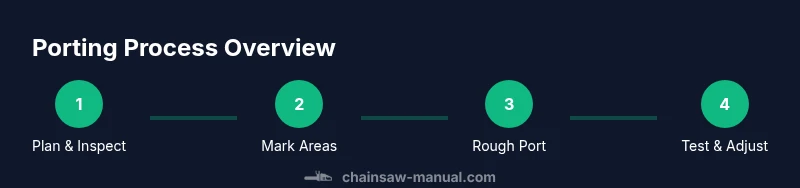
Approach porting as a controlled project with defined milestones. Start by documenting baseline engine behavior and measurements. Use precise measurements to guide material removal, and perform gradual port enlargements in small increments. Deburr all edges and inspect the port walls for straightness and smoothness. Reassemble with fresh gaskets, restore fuel and oil lines, and perform initial, non-load tests before gradual load testing. Carefully monitor engine temperatures, spark plug color, and fuel consumption during testing. If any abnormal signs appear, pause and reassess the modifications. Maintaining a detailed log helps track what changes produced the best results.
How porting affects performance: power, torque, and fuel considerations
Porting can improve power delivery and throttle responsiveness under certain conditions, particularly when matched to the exhaust and reed valve configuration. Expect changes in mid-range torque and the engine’s breathability at higher RPMs, depending on the porting approach. Fuel considerations are critical: a lean condition can cause overheating, while a rich mix may reduce power and foul plugs. Tuning the carburetor after porting is often necessary to balance air and fuel effectively. Be cautious about chasing peak horsepower at the expense of reliability. Real-world gains are highly model-specific and should be measured on a test stand or controlled environment.
This section highlights the main trade-offs you should expect when porting a chainsaw.
Maintenance and aftercare following porting
Ported engines demand attentive maintenance to preserve longevity. Check port walls for signs of wear, monitor exhaust sealing, and confirm carburetor settings remain stable after changes. Regularly inspect gaskets for leaks and replace them as needed. Use high-quality fuel and oil blends appropriate for the engine’s revised breathing characteristics. Keep air filters clean to prevent debris from entering newly shaped ports. Document maintenance intervals and planned inspections so you can catch issues early rather than after a failure.
Common myths vs facts and best practices
Myth: Porting always increases power. Fact: Gains depend on model and overall build quality; improper porting can reduce performance. Myth: Porting is safe if you’re careful. Fact: It carries significant risk to engine integrity if done without proper measurements and testing. Best practice: work methodically, measure everything, test incrementally, and never modify critical tolerances beyond manufacturer recommendations. Always prioritize safety and legality, especially around emissions and noise regulations.
Tools & Materials
- Dremel or rotary tool with carbide bits(Use bits suitable for metal; keep cutting edges cool with optional lubricant)
- Calipers or digital micrometer(Precise thickness and diameter measurements are essential)
- Masking tape and marker(Mark areas to be modified clearly before cutting)
- Safety glasses and hearing protection(Personal protective equipment is non-negotiable)
- Respirator or dust mask(Protect against metal dust and particulates)
- Shop rags and solvent(Clean surfaces and remove debris after porting)
- Gaskets and seals replacement kit(Have spares on hand for reassembly)
- Torque wrench(Use if reassembly requires specified torque)
- Gloves and clean workspace mat(Protect hands and keep parts clean)
Steps
Estimated time: 3-6 hours
- 1
Disassemble and Inspect Components
Power down the saw, remove the spark plug boot, drain fuel, and carefully disassemble the components to access the intake and exhaust areas. Inspect for wear, cracks, and gasket conditions before making any changes.
Tip: Document each part orientation; a reverse note helps during reassembly. - 2
Measure Ports and Plan Modifications
Use calipers to measure current port dimensions and depth. Based on model manuals, plan how much material to remove and where to reshape to improve flow, avoiding sharp transitions.
Tip: Only remove small amounts at a time and verify with measurements after each pass. - 3
Mark the Modification Areas
Apply masking tape along the planned port lines and mark the edges with a marker. Double-check alignment with the engine’s bore and any reed valve housings.
Tip: Keep the layout symmetrical and avoid cutting into critical boss features. - 4
Rough Porting and Deburring
Use a rotary tool to gently cut or grind the marked areas, following the planned geometry. Deburr all edges with a fine file or sanding bit to prevent catching and to improve flow.
Tip: Maintain a steady hand; rotate away from the edge to prevent gouges. - 5
Inspect and Measure Again
Re-measure port openings and verify smooth transitions. Look for burrs or uneven surfaces and refine until dimensions match your plan.
Tip: A single pass removing material beats multiple small passes with poor control. - 6
Reassemble and Check Fuel System
Reinstall gaskets, seals, and components. Reconnect fuel lines and ensure no leaks. Replace spark plug wires and re-gap the spark plug as needed.
Tip: Torque critical fasteners to manufacturer guidelines to prevent leaks. - 7
Baseline Test and Tuning
Start the saw in a controlled environment, monitor temperatures and exhaust color. Tune the carburetor by small increments and test under load before proceeding with further changes.
Tip: Document settings and results to guide further adjustments.
FAQ
What does porting a chainsaw involve and why might someone do it?
Porting involves reshaping intake/exhaust passages to alter engine breathing. Practitioners port for improved throttle response and power under specific conditions, but results vary by model and condition. Always assess model compatibility before proceeding.
Porting reshapes the engine passages to improve breathing, which can boost response. It depends on model compatibility and condition, so proceed with caution.
Is porting legal and safe for all regions?
Exhaust and performance modifications may be regulated by local laws and emissions standards. Check regional regulations and consult manufacturer guidelines. Safety and environmental compliance should guide your decision.
Local laws may regulate exhaust changes; verify compliance and always prioritize safety.
Will porting always give more power?
Gains are not guaranteed and depend on the model, condition, and tuning. Poorly executed porting can reduce reliability and power. Use a cautious, measured approach and verify results on a controlled test.
Gains aren’t guaranteed; the outcome depends on your model and how well you tune it.
Should a DIYer port a chainsaw or hire a professional?
Porting is an advanced modification. If you’re not highly skilled with metalworking and engine tuning, consider professional assistance. A mistake can cause permanent engine damage or unsafe operation.
If you lack advanced machining experience, hiring a pro is wise.
What safety gear is essential during porting?
Wear eye protection, hearing protection, gloves, and a respirator. Work in a well-ventilated area and use clamps or a vise to secure parts securely.
Always use eye protection, hearing protection, gloves, and a respirator.
What maintenance is needed after porting?
Check gaskets and seals regularly, monitor engine temperatures, and verify carburetor settings after changes. Use quality fuel and oil mixtures suited to the revised breathing characteristics.
Inspect seals, monitor temperature, and tune the carburetor after changes.
Watch Video
The Essentials
- Plan the modifications with a model-specific reference.
- Porting is risky; prioritize safety and legality.
- Measure accurately and test incrementally.
- Maintain thorough documentation for future tuning.