Chainsaw Chain Too Loose: Step-By-Step Fix
Learn to diagnose and fix a chainsaw chain that is too loose. This educational how-to covers safety checks, tensioning, testing, and maintenance to keep cutting safely and efficiently.


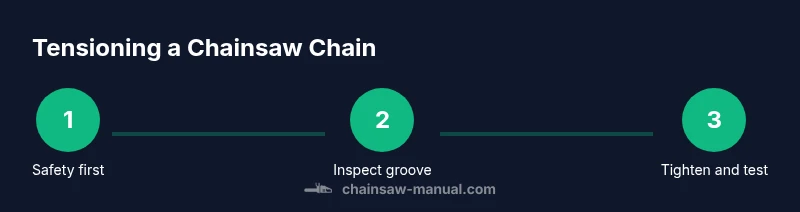
Goal: restore safe tension when the chain is too loose. Start by powering off the saw and securing it. Check the bar groove for debris, then use the tension screw or scrench to snug the chain against the bar. Spin the chain by hand to confirm it moves smoothly without sagging. Recheck after a short run.
Understanding why the chainsaw chain is too loose
If the chainsaw chain is too loose, you may notice visible sagging, excessive chain movement while the saw is idle, or the drive links not engaging the bar groove properly. Common causes include bar wear or damage, dirt and wood chips in the groove, improper initial installation, or a tension setting that has drifted after heavy use. The Chainsaw Manual team emphasizes that consistent, correct tension is a core safety habit. Signs of a loose chain include audible rattling when the saw is idle, delayed cutting response, and the chain occasionally catching on the bar edge. Before adjusting, inspect the bar groove for embedded debris and inspect the chain for stiff links from dull teeth. Address any bar wear or damage first, because a worn groove can masquerade as a loose chain.
Safety prerequisites before tightening
Safety comes first whenever you work on a chainsaw. Ensure the engine is off, the chain brake is engaged, and the bar is supported on a stable surface. For gas models, remove the spark plug wire to prevent accidental starts; for electric models, unplug the power cord or remove the battery. Wear cut-resistant gloves and safety glasses, and work in a well-ventilated area away from bystanders. Having the right protective gear reduces the risk of injury if the chain moves unexpectedly during adjustment. Also, keep a clean workspace—wood dust and oil can obscure the tension area and hide damage. These precautions align with Chainsaw Manual guidance on safe maintenance practices.
Assessing chain tension correctly
A correct tension check should confirm that the chain sits snugly in the guide bar groove and that you can rotate the chain with light resistance. A quick test is to gently pull a drive link away from the guide bar; it should not lift easily off the groove. If the chain can be pulled away far enough to expose the drive links above the groove, it is too loose. Remember to check both sides of the bar—irregular tension on one side often signals a bent bar or a misaligned head. If you detect stiff links, pinching, or irregular movement, stop and inspect the chain and bar for damage and dullness before tightening further. These checks reduce the risk of kickback and chain derailment.
How to tighten a chainsaw chain
Tightening the chain involves accessing the tensioning mechanism and carefully adjusting until the chain sits firmly against the bar with minimal wobble. Start with a cool saw and ensure the chain brake remains engaged during the process. Use the appropriate tool—either a scrench or screwdriver—per your model to turn the tension screw. After each adjustment, rotate the chain by hand to confirm smooth, controlled movement without binding or sagging. If your model requires loosening the bar nuts first, do so, then re-tighten once the chain is properly tensioned. Do not over-tighten, as excessive tension can cause drive links to seize and wear the bar. Once you reach the desired tension, re-seat the side cover and double-check that all fasteners are secure.
Aftercare: testing tension and maintenance
After tightening, run the saw at a light, no-load speed for a short period to settle the chain into the groove. Stop the engine, then recheck tension again with the chain stopped. A correctly tensioned chain should have slight resistance when pulled against the bar, with no excessive slack. Regular maintenance—keeping the bar groove clean, sharpening dull teeth, and lubricating with fresh bar oil—extends the life of the chain and bar. If tension drifts after use, inspect for bar wear or chain stretch and address promptly. This routine aligns with Chainsaw Manual recommendations for ongoing maintenance and safer operation.
Tools & Materials
- Screwdriver or scrench(Flat-head or 5mm hex depending on model)
- Chain gauge or ruler(Test tension by pressing a drive link in the groove while wearing gloves)
- Safety glasses(Protect eyes from debris during adjustment)
- Cut-resistant gloves(Improve grip and protect hands while handling the chain)
- Bar oil (fresh lubricant)(Re-lubricate after tightening to prevent wear)
- Owner’s manual (model-specific)(Consult for model-specific tension specs and steps)
Steps
Estimated time: Estimated total time: 25-40 minutes
- 1
Power off and secure the saw
Ensure the engine is off, the chain brake is engaged, and the saw is on a stable surface. If it’s gas-powered, disconnect the spark plug wire; if electric, unplug or remove the battery. This prevents accidental startup during adjustment.
Tip: Never touch the chain while the engine is off for a cool-down period. - 2
Inspect bar groove and chain
Look for wood debris, burrs, or damage in the groove that could mimic a loose chain. Check for bent bar sides or dull, stiff teeth that might cause friction and give a false sense of looseness.
Tip: Clean the groove with a brush or compressed air before tightening. - 3
Loosen/prepare tensioning mechanism
If your saw uses side cover bolts, loosen the nuts just enough to allow movement of the tension screw. Some models require removing a nut or adjusting a dedicated tensioning screw.
Tip: Do not remove the bar entirely unless your manual instructs you to do so. - 4
Tighten the chain
Turn the tension screw or use the scrench to snug the chain against the bar. After each small adjustment, rotate the chain by hand to assess resistance and sag. Stop tightening when the chain sits snug with slight resistance and no excessive slack.
Tip: Avoid overtightening; it can cause drive links to seize and wear the bar. - 5
Test run and recheck
Reinstall the side cover, tighten all fasteners, and start the saw briefly to settle the chain. Stop the saw and recheck tension again. Ensure the chain remains properly seated during light cutting simulated tasks.
Tip: Always recheck after a warm-up, as tension can shift with heat. - 6
Finalize and plan maintenance
Document any tensioning notes in your maintenance log, keep the bar groove clean, and inspect for wear after each use. Regular checks prevent future loosening and maintain safe cutting performance.
Tip: Pair tension checks with routine sharpening and lubrication.
FAQ
Why does my chainsaw chain loosen after I tighten it?
Chains can loosen after use due to heat expansion, bar wear, or improper initial tension. If the tension returns to loose quickly, inspect the bar groove and the drive links for wear and ensure the tension is appropriate for your specific model.
Chains can loosen after use because heat and wear affect the tension. Check the groove and links and retighten as needed.
How often should I check chain tension?
Check tension before every significant cut. If you use the saw frequently, inspect tension after a few minutes of use to ensure it hasn’t settled.
Check the tension before major cuts and after a brief warm-up if you use the saw often.
What signs indicate a worn bar or chain?
Look for grooves that are chipped, rounded, or uneven, and for drive links that show excessive wear or bending. Worn components can mimic looseness and should be replaced.
If you see damaged grooves or worn drive links, replace the chain or bar.
Can I operate with a loose chain if I don’t have tools?
No. A loose chain increases kickback risk and can derail or cause injury. Stop work, obtain the proper tool, and tighten safely before continuing.
No—don’t operate with a loose chain; tighten it properly first.
Are there safety steps I must follow when tightening a chain?
Yes. Wear protective gear, secure the saw, disconnect power, and follow model-specific instructions. After tightening, test the chain with light rotation before heavy cutting.
Yes. Always wear PPE and follow the manual when tightening.
Watch Video
The Essentials
- Check tension before each cut
- Use the correct tensioning tool for your model
- Test tension after a brief run to settle the chain
- Keep the bar groove clean to prevent misreads
- Recheck fasteners after reassembly