What Causes Chainsaw Chain Loosen: Practical Troubleshooting
Discover the common causes of a chainsaw chain loosening and follow a step-by-step troubleshooting guide to diagnose tension, worn sprockets, and bar issues. Learn safe fixes to prevent derailment and keep cutting smooth.


Most likely, the chain has become loose because of improper tension or a worn drive sprocket. Start by checking bar nuts and tension: loosen the bar cover, adjust the chain tension until it has a small amount of slack on the bottom run, then retighten the nuts. Inspect the bar, sprocket, and chain for wear and replace as needed.
What causes chainsaw chain to loosen
According to Chainsaw Manual, understanding what causes chainsaw chain to loosen starts with recognizing that most loosening comes from tension and wear, not a single catastrophic failure. What causes chainsaw chain to loosen is often simple: the chain is not held firmly by the bar and drive mechanism during operation. In practical terms, if the chain is too slack at the bottom run, it can climb off the bar under load or twist and bind in the guide bar groove. The Chainsaw Manual team notes that repeated use, aggressive cutting, and heat buildup gradually stretch the chain and loosen its grip. The remedy is routine, proactive maintenance: check tension before each use, inspect the drive sprocket for wear, examine the bar for straightness, and make sure the bar nuts are snug. Debris and oil buildup can also mask looseness, so clean the chain path during every service. By staying vigilant, homeowners, DIY enthusiasts, and professionals reduce derailment risk and cut hazards.
Common causes at a glance
To quickly pinpoint why the chain loosens, focus on the most frequent culprits:
- Improper tension: If the chain sits too loose, the bottom run will sag and may ride off the bar under load.
- Worn drive sprocket: A worn sprocket reduces grip on the chain, allowing it to slip and loosen over time.
- Loose bar nuts: Bar nuts that have vibrated loose during cutting will fail to keep the bar clamped to the chain tensioning system.
- Damaged bar or stretched chain: A bent bar or a stretched chain changes how the chain contacts the bar groove.
- Oil and debris buildup: Poor lubrication or debris can create uneven friction, disguising real looseness and accelerating wear.
Regular inspection helps catch these issues early. The Chainsaw Manual analysis shows improper tension and wear are leading contributors to loosening, so start with tension, then inspect the sprocket and bar.
Diagnostic approach: quick checks
Use a simple, repeatable routine to determine the cause of looseness. First, ensure the saw is off and the chain cannot move. Check the tension by lifting the chain at the bottom of the bar; it should have a slight drag but not be flopping. If it’s loose, adjust tension per your model's manual, then recheck. Next, inspect the bar nuts and bar clamp; if they are loose, tighten to spec. Examine the drive sprocket for gouges, chipped teeth, or wear along the teeth edge. If the chain remains loose after adjusting and the sprocket shows wear, you likely have a worn component or a stretched chain. Finally, look for bar wear: a dog-eared groove or a bent bar edge will permit slack to appear during operation.
Step-by-step fix for the most common causes
- Power down and secure the saw; remove the chain cover to access the bar and chain.
- Tighten the bar nuts to the recommended torque (without over-tightening).
- Re-route the chain along the bar groove and set the tension so the chain sits snug in the middle of the guide bar but can still move freely.
- Inspect the drive sprocket; replace if teeth are sharp, hooked, or missing.
- Inspect the guide bar groove for wear; replace the bar if the groove is excessively widened or wavy.
- Reassemble, lubricate properly, and perform a controlled test cut to verify tension under load.
Tip: Work slowly and keep hands clear of the chain; verify the chain catches on the drive sprocket without binding. If this doesn’t work, try replacing the worn sprocket or bar before re-tightening.
Safety and prevention practices
Safe operation starts with a secure chain. Always wear PPE: cut-resistant gloves, eye protection, hearing protection, and a helmet with face shield. Before starting, disconnect spark plug or power source to prevent accidental starting while you work on tension. After repairs, run the saw in a safe area to verify tension while the bar is supported. Routine maintenance—memoized in a log—reminds you to re-tension after heavy use, after deep cuts, or when the saw becomes warmer. Clean the bar groove and rollers regularly to prevent buildup that masks looseness. Use the correct chain gauge and pitch for your bar and chain; mismatched parts are a common cause of improper tension.
When to seek professional help
If tightening the chain does not eliminate looseness, or if the bar shows significant wear, seek professional help. A technician can measure sprocket wear, check inner bar tensioning mechanisms, and verify that the chain is the correct gauge for the bar. Complex issues such as a bent bar, misaligned chain path, or damaged drive system often require specialized tools and factory-approved parts. Delaying professional evaluation increases the risk of kickback, chain derailment, and injury. The Chainsaw Manual team recommends erring on the side of caution when you’re unsure about the wear level of critical components.
How to test tension after repair and ongoing maintenance
Once you’ve completed the fixes, perform a controlled test in a safe area. Start with idle, then bring the saw up to light load and observe the chain behavior. The chain should grip the bar neatly and not loose immediately after a cut. Recheck tension after a few minutes of use; some chains creep during initial operation as parts settle. If the chain remains too tight or too loose, recheck the bar nuts, tension settings, and sprocket wear. Record preventative maintenance intervals in your log and re-test at regular intervals. By following these steps, you reduce the probability of chain loosening during future work.
Steps
Estimated time: 30-40 minutes
- 1
Power down and access the chain
Shut off the saw and disconnect the spark plug or power source. Remove the chain cover to expose the bar and chain so you can inspect tension and wear without risk of accidental movement.
Tip: Keep the chain in a secure position to prevent it from snapping back during removal. - 2
Check tension and adjust
Manually lift the chain at the bottom run to assess slack. If needed, adjust the tension using the model-specific method until the chain moves slightly yet does not sag excessively.
Tip: Do not over-tighten; this can cause premature wear. - 3
Inspect critical components
Look for wear on the drive sprocket teeth, inspect the bar groove for wear or burrs, and check the bar nuts for proper torque.
Tip: Replace worn parts before re-tightening to avoid a repeat loosening. - 4
Reassemble and lubricate
Reassemble the cover, ensure proper lubrication, and ensure the chain tracks smoothly along the bar groove.
Tip: Lubrication helps prevent friction-induced loosening. - 5
Test under light load
Run the saw briefly in a controlled area to observe chain behavior under light load before full use.
Tip: Stand to the side in case the chain shifts unexpectedly.
Diagnosis: Chain loosens during operation
Possible Causes
- highImproper chain tension
- highWorn drive sprocket
- mediumLoose bar nuts
- lowDamaged bar or stretched chain
Fixes
- easyCheck and adjust chain tension according to model manual
- mediumInspect drive sprocket for wear and replace if needed
- easyTighten bar nuts to spec and re-check alignment
- mediumInspect bar groove and replace bar if wear is excessive
FAQ
What causes chainsaw chain to loosen?
Common causes include improper tension, worn drive sprocket, loose bar nuts, and damaged bar or chain. Regular maintenance helps prevent these issues.
Common causes are improper tension, worn sprockets, loose bar nuts, and damaged bar or chain. Regular maintenance helps prevent looseness.
How often should I check chain tension?
Check tension before each use and after heavy cutting or after cleaning and lubrication. Adjust as needed following your model’s manual.
Check tension before each use and after heavy cutting, then adjust as needed according to your manual.
Can I keep using a loosely fitted chain temporarily?
No. A loose chain increases the risk of derailment and kickback. Stop and fix tension before continuing work.
No, a loose chain is unsafe. Stop and fix tension before continuing.
What parts wear fastest on a chainsaw?
The drive sprocket, chain, and bar groove are the parts that wear most with use. Inspect and replace as needed to maintain safe tension.
The sprocket, chain, and bar groove wear the fastest; inspect and replace as needed.
When should I replace the bar or sprocket?
Replace the bar or drive sprocket if teeth are worn, hooked, or the groove shows excessive wear. This restores proper tension and performance.
Replace the bar or sprocket if worn or grooved; it restores proper tension.
Is a professional inspection necessary for quick fixes?
For basic tension, you can perform safe repairs if you follow the manual. Seek a professional if the chain continues to loosen after checks or there is significant wear.
If tension persists after checks or wear is evident, get a professional inspection.
Watch Video
The Essentials
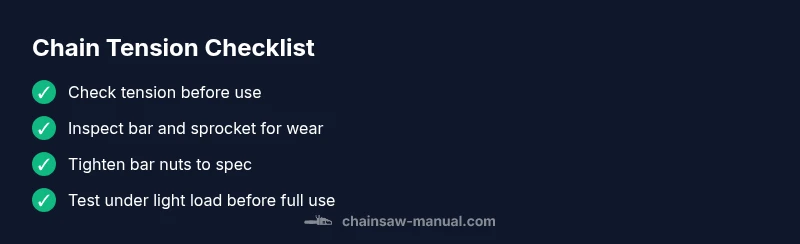
- Check tension before every use and adjust if needed
- Inspect sprocket and bar for wear regularly
- Tighten bar nuts to spec to prevent loosening
- Test tension after any maintenance work