How to Put Chainsaw On: Safe Mounting and Storage Guide
Learn safe, practical steps for putting a chainsaw on a wall, rack, or carrier. This guide covers prep, hardware, and maintenance to prevent accidents.


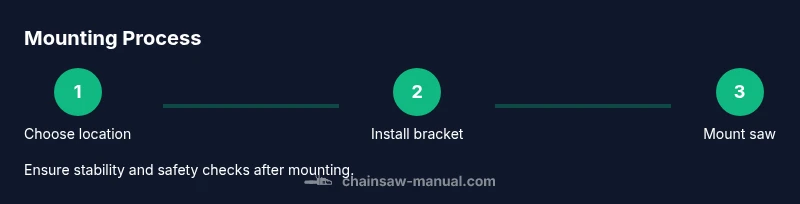
In this guide you’ll learn how to put chainsaw on a wall bracket, rack, or carrier safely. It covers choosing the right mounting option, securing the bar and chain, and verifying stability before use. This step-by-step approach reduces the risk of accidental starts, blade exposure, and fuel spills.
Why proper mounting matters
When you’re learning how to put chainsaw on a wall bracket, the first priority is safety. Proper mounting minimizes the risk of accidental blade exposure, fuel spills, and unexpected starts when you reach for the tool. According to Chainsaw Manual, careless storage is one of the most common contributors to injuries and equipment damage. A secure mount keeps the bar and chain protected, reduces risk during transport, and makes routine maintenance easier. In practice, a robust mounting solution also protects the saw from knocks and vibration that can loosen fasteners over time. If you mount a chainsaw incorrectly, you may face blade shift, fuel leaks, or chain tension loss that complicates future use. This chapter sets the foundation for choosing the right hardware and method, so you can store or transport the saw with confidence.
From a safety perspective, keeping the chain brake engaged during mounting and handling is non-negotiable. Chainsaw Manual’s analysis shows that many injuries happen when the saw shifts during repositioning or when users grab an exposed bar. Treat mounting as part of the operation itself—plan, secure, and test before you’ve finished. In short, proper mounting is about accessible, stable support that prevents accidental starts and keeps the operator out of harm’s way. Think through the mounting height, reach, and whether a rack, wall bracket, or rolling carrier best fits your workspace and workflow.
note2None
Tools & Materials
- Wall-mounted chainsaw bracket or wall rack(Choose one rated for at least the chainsaw weight and blade length; mount to studs or masonry with appropriate anchors.)
- Appropriate screws and wall anchors(Use steel screws; select wood screws for studs or masonry anchors for concrete/brick.)
- Safety equipment (gloves, eye protection)(Wear PPE during mounting to prevent injuries from slips or sharp edges.)
- Locking mechanism or chain brake (optional)(Optional latch or strap to secure the bar when not in use.)
- Clean, dry work surface(Clear space under and around the mounting area to prevent trips.)
- Torque driver or screwdriver set (optional)(Assists in tightening fasteners to spec and avoids over-tightening.)
Steps
Estimated time: 30-60 minutes
- 1
Assess the mounting location
Identify a sturdy wall with unobstructed space and a solid structure (studs or masonry). Use a stud finder for wood walls or appropriate anchors for concrete. Confirm that the height allows easy access for mounting and daily checks without bending or reaching over machinery.
Tip: Plan for at least 6–12 inches of clearance above the bar tip to prevent accidental contact during handling. - 2
Gather and verify hardware
Collect the bracket, screws, and anchors that match your wall type. Double-check that the bracket’s weight rating exceeds the chainsaw’s weight with blade installed. Inspect fasteners for rust or damage before use.
Tip: If you’re unsure of wall type, opt for masonry anchors or consult a hardware store for guidance. - 3
Mark hole positions
Hold the bracket against the wall and mark the drill holes through the bracket’s mounting holes. Use a level to ensure the bracket will sit flat and aligned. This step prevents crooked mounting, which can cause the saw to tilt or slide.
Tip: Use a pencil to lightly mark, then re-check alignment after temporary holds. - 4
Drill and install anchors
Drill holes at the marked positions, install wall anchors if needed, and insert screws loosely to hold the bracket in place. For concrete or brick walls, use hammer drill bits and masonry anchors as recommended by the anchor manufacturer.
Tip: Always wear eye protection when drilling and keep dust clear from the chain area. - 5
Attach the bracket to the wall
Secure the bracket with screws, tightening evenly to avoid creating a wobble. Check that the bracket sits flush against the wall with no gaps. If using multiple mounting points, ensure each screw is equally tightened.
Tip: Avoid over-tightening; use a torque driver if possible to reach the correct spec. - 6
Mount the chainsaw safely
With the chain brake engaged, lift and place the chainsaw into the bracket according to the manufacturer’s orientation. Center the bar and chain within the bracket’s supports and verify that the saw rests stably without tipping.
Tip: Keep your fingers clear of the chain path and never let the saw dangle by the bar. - 7
Test stability and finalize
Gently wiggle the mounted saw to confirm stability. If any movement is detected, re-tighten fasteners and adjust support points. Check that the chain cannot be contacted by hands or clothing and that there is no interference with other tools.
Tip: Perform a quick shake test after a 5–10 minute settle-in period. - 8
Label and maintain
Add a simple label indicating mounted status and last inspection date. Schedule periodic checks for fastener tightness, bar alignment, and fuel cap integrity to maintain mounting safety.
Tip: Record a maintenance date in your toolbox for future reference.
FAQ
Is it safe to mount a chainsaw on a wall rack?
Yes, it can be safe when mounted on a sturdy wall bracket designed for the saw’s weight and blade length. Always engage the chain brake and use appropriate anchors. Regular inspections help prevent loosening after vibration.
Yes, with a proper bracket and regular checks, wall mounting a chainsaw is safe.
What mounting options work best for different wall types?
For wooden studs, use bracket screws into studs; for brick or concrete, select anchors rated for masonry. Freestanding racks are a good alternative on non-load-bearing walls.
Wood walls use studs; masonry walls use anchors; freestanding racks work where wall mounting isn’t ideal.
Do I need a professional to mount a chainsaw?
Not always. If you’re comfortable with basic carpentry and you choose a wall mounting system rated for your saw, you can mount it yourself. For complex walls or uncertain weight ratings, a professional is advised.
If you’re unsure about wall strength or mounting hardware, consider hiring a pro.
How should I secure the chainsaw’s bar once mounted?
Center the bar in its supports, ensure no movement, and engage any built-in locking mechanism if available. Regularly check that the bar remains secure after transport or vibration.
Centered bar, locked if possible, and recheck after any movement.
What maintenance is needed after mounting?
Periodically inspect fasteners for tightness, verify alignment, and ensure the chain brake still operates. Wipe away dust and check for corrosion on mounting hardware.
Keep bolts tight and brakes functional through routine checks.
Can I mount a chainsaw on a vehicle carrier?
Yes, if the carrier is rated for outdoor use and securely attaches to the vehicle. Follow the manufacturer’s guidelines and disconnect power sources during mounting.
Vehicle mounts are possible with the right carrier and proper installation.
Should I store fuel with the mounted chainsaw still attached?
No. Store fuel separately in approved containers away from the mounted chainsaw and any heat sources. Follow local regulations for fuel storage.
Don’t store fuel with the mounted saw; keep it separate and safe.
Watch Video
The Essentials
- Secure the mounting location before attaching the chainsaw
- Choose a bracket rated for your saw’s weight and bar length
- Engage the chain brake and test stability after mounting
- Inspect fasteners and maintain the mounting over time