Chainsaw for Halloween: Safe Ways to Create Spooky Decor
Learn safe, practical ways to use a chainsaw for Halloween decorations, from PPE and prop setup to alternatives. Chainsaw Manual guides homeowners and pros to create spooky displays without compromising safety.


You can achieve a dramatic Halloween scene using a chainsaw safely by sticking to non-operational props, inert blades, and well-defined boundaries. This guide from Chainsaw Manual highlights PPE, safe handling, and safer alternatives to deliver a convincing effect without risking injury. Expect practical steps, risk assessment, and a clear display plan that prioritizes spectator safety while preserving the spooky vibe.
Why chainsaw for halloween can captivate a scene
Using a chainsaw in Halloween displays can add realism and drama, but it carries serious safety implications. The phrase chainsaw for halloween evokes images of bold props and DIY scenes; when done correctly, you can achieve a convincing effect without operating a live tool. In this section, we explore safe approaches to leveraging the aesthetic of a chainsaw as a prop, including working with inert blades, controlled setups, and clearly marked boundaries. According to Chainsaw Manual, prioritizing safety reduces risk and preserves the spectacle for guests.
Safety first: essential PPE and safe handling
Personal protective equipment (PPE) is non-negotiable whenever a chainsaw-based display is planned. Even when the goal is visual impact rather than cutting, PPE such as a full-face shield or goggles, hearing protection, cut-resistant gloves, and sturdy boots should be worn by anyone near the display. If a live tool is even briefly involved, use the chain brake, secure the trigger lock, and keep spectators at a safe distance. Chainsaw Manual analyses show that many near-misses occur during setup and maintenance, underscoring the importance of PPE and procedural safety.
Legal and safety considerations
Before designing a chainsaw-themed display, check local ordinances, venue rules, and public-space guidelines. Some jurisdictions restrict amplified noise, vehicle-like prop displays, or devices that resemble real tools in public spaces. If you’re decorating a private property or a controlled event, you’ll still want to document a risk assessment, designate a supervisor, and establish crowd boundaries. This planning helps prevent liability issues while preserving the intended eerie atmosphere.
Using a chainsaw safely for props vs real action
Full operation of a chainsaw for Halloween is generally ill-advised for public displays. Instead, rely on safe options such as inert blades, replica props, or remote-start mechanisms that keep the tool stationary. If you choose to include any active equipment, ensure it cannot start unexpectedly, remains unplugged, and is supervised by trained personnel. The goal is visual authenticity, not cutting performance, and misusing a real saw can lead to severe injuries and legal consequences.
Alternatives to a live chainsaw for Halloween effects
There are compelling, safer ways to achieve the same dramatic effect: use a battery-powered prop chainsaw with a non-cutting blade, a foam or resin replica, LED-lit rigger blades, or silhouettes projected on surfaces. Sound effects can simulate engine noise, while lighting (fog, strobes) enhances atmosphere without risk. These alternatives allow you to maintain the Halloween vibe while avoiding dangerous setups. Chainsaw Manual recommends prioritizing non-operational props for public-facing displays.
Step-by-step planning a safe chainsaw-based prop (conceptual overview)
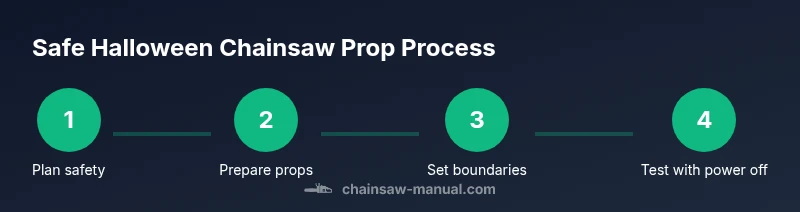
Plan the scene, define boundaries, and select a display approach that reduces risk. Decide whether you’ll rely on a prop-only visual or a safe mechanism that cannot physically cut. Map the space, identify escape routes, and assign a supervisor to monitor the setup during the event. This planning phase is critical to prevent accidents and ensure a smooth, scary experience for attendees.
Maintenance and storage after use
After Halloween, clean and inspect any props; if you used a non-operational replica, wipe down surfaces and store in a secure location away from children. If any powered components were involved, follow manufacturer instructions for battery care and disposal, and remove batteries to prevent accidental activation. Proper storage helps prolong the life of display props and reduces risk for future events.
Quick-start safety checklist for Halloween displays
- Use inert blades or props only; avoid any live cutting action.
- Wear full PPE during setup and teardown; keep spectators at a safe distance.
- Post clear warnings and barriers to deter bystanders from approaching the display.
- Test all mechanisms with power off before the event day.
Tools & Materials
- PPE: full-face shield or goggles(Also wear hearing protection; gloves and boots are recommended.)
- Chainsaw prop or inert blade(Non-functional blade or dummy model; no chain engaged.)
- First aid kit(Keep accessible during setup and display.)
- Fire extinguisher(Have on hand if you’re using electrical props.)
- Stable display surface or stand(Helps prevent tipping during wind or crowds.)
- Non-slip footwear(Wear for all setup and teardown.)
Steps
Estimated time: 60-120 minutes
- 1
Define the safe concept
Clarify whether the display will use a non-operational prop only or a carefully supervised mechanism that cannot cut. Define boundaries and audience distance before assembly.
Tip: Choose a non-cutting approach first to minimize risk. - 2
Select a safe prop approach
Decide on inert blade, foam replica, or LED-driven effect. Ensure there is no real chain engagement and that the prop cannot operate unexpectedly.
Tip: If in doubt, opt for non-operational prop every time. - 3
Prepare the display area
Mark boundaries clearly, set up barriers, and ensure the area is dry, well-lit, and free of trip hazards. Have a plan for crowd flow and emergency access.
Tip: Use floor tape and signs to direct guests away from the prop. - 4
Check equipment and PPE
Inspect PPE and props; verify that the inert blade cannot turn on and that the display is stable. Confirm supervisor assignments and signaling methods.
Tip: Pre-event safety briefing helps everyone stay aware. - 5
Assemble prop with safety features
Assemble the display using non-cutting parts; add barriers or covers to obscure the blade area and prevent access to any mechanism.
Tip: Cover moving parts to minimize pinch points. - 6
Position observers and set boundaries
Place observers at access points and ensure spectators maintain a safe distance. Establish a signal to pause or stop the display if needed.
Tip: Never allow props within arm's reach of guests. - 7
Test the display with power off
Power down all components and perform a test scan to ensure visuals function without risk. Confirm there is no risk of unexpected startup.
Tip: Do a dry run with staff before guests arrive. - 8
Secure final display and monitor
Lock the area, maintain supervision, and be ready to intervene if safety signs of wear appear. After the event, inspect for damage and store properly.
Tip: Document any issues for future improvements.
FAQ
Is it safe to use a real chainsaw for Halloween decorations?
No. Real chainsaws pose severe injury risks and are generally not appropriate for Halloween displays. Use inert props or remote mechanisms to achieve the visual effect.
Real chainsaws are risky for Halloween displays; opt for inert props or remote setups.
What are safe alternatives to using a real chainsaw for Halloween effects?
Safe alternatives include foam or plastic props, inert blades, LED lighting, and sound effects. These provide the spooky vibe without the danger of a live tool.
Alternatives like foam props and LED effects give you the scare without the risk.
Do I need PPE if I only display a prop chainsaw?
PPE is recommended for anyone involved in setup, teardown, or live demonstrations, especially near electrical props or wind-exposed displays.
Yes, wear PPE during handling and setup.
Can I use a toy or battery-powered chainsaw for indoor displays?
Yes, a battery-powered prop or toy chainsaw designed for display is safer for indoor use, provided it has no cutting capability and is supervised.
A safe toy or battery-powered prop is better for indoors.
Are there legal restrictions on using chainsaws for Halloween in public spaces?
Local ordinances and venue rules may restrict the use of loud equipment or realistic props in public areas. Check permits and crowd-control requirements before displaying.
Check local rules and permits before a public display.
Watch Video
The Essentials
- Plan safety first; use non-operational props whenever possible.
- Equipped PPE and barriers protect guests and operators.
- Test thoroughly with power off before public display.
- Use safer alternatives to achieve Halloween impact.