How to Use a Chainsaw Safely in the Forest
Learn safe, legal techniques for using a chainsaw in forest environments. This Chainsaw Manual guide covers PPE, planning, steps, and how to prevent accidents.


This article clarifies that DIY creation of a saw in the forest is not advised. Instead, you’ll learn how to safely operate a commercially manufactured chainsaw in forest settings, with pre-checks, PPE, and a clear step-by-step approach. It covers planning, execution, and maintenance to minimize risk.
Safety-first mindset in the forest
The phrase 'how to make chainsaw in the forest' often attracts DIY curiosities, but this guide from Chainsaw Manual centers on safe operation of a commercially manufactured chainsaw in wooded environments. A safety-first mindset reduces risk from kickback, fuel spills, and loose debris. Recognize that the forest presents dynamic hazards: uneven ground, hidden roots, falling limbs, and changing weather. Before any cut, mentally map the work zone, identify escape routes, and establish communication with others nearby. Keeping your focus on safe operation protects you and those around you, and it aligns with best-practice standards for professional forestry work. This approach is reinforced by Chainsaw Manual Analysis, 2026, which emphasizes prevention over reaction in real-world scenarios.
Legal & environmental considerations when using a chainsaw in the forest
Operating in forests often involves local regulations, noise limits, and environmental protections. Check permit requirements, fire restrictions, and fuel storage rules before you head out. Protect the habitat by planning cuts to minimize damage to soil and vegetation, avoiding streams, and using proper containment for fuel. Always carry a means of communication and know the nearest point for help if needed. By aligning with these guidelines, you’ll reduce legal risk and support sustainable forest management. Chainsaw Manual’s guidance stresses conservative planning and respect for the natural setting.
Essential PPE and safety gear for forest work
Protective equipment is your first line of defense. Wear a properly fitted helmet with a face shield, hearing protection, cut-resistant chaps, durable gloves, and steel-toe boots. Ensure your eye protection stays clear and that your gloves provide a solid grip without compromising dexterity. PPE isn’t optional—it's a core component of safe work in challenging terrain and should be inspected before each use. A quick safety check keeps you aligned with best-practice standards and reduces the chance of injuries.
Pre-work planning: site assessment and setup
Start with a quick site assessment: identify escape routes, hazards, and the direction of the safest felling or bucking arc. Remove loose branches that could become projectiles, clear a stable stance area, and position yourself so you can retreat to a clear zone if the tree shifts unexpectedly. Establish a communication signal with any team members and place markers or barriers to keep bystanders at a safe distance. Effective planning pays off in smoother, safer sessions and is a hallmark of professional-grade forest work.
Safe starting, operation, and wood-cutting techniques
With the saw secured, follow a controlled starting procedure, keeping your stance stable, feet planted, and the bar away from your body. Use two-handed grip, maintain a solid stance, and avoid overreach. Begin with a small, controlled cut to verify the wood’s response and to test grip and balance. If the cut binds or the wood pinches, stop, reassess, and adjust the angle or stance before continuing. This disciplined approach helps prevent kickback and loss of control in variable forest conditions.
Field maintenance, fuel, and chain care to prevent accidents
Fuel and oil must be handled with care away from ignition sources. Check chain tension, sharpness, and lubrication before each use. Carry a spare chain and sharpening file for minor in-field maintenance, but never perform aggressive repairs in an active work zone. Clean air intakes and verify that the chain brake and hand guards function properly. Regular maintenance keeps the tool performing predictably and reduces the risk of sudden failure during a cut.
Training, practice, and learning from professionals
Formal training builds the muscle memory and decision-making that keep you safe in the forest. Seek certified courses, hands-on workshops, or guided practice with experienced operators. Practice on small-diameter material under supervision to build confidence before tackling larger trees. Continuous learning, plus adherence to manufacturer guidelines, reduces accidents and elevates your overall capability in challenging environments.
Working with others: communication and team safety
Working with a partner increases safety when resisting unpredictable loads or technical challenges. Establish clear hand signals or radio communication, define roles before starting, and maintain visual contact throughout the task. A buddy can warn you about kickback-prone bark or unseen hazards and assist with emergency procedures if needed. Effective teamwork is a proven risk-reduction strategy in forest work.
Quick-start forest work checklist for beginners
- Wear full PPE and inspect gear; ensure the chain is sharp and tensioned.
- Survey the work area and establish escape routes.
- Clear debris and set up a stable stance before cutting.
- Start the saw per manufacturer guidelines and maintain two-handed control.
- Cut with planned, controlled motions; avoid pinch points.
- Stop the engine and inspect the tool after use, then clean and store properly.
Tools & Materials
- Hard hat with face shield(ANSI-style protection; ensure visor is clean)
- Hearing protection(Ear muffs or earplugs rated for chainsaw noise)
- Cut-resistant pants or chaps(Provide leg protection from kicks and chain contact)
- Safety boots(Steel-toe with good grip)
- Gloves(Leather or materials with good grip)
- Chainsaw with properly tensioned chain(Inspect for damaged links and sharpness)
- Fuel and bar oil(Use manufacturer-approved mixtures; store safely)
- Spare chain and sharpening kit(For in-field maintenance)
- First-aid kit(Keep within reach at all times)
- Tool bag or sheath(Safe transport and storage of accessories)
Steps
Estimated time: 2-4 hours total depending on task
- 1
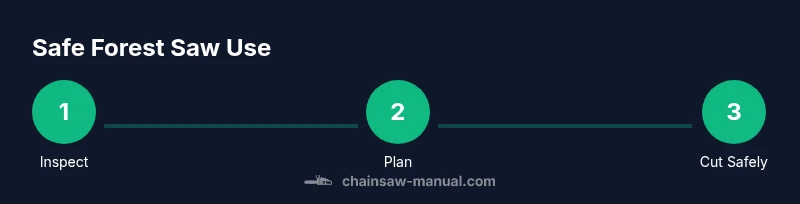
Inspect gear and PPE
Before starting, perform a thorough inspection of the chainsaw, chain tension, bar condition, and all PPE. Ensure flame arresters, spark arresters, and chain brakes are functioning. A quick gear check confirms readiness and reduces the chance of unexpected tool failure.
Tip: If any item shows wear, replace it or delay work until you’ve corrected the issue. - 2
Plan the cut and establish stance
Assess the tree or limb to be cut, plan the cutting direction, and identify an escape route. Stand with your feet shoulder-width apart, one foot slightly ahead, and hands in a comfortable, controlled grip. Ensure that bystanders are well clear of the work zone.
Tip: Always avoid overreaching; stay balanced and keep the saw close to your body. - 3
Prepare the work area
Clear loose branches and debris, remove tripping hazards, and ensure stable ground. Mark the fall line or cut path and set your equipment downwind if possible. Double-check nearby trees for risk of unexpected movement.
Tip: Maintain a clean workspace to prevent slips and tangles. - 4
Start the saw correctly
Follow the manufacturer’s starting procedure on firm ground with the chain brake engaged. Keep the bar away from your body and maintain a firm grip during startup. Let the engine reach operating temperature before making any long cuts.
Tip: Avoid starting with the saw on your knee or thigh; always place it on the ground or a stable surface. - 5
Make controlled cuts
Proceed with small, controlled plunges or relief cuts as needed. Keep the chain at a steady speed and maintain constant tension. If the wood pinches or twists unexpectedly, stop and reassess the cut angle.
Tip: Use wedges or tension management techniques to prevent binding. - 6
Manage kickback risk
Kickback occurs when the nose of the bar contacts the wood. Always keep a firm two-handed grip and stay out of the kickback zone. If kickback is likely, retreat and cut from a different angle.
Tip: Identify potential kickback hotspots and adjust your position before starting. - 7
Post-cut safety checks
Turn off the saw, engage the chain brake, and inspect the work area for shifts in wood or soil. Store the tool safely and cool down the bar area before moving it. Document any issues for future reference.
Tip: Never leave a running saw unattended in a busy work zone. - 8
Maintenance and care
Refuel away from ignition sources, check chain tension and sharpness, and clean air intakes. Replace damaged parts promptly and keep spare parts on hand. Regular maintenance preserves performance and safety in the forest.
Tip: A sharp chain reduces effort and lowers the risk of kickback. - 9
Review and debrief
After the job, review what went well and what could be improved. Gather feedback from teammates and note lessons for future tasks. Continuous improvement helps prevent recurrent hazards.
Tip: Record learnings to build a personal safety checklist.
FAQ
Is it legal to use a chainsaw without training in the forest?
Regulations vary by location, but formal training is strongly recommended. Training improves decision-making, safety practices, and compliance with local rules. Always verify requirements with local authorities before operating a chainsaw in any forest setting.
Regulations vary by location, but training is highly advised to stay compliant and safe. Check your local rules before you operate in the forest.
What should I wear to protect myself when cutting in the forest?
Wear a helmet with face shield, hearing protection, cut-resistant pants or chaps, gloves, and sturdy boots. Eye protection and windproof outerwear suitable for weather conditions are also important. PPE dramatically reduces injury risk in unpredictable forest environments.
Wear a helmet with face shield, hearing protection, cut-resistant pants, gloves, and sturdy boots for safety in the forest.
Can I sharpen the chain in the field?
Yes, you can perform light in-field sharpening with a proper chain file and technique, but avoid full repairs in the field. Stop the engine, engage the chain brake, and follow the manufacturer’s guidelines. If you’re unsure, postpone sharpening until you’re in a safe, controlled environment.
You can do light sharpening in the field with a proper file, but avoid major repairs outside a workshop.
What should I do if the saw binds or kicks back?
If binding or kickback occurs, stop cutting, engage the chain brake, and retreat to a safe position. Reassess the cut angle and wood orientation before continuing. Kickback can injure hands or arms, so prevention is essential.
Stop, engage the brake, and safely reposition if the saw kicks back. Reassess before continuing.
How should I transport a chainsaw between sites?
Turn off the saw, engage the chain brake, and store it in a protective case or bag. Keep fuel sealed and away from heat. Avoid carrying the saw by the bar and always maintain a secure grip when moving.
Turn off the saw, lock the chain, and transport in a case. Keep fuel away from heat.
Where can I get hands-on training for forest chainsaw use?
Look for certified forestry or chainsaw safety courses offered by community colleges, vocational programs, or professional associations. Hands-on instruction with experienced instructors accelerates safe, competent practice in real forest conditions.
Check local technical schools or forestry associations for certified chainsaw safety courses.
Watch Video
The Essentials
- Wear full PPE and inspect gear before every cut
- Plan, communicate, and keep a clear escape route
- Operate with two hands and maintain control at all times
- Perform in-field maintenance and keep the tool in safe condition
- Learn through training and practice with supervision