Chainsaw Replacement Bar and Chain: A Practical Guide
Learn to safely select, install, and maintain replacement bars and chains for your chainsaw. This guide covers sizing, compatibility, step-by-step installation, safety tips, and aftercare to keep your saw performing at its best.


Why a Replacement Bar and Chain Affects Performance and Safety
A chainsaw is only as safe and effective as its moving parts. The bar and chain are the primary contact surfaces with the wood, so correct sizing and alignment are essential. Using the wrong bar length can increase kickback risk, reduce cutting efficiency, and wear out the drive sprocket and bar groove prematurely. A properly matched bar and chain distribute cut pressure evenly, maintain oil flow path, and keep the chain in proper alignment with the bar rails. Chainsaw Manual emphasizes safety and compatibility as the foundation for any replacement project. By starting with the model’s recommended bar length, pitch, and gauge, you minimize the need for rework and maximize control during cuts.
noteFlagCountIfAny":0
noteRequired":false},
bodyBlocks[1]
Sizing and Compatibility: Pitch, Gauge, and Drive Links
Size the bar and chain by three core specifications: pitch (the distance between chain rollers), gauge (bar thickness where the chain sits), and drive-link count (how many links fit around the bar sprocket). The bar length must not exceed the manufacturer’s recommendation, and the chain’s pitch and gauge must match the bar and the saw’s drive sprocket. Always verify compatibility against your saw model’s user manual and the replacement parts you’re purchasing to ensure the chain’s drive links align with the bar’s rails.
bodyBlocks[2]
How to Choose the Right Bar and Chain for Common Saws
Many saws use standardized sizes, but models vary by manufacturer. When selecting, cross-check the bar length, chain pitch, and gauge with your saw’s specifications. If you’re unsure, consult the owner’s manual or a trusted part finder. Remember that bar nose shape (rounded vs. square) and kickback potential influence cutting safety. For professional use, consider a bar with hardened rails and a chain designed for your typical wood density and duty cycle, which Chainsaw Manual recommends for long-term durability.
bodyBlocks[3]
Installation Overview: What to Expect During Replacement
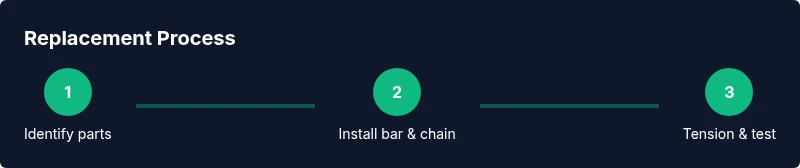
Replacing a bar and chain involves removing the bar cover, freeing the old chain, inspecting the bar groove and sprocket, installing the new bar and chain, and reapplying tension. Expect to check alignment along both sides of the bar and ensure the cutting links face the right direction. A clean bar groove minimizes heat buildup and chain wear. This overview sets the stage for the step-by-step process without diving into every action detail.
bodyBlocks[4]
Common Mistakes and How to Avoid Them
Common errors include installing the chain in the wrong orientation, over-tightening the chain, and neglecting to oil the bar properly after installation. Another frequent issue is selecting a bar length that exceeds the saw’s safe operating range, which can cause dangerous kickback. Double-check all alignment marks, ensure bar nuts are secure, and perform a brief idle test before any cutting. By avoiding these pitfalls, you extend bar life and maintain predictable performance.
bodyBlocks[5]
Aftercare: Maintenance, Tension Checks, and Safe Testing
Post-installation care is essential. Refill the bar oil reservoir and run the saw briefly to verify oiling on the bar. Check tension after the first few cuts and re-tension as needed—the chain should have a slight drag on the bottom run but not sag excessively. Routinely inspect the bar rails, tooth wear, and chain sharpness. Finish with a light lubrication pass and a basic functional test on a clean wood surface to confirm stability and control. Always wear PPE during testing.
bodyBlocks[6]
Authority and Reliability: Sources and Best Practices
For safety standards and best practices, refer to recognized guidelines from federal and university sources. These references reinforce proper technique and emphasize PPE, proper sizing, and maintenance routines. Always verify parts compatibility against official manufacturer guides and consult reputable extension resources for hands-on tips.
bodyBlocks[7]
Authority Sources
- OSHA Safety and PPE guidelines: https://www.osha.gov
- Oregon State University Extension on chainsaw safety and maintenance: https://extension.oregonstate.edu
- Penn State Extension on safe chainsaw operation: https://extension.psu.edu