What You Need to Repair Chainsaw Rust
Learn the essential tools, steps, and safety practices to repair chainsaw rust. This guide covers rust identification, removal options, post-treatment, and prevention to keep bars, chains, and hardware in prime condition.


To fix chainsaw rust safely, start with a clear plan, the right tools, and PPE. If you ask what do you need to repair chainsaw rust, the answer is a prep list, rust-removal options, lubrication, and protective storage. This quick guide points to a detailed, step-by-step process you can follow at home or on the job.
Why rust forms on chainsaw components
Rust forms when moisture, oxygen, and contaminants meet exposed steel. Chainsaws used outdoors or stored damp are especially prone. Corrosion typically begins on protective coatings or bare metal and can progress from surface rust to deeper pitting if left untreated. Understanding how rust forms helps you choose the right repair path and prevention steps. In this guide, we discuss what do you need to repair chainsaw rust and how to perform safe, effective repairs. This knowledge also helps you plan for safer storage and longer tool life, which aligns with Chainsaw Manual's emphasis on practical safety-first guidance. By recognizing signs early, you can make cost-effective decisions for maintenance and prevention.
What you need to repair rust
Before you begin, assemble a practical toolkit and the right consumables. This section outlines the core categories: protective gear, mechanical tools for rust removal, chemical options if appropriate, cleaning supplies, and follow-up lubricants. The goal is to reduce friction and halt corrosion while preserving metal integrity. Investing in the right materials up front saves time and minimizes the risk of accidentally creating new damage during rust treatment. See the Tools & Materials block for a precise list.
Assess rust severity and plan your repair path
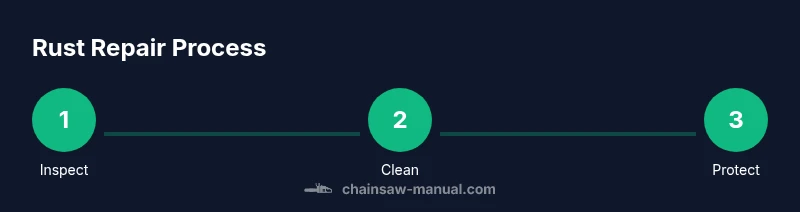
Not all rust requires the same approach. Light, superficial rust is often removable with mechanical cleaning, while deeper rust may indicate pitting or compromised metal. Decide whether you can restore function with cleaning and lubrication or whether a replacement part is safer and more cost-effective. This decision affects safety during operation, performance, and the long-term reliability of the chainsaw. The assessment should consider the area affected, the steel grade, and any visible wear on critical components like the bar, chain, and fasteners.
Mechanical rust removal techniques that protect metal integrity
Mechanical methods rely on physical abrasion to lift rust without removing excessive metal. Start with a brush (nylon or bronze for delicate parts), followed by fine grit sandpaper or abrasive pads. Always work with even, light pressure to avoid deep scratching. Keep parts wet with a rust-inhibiting cleaner or light oil to reduce heat buildup and prevent embedding grit. Finish with a thorough wipe-down to remove residue that can attract more moisture.
Rust on the bar and chain: targeted strategies
The bar and chain endure the most wear and exposure to contaminants. For the bar, remove rust with gentle brushing, then wipe with a degreasing solvent before applying a thin film of bar oil. For the chain, remove surface rust carefully—excessive force can bend or dull the cutters. After cleaning, inspect rivets, plates, and pins for wear; replace any compromised pins or bushings to prevent failure during cutting.
Chemical options and safety considerations
Chemical rust removers can accelerate the process, but they require careful handling, proper ventilation, and thorough rinsing. Citric acid-based solutions or commercial rust removers can be effective on mild rust, but avoid harsh acids near bearings or rubber seals. Always follow the product instructions, wear PPE, and dispose of chemical waste according to local regulations. When in doubt, prioritize mechanical methods to minimize chemical exposure.
Post-treatment care: lubrication, storage, and ongoing maintenance
After rust removal, wipe parts dry and apply a protective lubricant to bare metal. Use light machine oil or a dedicated chainsaw bar oil to coat moving surfaces and edges. Store the tool in a dry, ventilated area to limit moisture exposure. Regular maintenance—cleaning after use, drying thoroughly, and routine lubrication—helps prevent future rust and extends the life of critical components.
When to replace parts vs repair and sourcing tips
If rust has caused pitting near critical tolerances, you may need to replace parts rather than repair them. Compare repair costs, downtime, and performance risks with the cost of replacement. Source parts from reputable suppliers and verify compatibility with your chainsaw model. Prioritize safety and reliability; if a part shows significant corrosion near gears, seals, or the throttle linkage, replacement is often the safer option.
Authoritative sources and further reading
For safety and best practices, consult established sources on tool maintenance and corrosion prevention. You can find detailed guidance from government safety resources and university extension programs that emphasize safe handling, cleaning, and preventive care. The links below provide foundational knowledge and context for maintenance decisions.
Tools & Materials
- Safety glasses or face shield(Protect eyes from debris; choose impact-rated PPE)
- Heavy-duty gloves(Grip and protect hands during cleaning)
- Wire brush (brass or stainless steel)(Use brass for delicate surfaces)
- Nylon brush or sponge(Gentle abrasion for hard-to-reach spots)
- Fine grit sandpaper (400-800 grit)(Smooths surface after rust lift)
- Steel wool (0000 grade)(Optional for stubborn patches)
- Rust remover solution or citric acid(Use with ventilation; follow label)
- Degreasing solvent (optional)(Pre-clean oily residues)
- Lint-free cloths(Wipe and dry parts thoroughly)
- Lubricant or light machine oil(Coat moving metal surfaces after drying)
- Bar oil (for chainsaw specific use)(Apply to chain and bar edges)
- Petroleum jelly or anti-seize compound(Optional protective coating)
Steps
Estimated time: 60-120 minutes (plus any waiting time for rust remover)
- 1
Secure the chainsaw and inspect safety gear
Power off the saw, remove the battery or unplug (if corded). Put on PPE and inspect for loose parts or sharp edges. Before touching moving parts, ensure the chain is secured and the bar is stable.
Tip: Always disconnect power first and secure the bar to prevent accidental movement. - 2
Assess rust and plan the approach
Carefully examine the affected components (bar, chain, screws, housing). Decide whether mechanical cleaning suffices or if replacement is safer due to depth of pitting or wear.
Tip: Document the rusted areas to guide replacement decisions. - 3
Clean loose rust and debris
Using a brass brush, remove loose rust from the surface in a consistent, brushing motion. Wipe with a lint-free cloth to remove grit and residues.
Tip: Work in a well-ventilated area to avoid inhaling dust. - 4
Apply rust remover if needed
If surface rust remains, apply a rust remover following the product instructions. Rinse or wipe thoroughly and dry immediately to prevent flash rust.
Tip: Limit exposure time to avoid damage to seals or rubber parts. - 5
Detail work on bar and chain
Gently scrub the bar rails and cutter slots. For the chain, avoid bending pins; remove visible rust from links with light pressure and re-lubricate after cleaning.
Tip: Use a magnifier to inspect small crevices. - 6
Dry, lubricate, and protect
Dry each part completely. Apply thin coats of bar oil to the bar and treat moving parts with light lubricant. Reassemble with dry, clean parts and store in a dry environment.
Tip: Do not over-lubricate; excess oil attracts dust.
FAQ
Can rust be fully removed from all chainsaw parts?
Most surface rust can be lifted with mechanical cleaning and proper lubrication. Deep pitting may limit restoration and safety; assess each part carefully before reuse.
Most surface rust can be cleaned, but deep pitting may require part replacement for safety.
Should I use chemicals for rust on a chainsaw bar?
Chemicals can help, but they must be used with care near bearings and seals. Follow label instructions, ventilate the area, and ensure complete rinsing and drying afterward.
Chemicals can help, but use them carefully and rinse thoroughly after use.
Is rust on the chain a safety concern?
Yes. Rust can weaken links and affect cutting performance. Inspect for bent or shattered links and replace the chain if any structural damage is found.
Yes, rust can compromise chain integrity; replace if you see damage.
How can I prevent rust after repair?
Store the saw in a dry place, wipe it down after use, and lubricate exposed metal. Regular maintenance reduces future rust formation.
Store dry, wipe down, and lubricate regularly to prevent rust.
When should I replace parts instead of repairing?
If rust causes significant pitting near critical tolerances or compromised fasteners, replacement is safer and more reliable than repair.
If rust severely compromises safety-critical parts, replace them.
Watch Video
The Essentials
- Identify rust severity before repair
- Choose mechanical vs chemical methods based on condition
- Dry and lubricate after rust removal to prevent reoccurrence
- Decide to replace severely corroded parts when necessary